SATANGONE
After Madgone meets his end at the hands of Jumborg 9, PAT and SGM (see my Mirrorman article), he warns that his superior, Satangone, will be arriving and challenge PAT to their fullest extent.
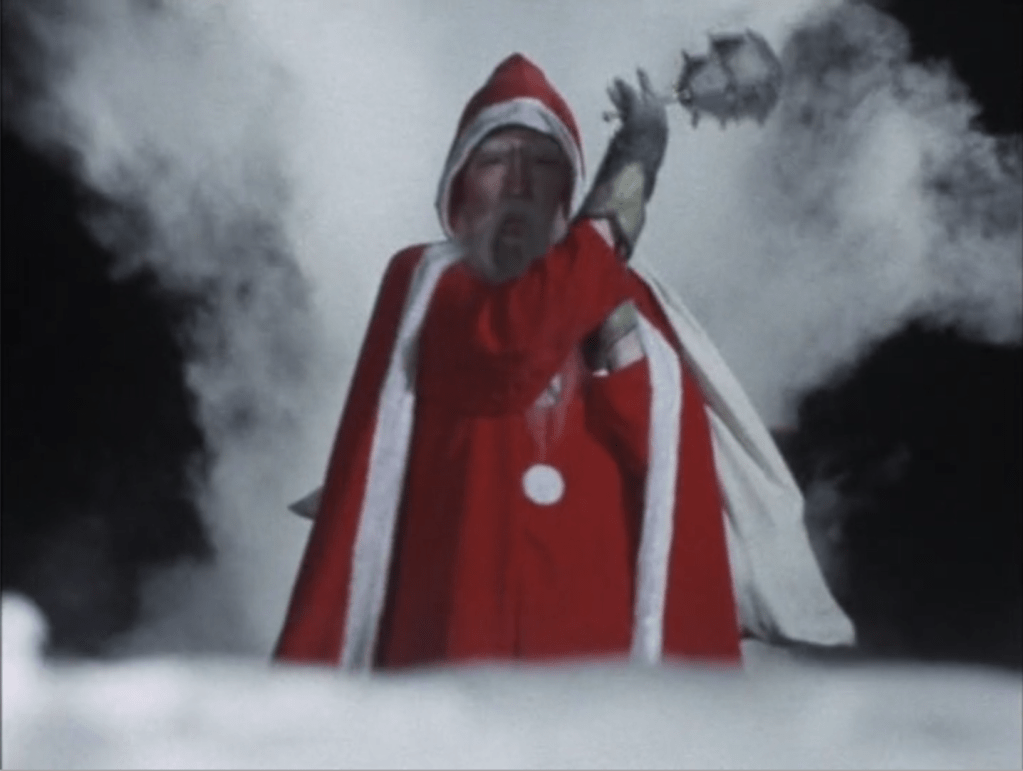
Arriving on Earth disguised as Santa Claus, Satangone roams around, using his mysterious bell to transform children into vinyl kaiju dolls.

Satangone soon reveals to Naoki and PAT that he intends to take the kids back to the Growth homeworld where he’ll transform them into his latest batch of kaiju to conquer the Earth with. Thankfully, Jumborg 9 is able to rescue the tykes in time, but Satangone manages to slip away, becoming the show’s third main antagonist.

While Madgone’s schemes mainly focused on testing the strength of PAT and the Jumborgs with his powerful monsters, Satangone here takes more of a surreal, nightmarish approach to his world domination schemes. This particular section of the show was influenced by the fascination of the occult that was going on in Japan at the time, so Satangone’s plans and kaiju tend to be much more strange and horrific compared to the show’s earlier monsters. His design by Yonetani is a very good one, living up to the Satanic name he has. Unlike the past two Growth commanders, Satangone’s antelope inspired horns aren’t a permanent part of his design, but rather, they’re telescopic. This was due to just how unwieldy they were for his suit actor. Lastly, his fancy cape is inspired by magic carpets, befitting the supernatural motif the character has.
BUTTERFLY KING

Sent to target a scientist who was working on a special virus meant to kill the Growth aliens, Butterfly King takes the form of a ghostly woman who makes threatening phone calls to the scientist’s family and kills using butterflies that have the ability to dissolve flesh.

Butterfly King is one of those monsters who is much scarier in their human disguise as opposed to it’s true form, which sadly looks really cheap with those huge wings and orange bell bottoms. The suit itself was based off of Yonetani’s original design for the Growth aliens, which probably is the reason for the more slapdash nature of the design.
GROWTH ALIENS VERSION 2
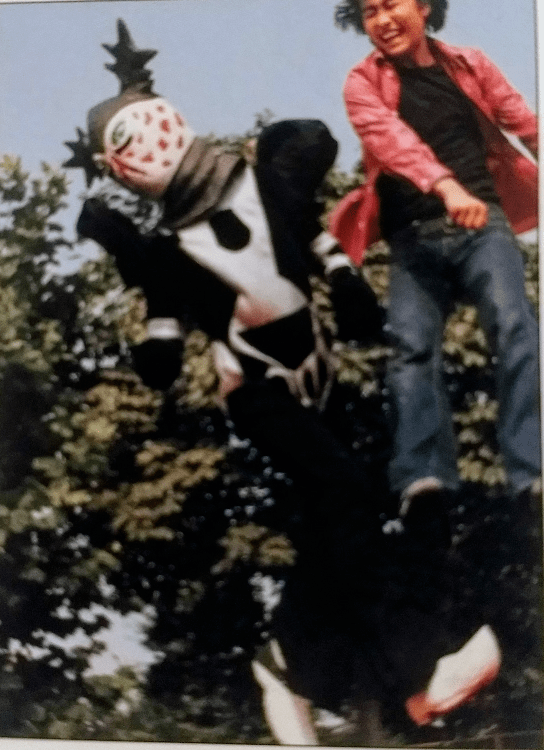
Which is a good segue to the new versions of the Growth aliens that Satangone uses for his various schemes on Earth. These were based on the original designs Yonetani drew for the Growth aliens until production issues forced them to go with the retooled Invader costumes. While I’m glad that these designs eventually got used, as well as the fact that they look somewhat more in line with the horned generals, I do wish the show gave them some more fanfare with the change. What’s strange though is that the older designs will appear in these episodes alongside the newer ones, including a scene where the older Growth transform into the newer ones for no reason! It’s very odd.
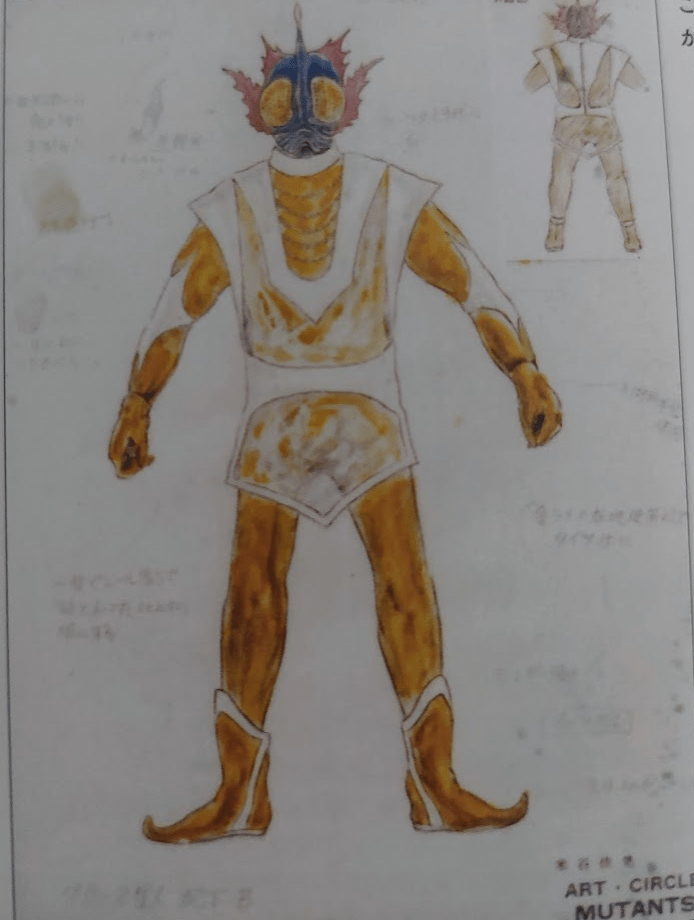
There’s also this piece of concept art for the Growth aliens, albeit I’m not sure where exactly it comes into the show’s production. It’s a pretty good alien design though, bringing to mind Ultraseven alien Cannan.
GOLD DRAGON
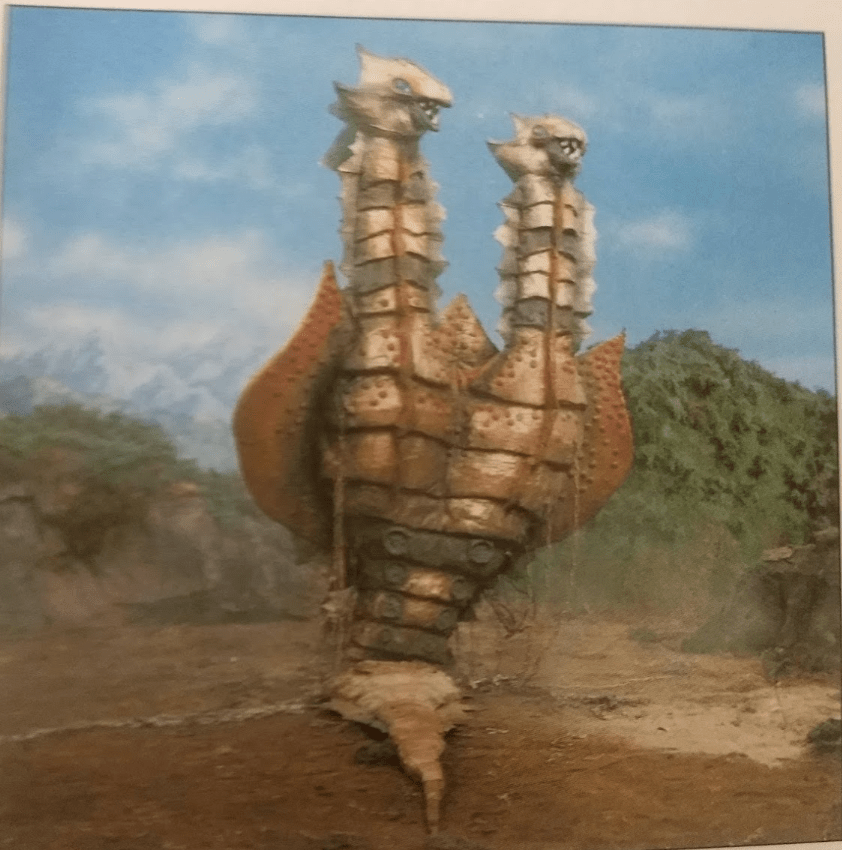
Starting off as floating gold chains that strangle whoever they come across, Satangone eventually makes them coalesce into Gold Dragon. A creature brought to life through puppetry, Gold Dragon is one of the stranger creatures seen in Jumborg Ace, and the idea of ghostly, gold chains makes for a memorable and frightening creature, albeit one that doesn’t last too long against Jumborg Ace during the finale. But a golden, two-headed monster dragging chains along as it flies through the air is a very striking visual.
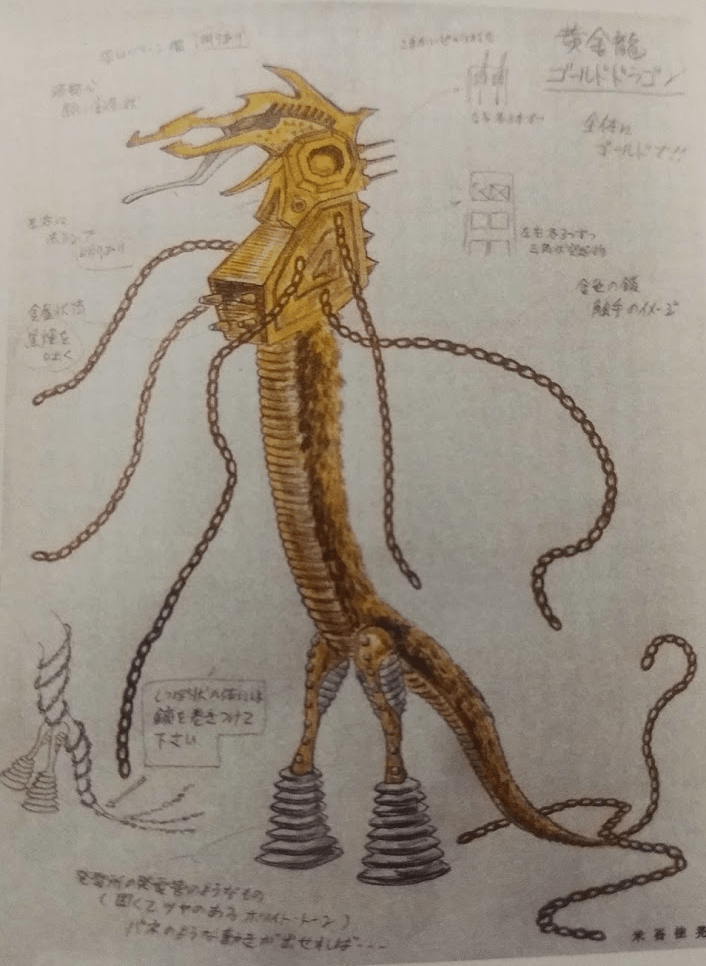
The original design of Gold Dragon was meant to be a homage to Ultraseven‘s Nurse, but the design by Yonetani would be scrapped and replaced ultimately with a design by Kengo Kime. I gotta say, while I’ve enjoyed the tributes to the various Ultraman kaiju, I am glad we got the final design, which looks a lot more unique and able to stand on it’s own as a character. In addition, while I presume Yonetani’s version of Gold Dragon would be a puppet as well, it looks like it’d be a bit more elaborate and harder to pull off compared to it’s inspiration and the final design.
OROLONGER

A monster guarding Satangone’s mountain base, there isn’t a whole lot to say about Orolonger. It’s a decent looking draconic design, and the smaller limbs next to his head remind me of Dead King from Mirrorman. Overall, not too terrible of a monster, but nothing super memorable compared to some of the other stuff Jumborg Ace has thrown at us.
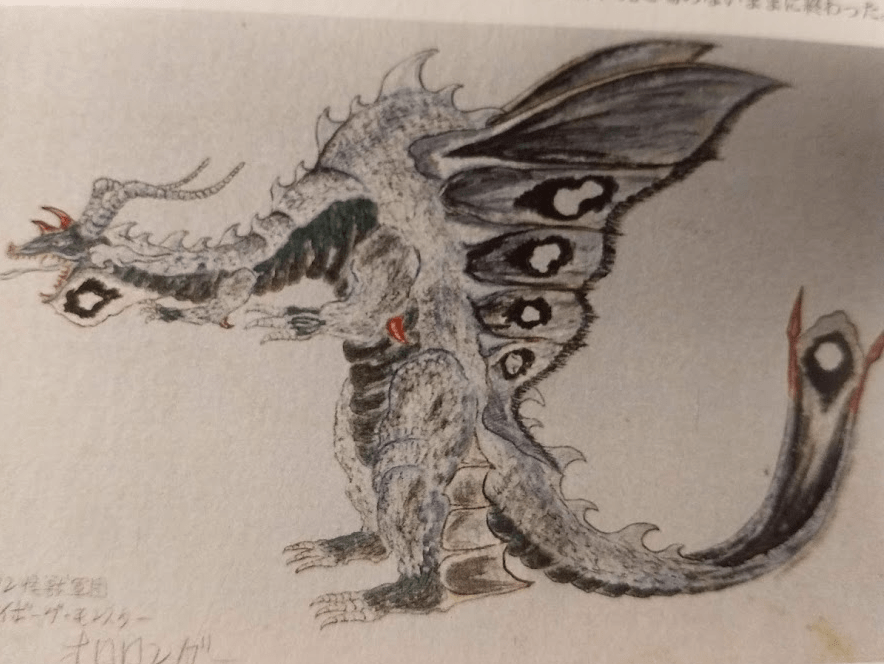
The original design by Yonetani is much more interesting, bringing to mind Femigon from Return of Ultraman, as well as Ghoulgilas from SSSS Gridman a few decades later. This was scrapped in favor of the less elaborate one we see in the episode proper, and it’s a bit of a shame since there’s a lot of features I like on this guy, such as his peacock inspired tail and those large wings with eyespots.
ELECTRIC BIRD

Born from a large egg at Satangone’s hidden carnival base, Electric Bird is…well, an electric bird monster. A bit more exciting compared to the last few creatures, Yonetani’s design combines features of condors and the rokurokobi (a yokai that resembles a woman with a long, prehensile neck) into a very visually interesting monster. The suit’s head and neck were cannibalized from Glass King and Mighty Growth, though they gave a lot of care to disguise these and I thought it was a brand new suit before learning of it’s components. On the subject of this guy’s neck, am I alone in it reminding me of those tube toys that you can stretch out? Anybody?

I don’t have much to say about this guy really, but the egg prop they made is just really nice looking, so marvel at it for a few seconds why don’tcha.
KENDARUS
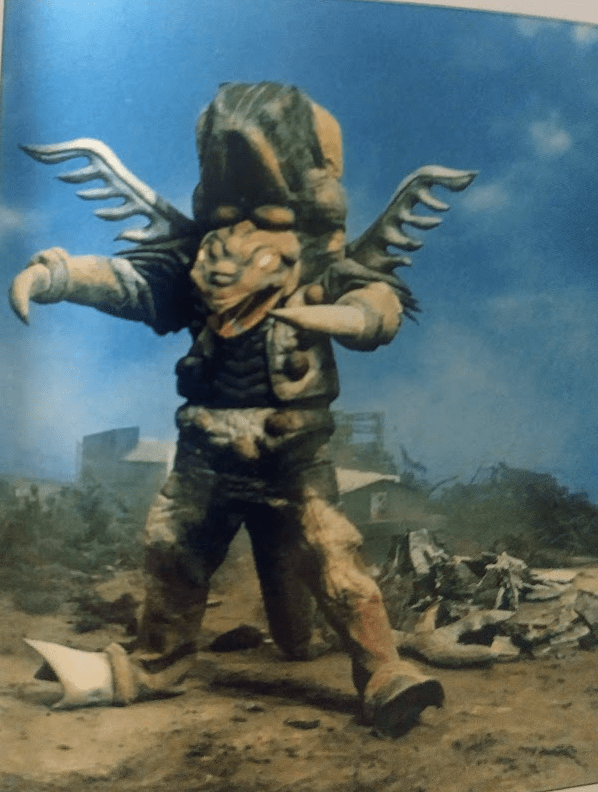
Sending out a group of five cyborgs to spread a deadly space virus in Tokyo, PAT is able to stop the deadly plot, but the last cyborg, upon death, transforms into the monster Kendarus.
Kendarus is a fun monster, and is one of the better monsters seen in the tail end of Jumborg Ace. I really like how he’s another bird-looking monster, but the placement of the head, design of the wings and the overall color scheme makes him a really unique looking monster, almost like he’s a walking totem pole.
Kendarus’s design by Yonetani is unique among the various Jumborg Ace monsters, as rather than trying to have him fit alongside the previous creatures, Kendarus is meant to be more in line design wise with the Chojuh of Ultraman Ace. Yonetani designed him as a sort of unofficial Chojuh for his motif, which is super cool.

I feel I should also bring some attention to the five cyborgs here, as their appearance, mannerisms, Satangone’s general plan, and one of their number transforming into a kaiju feels like a return of the Invaders from Mirrorman, and seeing as how Jumborg Ace is sort of a sequel to the former, I wouldn’t be shocked if this was done as a deliberate throwback.
DEATH MOON
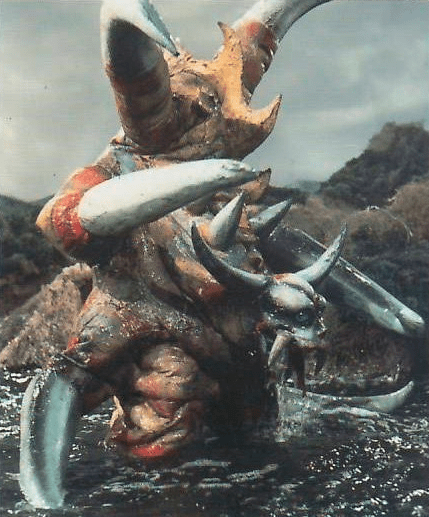
One of the more morbid monsters from the show, Death Moon hides out in a lake and reduces his victims to skeletons, and then reanimates the bones to terrorize anyone else wandering about. It’s genuinely creepy stuff, especially with how the skeletons that Death Moon controls still have little bits of flesh on them, yuck!
In addition to his disturbing set of powers, Death Moon has a wonderfully creepy design. Meant to evoke a spider by Yonetani, the monster also brings to mind the Buer from the Pseudomonarchia Daemonium, as well as the Emmer aliens from Senkosha’s Silver Kamen. It’s just a monster that looks very imposing and dangerous, and the yellow body with red stripes works incredibly well with the white horns and face to create a striking, fearsome kaiju.

SKELETON
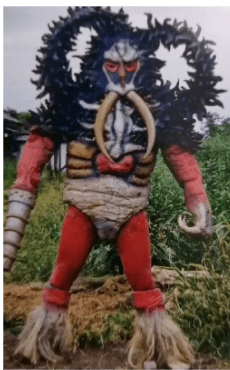
Skeleton here doesn’t do quite as much as many of his MOTW brethren in the show, mainly just hanging about at human size and snacking on villagers, but he does team up with Satangone and almost take down Jumborg 9, which I have to give him props for.
Skeleton is unfortunately one of the show’s weakest monsters in my eyes. He doesn’t look as elaborate or coherent as the show’s other creatures, but I cannot deny the human-sized Skeleton feels appropriately creepy as he feeds on the pile of human corpses in his episode. The name might feel more appropriate for Death Moon from an episode prior, but the design by Yonetani was meant to evoke a skull, with the rings on the back to represent the eye-sockets of the skull, but this was lost when the suit was modeled. In addition, Skeleton’s bipedal body plan was designed around the consideration of the episode’s climax being shot in water. Lastly, befitting of his name and theme, his hook hand is meant to be evocative of the pirate with a hook hand stereotype.
SPACE WITCH BARABAS AND HONEST KING

The grandmother of Satangone himself, Barabas awakens from her 1000 year long slumber due to her grandson’s failures, forcing her to step in and help her descendant conquer Earth and defeat the Jumborgs.
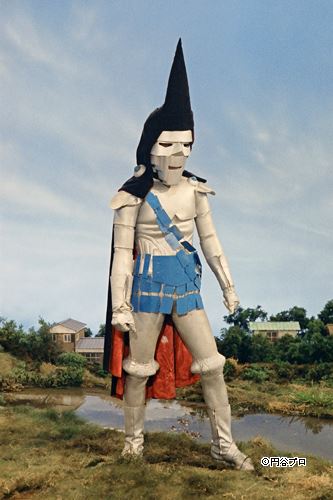
Sending out a robot by the name of Honest King, the tin-terror befriends Kazuya and disguises itself as a cute little dog, making it easier for itself to infiltrate PAT’s HQ and learn of their secrets. When Honest King is defeated by Jumborg Ace, Barabas takes off the kid gloves and not only kidnaps Kazuya and threatens to feed him to flesh eating rats if Naoki doesn’t give up the secrets behind the Emeraldian mecha, but also kills PAT agent Kenji before she meets her end.
For a character that only appears in two episodes near the show’s tail end, Barabas is a very effective villain, and I actually wish she was able to stick around for more episodes, if not usurp Satangone as the main bad guy for these last few episodes. While her grouchy personality and interactions with Satangone at first make her seem like a more comedic character, but she quickly shows how deadly she can be with her clever scheme of manipulating the lonely Kazuya with Honest King, as well as just going all out in her second episode. With threatening to feed Kazuya to rats alive, torturing Naoki by shooting iron nails into a picture of Naoki to inflict pain via sympathetic magic, and even killing one of the main cast, Barabas is clearly a cut above most MOTW, and it’s a bit sad she bites it thanks to Jumborg 9. It’s the nature of such shows and the characters in them, but you’d expect such a powerful villain not to be a paper tiger.
Honest King is a fun monster, and while he definitely looks different compared to the more outlandish Jumborg Ace kaiju, I think the change of pace helps the character stick out more. The design is simplistic and brings to mind numerous things such as tin soldiers, gladiators, Dr. Doom and Frankenstein’s Monster.
The designs for these two were attributed to Tsuburaya Pro. mechanical designer Tetsuzo Osawa, but Yonetani has stated he did rough design sketches for the two. Regardless of who designed them, they’re some fantastic characters, even if they didn’t get to stick for a long time.
JUMKILLER JR.

A revamp of the original Jumkiller, Jr. here once again manages to completely overcome Jumborg Ace, but meets his end at the hands of Jumborg 9. There’s not much to add in regards to commentary for this guy, as the additions to the design aren’t too notable. This was perhaps intentional as Yonetani’s design notes for Jr. mention that it was going to be for a modification of the original Jumkiller suit, rather than a brand new one. Minor tweaks aside, the only really notable stuff about the character here is that aside from beating Jumborg Ace again, he’s not a nifty scythe for his main weapon, and oddly enough, has the roar of famous Toho kaiju Rodan, which is such a bizarre choice for an evil robot duplicate.
Jumkiller Jr. would be one of the few monsters to escape this show, appearing in not one, but two Chaiyo productions, the first being Jumborg Ace and Giant, a co-production with Tsuburaya that much like Hanuman vs. 7 Ultraman, features ancient deities teaming up with Japanese superheroes to battle evil monsters. The second was Chaiyo’s bizarre fantasy-comedy, Magic Lizard where Jumkiller Jr. appears as the film’s antagonist.
MIRROR KONG
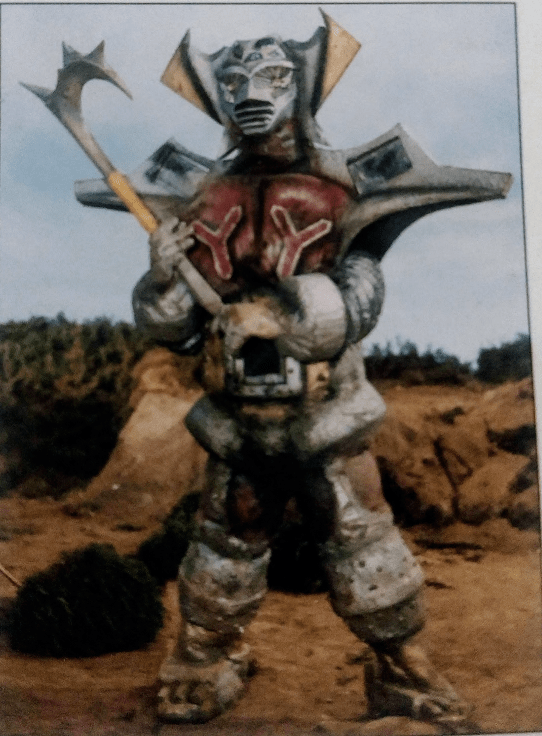
Originally a Growth alien that infiltrates PAT, it transforms into a giant robot that traps Kazuya and his mother inside the mirror in his abdomen. Satangone uses them as leverage to get PAT’s new Molecular Destruction Ray.
Mirror Kong is a fine robot monster, and the idea of being a mirror-themed robot is a fun concept. Much like Dump Kong, Mirror Kong has a nice, rusty, industrial look to him, which really fits the sort of aesthetic the show has for it’s kaiju. Fittingly, Yonetani took inspiration from Mechani-Kong from Toho’s King Kong Escapes, mixed in with elements of Windam in order to avoid any possible copyright infringement with the design. The Y-shaped patterns on his chest are actually Yonetani’s initials!
KING BEETLE

A sand-dwelling kaiju who guards Satangone’s base, King Beetle is your typical insect kaiju, albeit the name is a bit of a misnomer since he’s not really a beetle at all, and more of a generic insect with a healthy dose of inspiration from our friend Baltan.
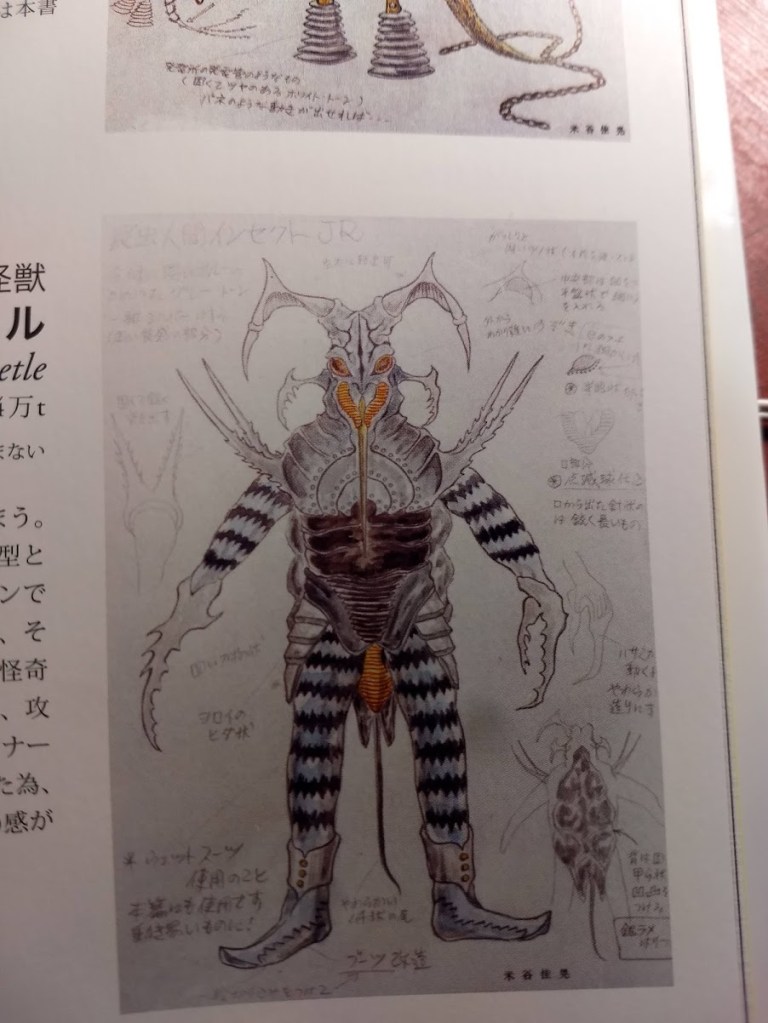
It’s not a bad Baltan pastiche either, and I can totally see this guy appearing as a variant of everyone’s favorite space ninja in an Ultra show at the time. The original design by Yonetani even has the striped pattern Baltan has! King Beetle’s vine-shaped tentacles were added on during the construction of the suit and weren’t part of Yonetani’s original conception for the character.
While we’re not quite done with the characters in this show, King Beetle is our last bonafide monster of the week for the show! Due to constructing all these new monster suits (as well as I can imagine, the cost of Ultraman Taro and Fireman‘s special effects at the same time), it had become too expensive to keep producing new opponents for each episode, so some monsters got left on the cutting room floor, but that is a story for another time.
MODIFIED SATANGONE

After a string of numerous defeats by PAT, Satangone is put on trial by the highest ranking general of the Growth aliens, Demongone, and is sentenced to death. However, Satangone manages to earn himself one last chance to destroy Jumborg Ace via a suicide bombing thanks to Demongone implanting the bomb in his body. As these shows go, Satangone fails, setting the stage for the final villain…
Satangone’s upgraded form was done to mainly disguise the damage that the suit had taken during it’s time on the show. It was originally going to be given a new paint job, but a lack of time prevented this from occurring. The head, which always reminded me of those old Russian onion domes, was to hide the part of the head where the horns would normally go in, and it helps establish, with it’s red coloration and gold divots how the price of failure is in Demongone’s eyes, and just how cruel their idea of mercy is. Not a bad way to play up the final boss.
DEMONGONE

The highest ranking general of the Growth forces, Demongone arrives on Earth with the intent to bring the Earth under the heel of their empire after numerous failures. At first showing up in Tokyo and making a public proclamation that these are the planet’s last days, Demongone takes control of Jumborg 9 and forces the two mechs to battle. After the Emerald aliens intervene, Demongone continues to be a thorn in the sides of the heroes, targeting Naoki’s family, messing with Tokyo’s clocks to cause havoc on a massive scale, and lastly, installing a death ray on the moon to target cities on the Earth with.

Demongone is a pretty stellar final villain, albeit they are one of the more unique final bosses of 70’s tokusatsu (which is saying something). While alternate forms aren’t unheard of for these kinds of guys, Demongone is able to switch between both male and female personas with relative ease, often switching to their male form when fighting the Jumborgs directly. In additon, Demongone commands four episodes to themselves. The episodes, unlike many endgames to these shows, are relatively stand alone, and Demongone dies at the end of each of them, only return no worse for wear in the following episode. The only reason it seems that Naoki is able to kill Demongone once and for all is thanks to Jumborg 9 stabbing them in the large eye in their abdomen. It’s never fully addressed that is Demongone’s weak point in the show, but hey, it makes sense for a monster like this to have a video game boss styled weakness. The particular reasoning behind Demongone’s constant deaths and resurrections is behind the scenes one, as the cost of constructing new monster suits for the show caused them to run out of budget, leaving several monsters, like a clock monster named Time Kong on the cutting room floor.
The design by Yonetani is another winner and while not as elaborate as Satangone, the design itself feels very fitting for the show’s final monster. I am a big fan of the striped patterns on the chest, which reminds me of both of zebras, as well as Dada, as well as the satyr-like legs they have which helps continue the demon theme well. The horns on Demongone’s male form were made smaller after how difficult it was to work with Satangone’s larger and unwieldy horns, and were inspired by cow horns. Each form’s unique face was accomplished by having switchable masks, thus saving time and money by creating a whole costume for each form. The large eye in Demongone’s stomach had an eyelid mechanism, something that was not possible at the time of Mirrorman, and almost feels like a throwback to Yonetani’s design for Big Eye back in that show, almost as a little tribute to that eyeball beastie from Mirrorman.

While Demongone is the show’s last enemy, there were plans that if the show did well enough to continue a bit longer, to introduce Demongone’s own superior, the leader of all of the Growth alien forces, as the program’s final villain. While he never made it into the show proper, the final scene is the leader of the aliens, Growthgone, vowing his own revenge. But he’s a story for another time….
 Easter's Kaiju Kompendium