GRONKEN

Gronken, seen here in a rare moment of repose, is one of the stranger monsters from Return. A dinosaur covered in buzzsaw blades is certainly quirky, especially since we don’t get any explanation for where Gronken came from. Are we to assume evolution somehow produced a monster with literal buzzsaws? The fact the monster goes around sawing down statues of the goddess Kannon makes me feel like there’s some sort of cultural connection here that I’m missing.
Strangeness aside, I absolutely love Gronken’s design. The idea of a dinosaur monster covered in buzzsaws is a fun concept, and I think they chose the right placement for the buzzsaws on the body-dig that buzzsaw mohawk! Gronken was designed by Kakou Yonetani, who would go on to do design work for various tokusatsu productions by Tsuburaya, and Toei, with Gronken being his first monster design used by any television show. Yonetani originally conceived Gronken’s eyes to be positioned under his mouth, but this was scrapped because it was too grotesque (makes me wonder if those horns down there are a remnant of that idea), and due to the human drama in the episode revolving around a boxer, he based Gronken’s hands off of boxing gloves, while the monster’s proportions were inspired by kangaroos.
VARRICANE
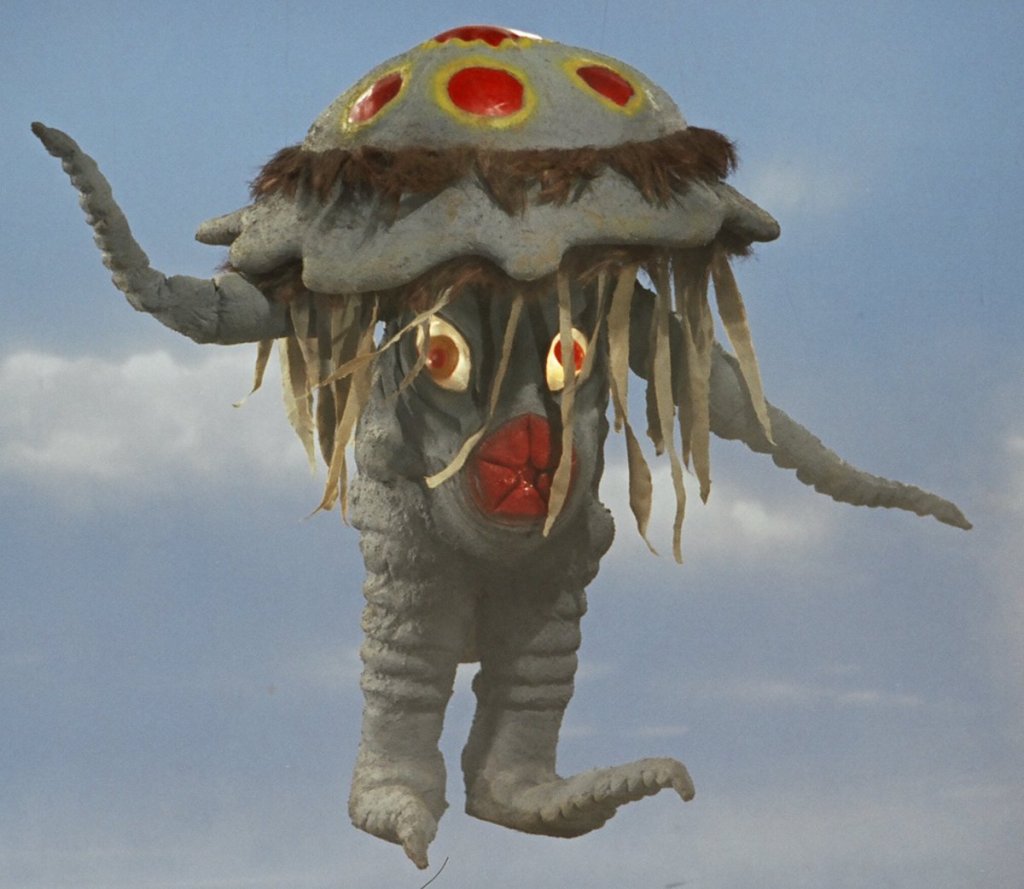
A bizarre monster from the sea, Varricane soon arrives on the surface and begins to generate typhoons.
Varricane is another weirdo, but that’s why I love him. The eyes on the chest are very reminiscent of Hedorah from Godzilla vs. Hedorah from earlier in the year, and they form a really unpleasant face when combined with that awful sucker mouth of his. The top of the body, with it’s red dots, and fringes, helps in making a really fun character design, and the fact it spins incredibly quickly to generate typhoons only helps in making the monster stand out from the crowd.
Varricane was designed by Yonetani again, although some reports would mistakenly attribute Ken Kumagi to the design. The truth of the matter is that Yonetani was assigned to design a typhoon monster, and Kumagi suggested basing it off of a jellyfish, leading to the misconception.
YADOKARIN
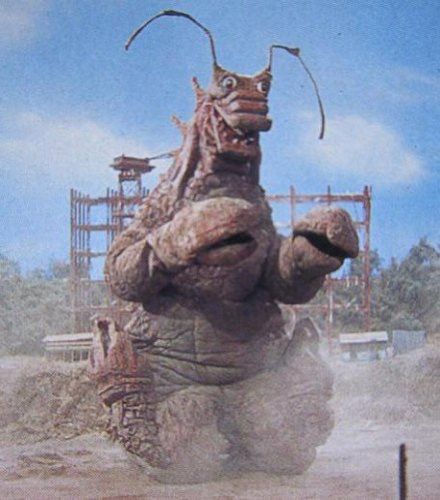
A monster that uses the downed MAT Space Station No. 5 as a shell, and Jiro, knowing his knack for discovering monsters, becomes trapped inside.
Yadokarin is another one of those monsters that I feel should have been spared at the end of the day. Yadokarin only attacked after MAT, and Jack forced him out of his “shell”, and even tried to retreat at the end of the fight.
The idea of a hermit crab kaiju is a good one, and the idea of making his shell a fallen space station is truly inspired. The face of Yadokarin, while maybe not intentionally so, looks like the same sort of sad expression quite a few “ugly cute” kaiju have, and I think that’s one of the main reasons I feel so bad for the poor guy. Yadokarin is another creature designed by Yonetani, who based his concept around the suit-actor moving on his knees. The actor who played Yadokarin, Takanobu Toya, would state that playing the monster would give him severe pain in his knees.
OXTER
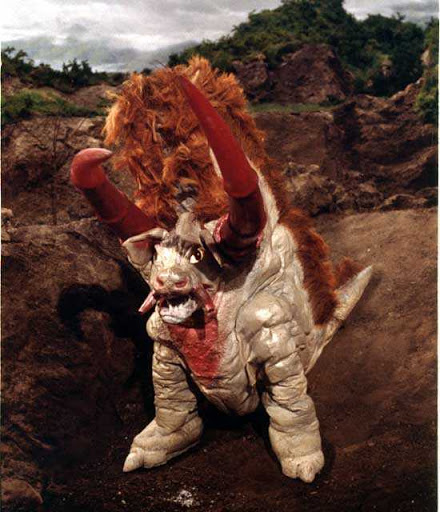
The lone survivor of a race of prehistoric oxen, Oxter guards the graveyard where the remains of his kind rests. Disturbed by scientists who stole the bones of the ancient oxen, Oxter emerges from the depths of the lake to kill them.
Alright, in terms of weird Ultraman monsters, Oxter is sorely ignored, which is a damn shame, since I think he’s easily as bizarre as Keronia. The idea of a prehistoric oxen isn’t super bizarre, but then you look at his body shape, and things get much stranger. Oxter is actually an aquatic monster, being more at home in the depths of the lake he calls home, rather than land like the animal we’d normally associate with an ox. In addition, the monster’s two main weapons are an acidic spray, and a long, prehensile tongue. Are we sure we can even lump Oxter in with other bovines? The Earth in Ultraman, at one point, had freshwater, acid spewing oxen which is just terrifying. What’s even stranger is that the bones we see in the episode are regular ol’ oxen bones, so then, what is Oxter? Is he one of the oxen, but mutated, or is he even some sort of supernatural guardian of the land?
Oxter was designed by Akihiko Iguchi, who designed the MAT aircraft in the show, and would go on to design many of the monsters seen in the show’s final 13 episodes, and would go on to work for other Tsuburaya Productions shows such as Mirrorman, Ultraman Ace, Jumborg Ace, Ultraman Taro, The Ultraman, the Heisei Ultraseven specials, and Ultraman Neos. He would also have the credit for designing Mechagodzilla for the fan-favorite film Godzilla vs. Mechagodzilla. Iguchi took inspiration from buffalo, and cow bones for Oxter’s design, and based the monster’s odd body shape around the fact the creature had little movement in the script. The design originally had four feet, but was changed to two in order to have the suit actor operate the red horns.
PLOOMA AND ZELAN
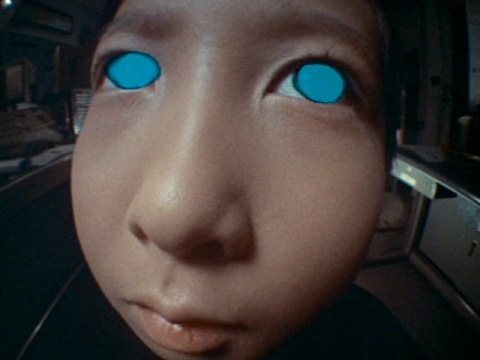
Disguising himself as the deaf friend of Cap. Ibuki’s daughter, Zelan infiltrates MAT HQ, and issues a telepathic threat to Goh: That Ultraman Jack, and MAT will die by the hands of his monster, Plooma. However, there’s more to this plan than at first glance, and the alien’s true goal is to gain control of the Ultra Bracelet to kill Jack.
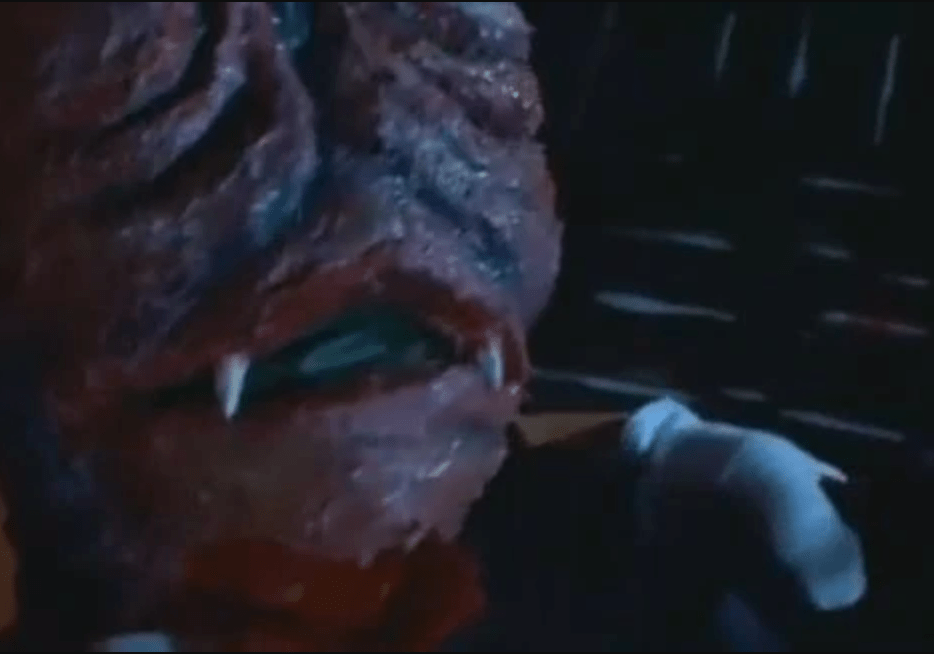
Zelan’s plan to bait Jack into a trap, and then take control of the hero’s most powerful weapon is among the most clever alien invader plots of the whole series, and it’s a tad surprising that the plan hasn’t been reused in other shows. We only briefly see Zelan’s true form after his death, but it’s a pretty solid alien design, with the inhuman folds in place of the eyes, and tiny little vampire fangs make him seem really grotesque.
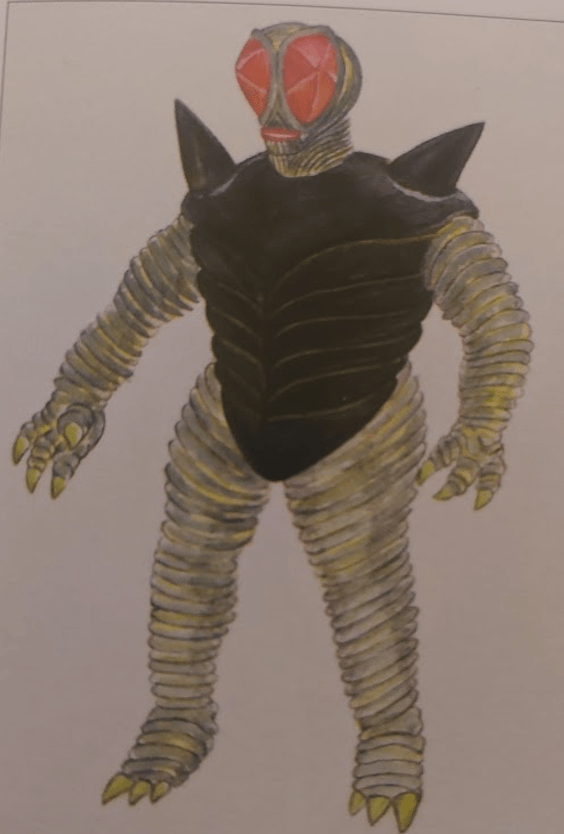
Yonetani’s main inspiration for the design were pickled plums, based on the suggestion from the episode’s director, Tadashi Manafune that the alien in question needed to look as grotesque as possible. The original design for Zelan also gave the alien similar features to Plooma, though these were dropped fairly early on. One interesting thing to note, before we look at Plooma, is that it took us 31 episodes to get to a bonafide alien invader in Return, a definite contrast to the more alien-heavy Ultraseven for sure.
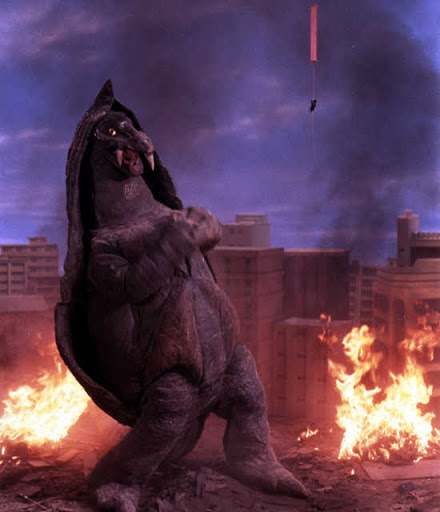
Plooma, the main monster seen in the episode, is a creature that I can’t help but love, and I think it comes down to just how nice the design is. It’s one of those monster designs that is simplistic, but is still memorable. There’s few really cool features the monster has that I really like, specifically the three fangs, and shell on his back. Yonetani based the monster off of giant armadillos, and I think he did a good job on creating a monster that doesn’t feel too plain.
Plooma would sadly never appear again in any future shows, but Zelan would join the ranks of the Cicada Men as one of the main stock aliens seen throughout the latter Heisei era shows.
KING MAIMAI
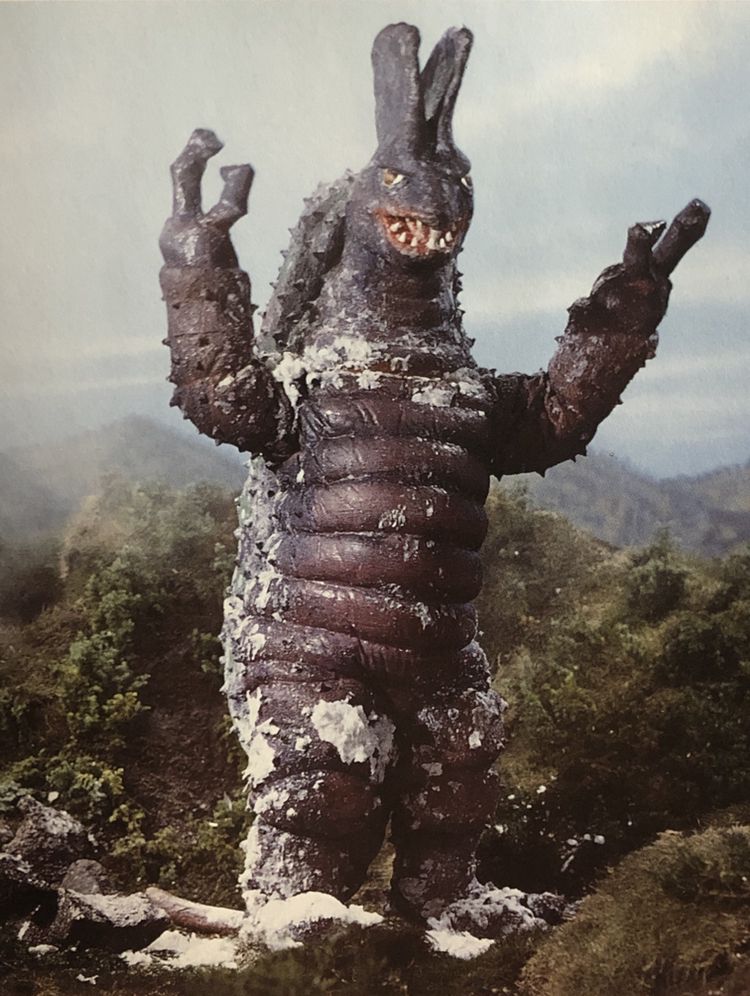
The source of a series of earthquakes in Ryujindake, MAT goes undercover to investigate in order to not frighten the locals.
The first form of King Maimai we see is a pretty well-rounded looking monster, being the last creation by Noriyoshi Ikeya for the series. Ikeya designed the monster as a favor for his friend, Jun Oki, who directed this episode. Ikeya drew upon the life cycles of a butterfly for the monster, with the first stage being fittingly enough, based on a caterpillar. I really like the dark coloration, which contrasts well with the ice King Maimai breaks out of, and the more insectoid features, such as the bellows on the belly, and pincher hands help King Maimai stand out from the usual reptilian suspects. The crest on top of the head also brings to mind the corythosaurus as well as various caterpillar species.

The larva form also has the deadly ability to fire explosive farts at his enemies, which is probably the strangest monster power we’ve seen so far, but it does tie into the motif of the monster, as swallowtail caterpillars will emit a pungent odor to drive away predators.
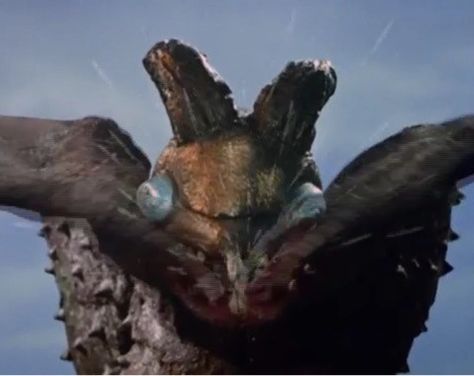
As the sun sets, King Maimai undergoes a metamorphosis into his adult form. He doesn’t go into a cocoon, but rather we get this cool effects shot of the larva’s skin being shed to reveal the adult underneath!
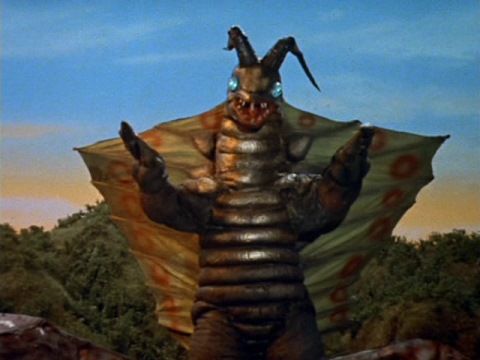
The adult King Maimai is probably my favorite Ikeya creation hands down, just look at that design! It’s just so gorgeous looking! There’s a lot to love about the final design, like how it looks much more insectoid compared to the larva form, the beautiful spotted wingspan, and how the colors compliment the sunset battle scene perfectly, like King Maimai is perfection. This would be Ikeya’s last monster in Return of Ultraman, and of all the monsters to end on, King Maimai is far from a bad choice, hell, it is a fantastic one.
MATES AND MURUCHI
This is probably going to be the heaviest of all the monsters we’ll ever talk about here on Kaiju Kompendium, and it’s one that I feel I may not do complete justice in going over the concept.
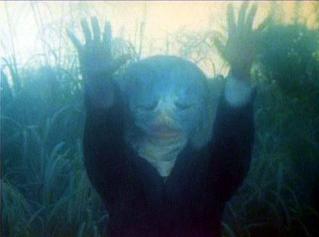
Arriving on Earth to study the Earth’s climate, Mates discovers a homeless orphan boy named Ryo during the monster Muruchi’s attack on a rainy night. Using his strength, Mates manages to seal Muruchi deep within the Earth, as well as hiding his starship underground.
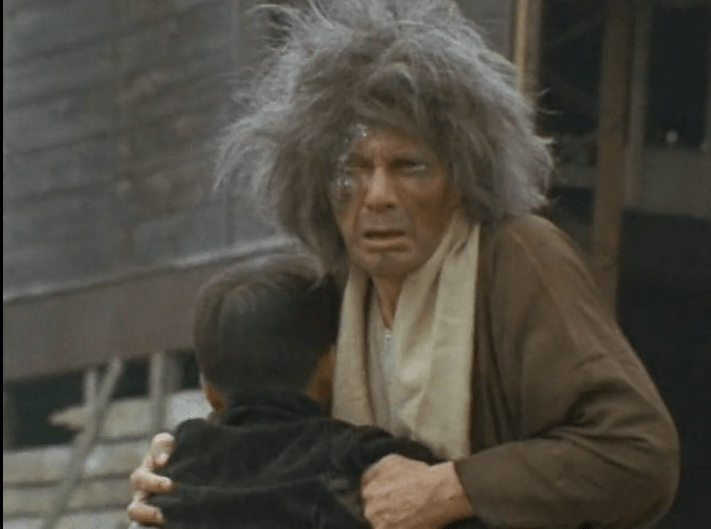
Disguising himself as human, the alien takes Ryo under his wing, and the two struggle through a life of poverty. Poor Ryo finds himself discriminated, as the local townspeople view him as an alien. In addition, the pollution on Earth is slowly killing Mates, so Ryo has begun the Herculean task of digging up the spacecraft for the two to make it off world, but time is running out, and the townsfolk prepare to confront the two…
The story of Mates is one of the most powerful episodes of all of Ultraman (it won second place in a fan poll of best Ultraman episodes, only losing out to Ultraseven‘s final two episodes). The writer of the story, Shozo Uehara, crafted an excellent tale of xenophobia, and prejudice that still feels as relevant today as it was back in 1971. Uehara’s main inspiration for the episode came from the 1923 Kanto Massacre, an event following the Great Kanto Earthquake where the fear of Korean immigrants looting the the Kanto region following the earthquake led to the police, military, and vigilantes roaming around and killing any non-Japanese they could find, with the final death toll reaching around 6000. The Kanto Massacre remains a sobering testament to how when fears and rumors mix with prejudice, it can lead to the deaths of innocents, a theme that is prevalent in this episode. In addition, being Okinawan himself, Uehara drew upon his own experience of prejudice growing up, and it adds an extra air of tragedy to the episode. It is a powerful story, and it’s one that I feel like has more than earned it’s reputation.
We only briefly see Mates’s true form briefly in this episode, but I think that’s fine. The mask was made from the Zelan mask, and I think they did a good job disguising it. I like how sort of sad, and kinda creepy it looks, as it fits the overall message of the story. Just because someone looks different than us, doesn’t mean they’re a monster.
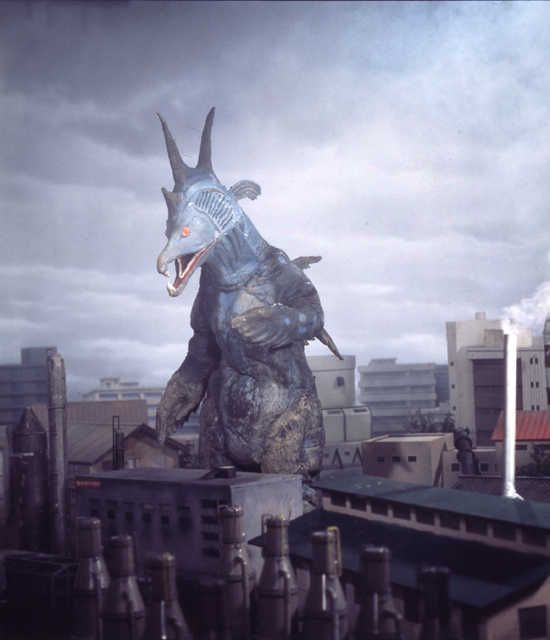
Muruchi himself, is a very nicely done monster, and arguably one of the most iconic kaiju seen in Return. Designed by Ken Kumagi, the monster was derived from salmon, and I think Kumagi did a fantastic job creating a simplistic, but very memorable monster. I love the fish-head, as well as the color scheme, which fits very well with the dreary, overcast weather we see in the episode, especially during the final, duel with Ultraman Jack during a thunderstorm. I’m also quite fond of the spikes along the monster’s head, which help create a striking profile.
Muruchi would go on and appear in Ultraman Ace, meeting a grisly demise at the hands of the chojuh Doragory in arguably one of the most graphic scenes in the entire series. The son of Mates himself would appear 35 years in Ultraman Mebius, but that’s something we’ll cover further down the line.
LEOGON
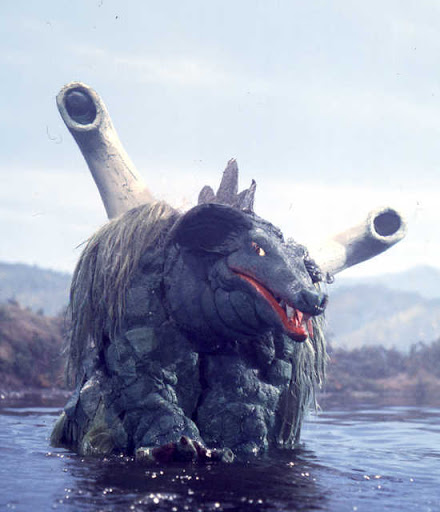
A plant-animal hybrid monster created by Goh’s childhood friend, Mizuno, Leogon soon escapes the laboratory that spawned it, and soon takes up residence in Lake Ashi. An emotional climax follows as Goh, and Mizuno go to confront the now giant Leogon…
The story of animal-plant hybrid kaiju living in Lake Ashi should ring a bell to anyone who knows their Godzilla movies fairly well, as the plot in question is basically a first draft of Godzilla vs. Biollante. This is no coincidence, as the writer for this episode, 16-year old Shichiro Kobayashi, would later submit a similar story concept for Toho’s story contest for their next Godzilla film. Kobayashi was a massive tokusatsu fan, and contributed not only to Return of Ultraman, but also Mirrorman as well and had sent in 13 different monster designs and story concepts to Tsuburaya Productions. It’s incredibly surreal to realize one of the most unique of all the Godzilla films is an adaptation of an Ultraman episode, sort of feels like we’ve come full circle from the connections in the early shows.
The original design of Leogon by Kobayashi had the monster resembling a mixture between Bemular and a pitcher plant, a unique idea, and it’s a shame I have been unable to find the art for it. The final design is another Yonetani creation, and one I find quite well done. While Leogon isn’t as intricate as Biollante, I think it’s a successful hybrid monster, and the shaggy moss shoulders with the vine-shooting pitcher plant cannons feel like appropriate weapons, and the mammalian face gives me the vibe that this thing is simultaneously sympathetic, but also a creature that is unnatural, and even loathsome. Yonetani designed the monster as a quadruped, despite being aware of the difficulties of shooting such a monster in a water set, as he knew that the episode’s director, Kazuo Sagawa, would find a way to utilize the monster well enough, despite these complications. The pitcher-plant cannons were based around the idea of them being reminiscent of periscopes, fitting for the monster’s watery new home, and the mammalian face, and tufts of moss were inspired by the manes of lions, which in turn, helped inspire the creature’s name.
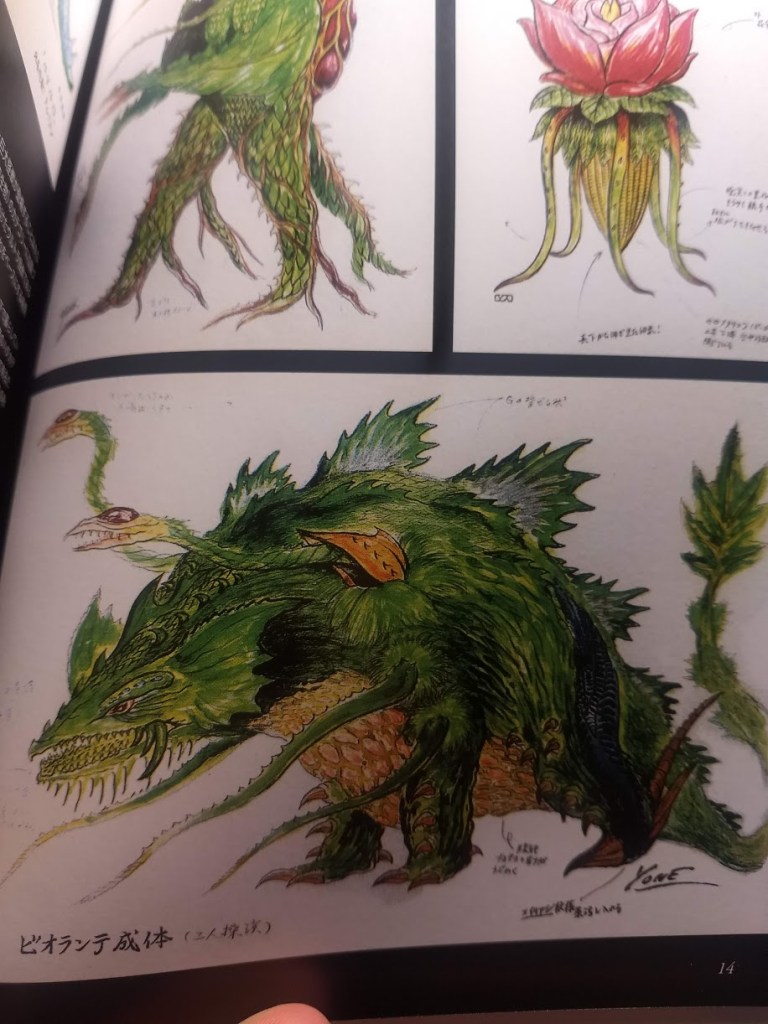
For one last Godzilla vs. Biollante connection, Yonetani would contribute designs for the title monster, with one of the concepts feeling like a sort of redux of Leogon’s design.
PRIZ-MA
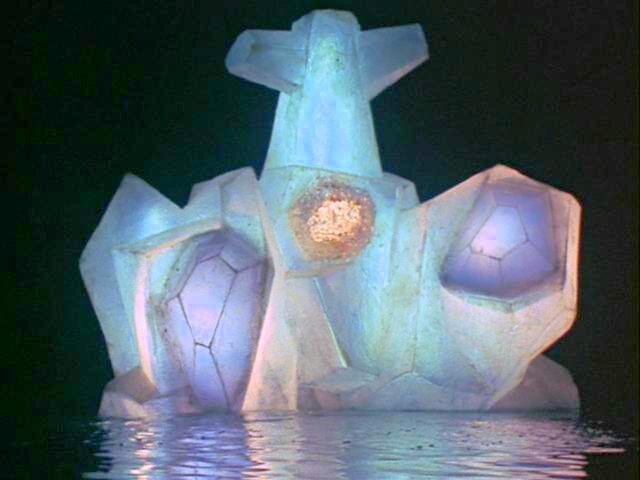
A crystalline monster from Antarctica, the eerie Priz-Ma travels to Japan, absorbing light as its food source, and causing all who come into contact with it to crystalize. Ultraman Jack stands little chance against the crystalline monster, as his Specium Ray is easily absorbed by the monster, and even the hero himself soon becomes consumed by Priz-Ma, and becomes trapped inside the surreal, kaleidoscope interior.
Priz-Ma, is easily up there as one of the strangest, and most terrifying of all Ultra kaiju. While a giant crystal doesn’t seem the scariest at first glance, Priz-Ma’s surreal behavior edges the monster into pure nightmare fuel. Able to travel around by turning itself into a fog, Priz-Ma always creates an aurora borealis at this time of year, localized entirely in Japan wherever it appears. Adding to the already frightening nature of the monster, Priz-Ma’s only vocalizations are of a strange, echoing cry. Just what is this thing?
Priz-Ma’s episode was written by famed actor Shin Kishida, who played Ken Sakata on the show. Kishida at the time was a member of a sci-fi fan club, and was a big devotee to the works of H.P. Lovecraft especially. Kishida drew from the classic Lovecraft story The Color Out of Space, as well as The Mountains of Madness, and J.G. Ballard’s The Crystal World to craft a story that honestly wouldn’t feel too out of place amongst it’s inspirations.
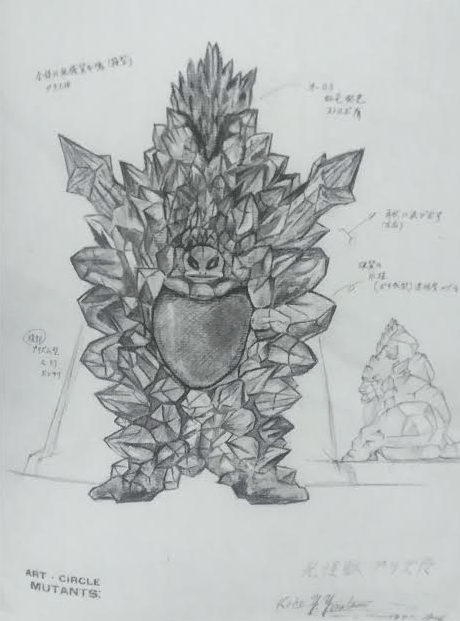
The design of Priz-Ma was done by Iguchi, and I think he did a great job creating a simple, but terrifyingly effective monster. Yonetani originally had a more orthodox design for Priz-Ma as seen above, and while it’s a decent monster design, I don’t imagine it’d bring the same level of menace that the final version does. This scrapped design for Priz-Ma would be repurposed as the design of the monster Coldon from Mirrorman, but would ultimately go unused for him as well.
DRACULAS
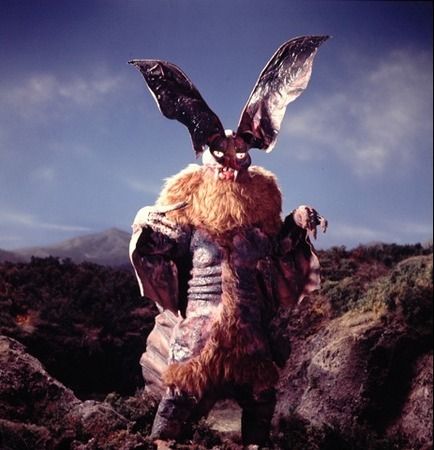
A vampiric alien from the planet Carmilla, Draculas arrives on Earth, and under the guise of a vampire woman, begins to kill off women one-by-one.
Draculas is a bit of a step down from our past monsters, being sort of a harbinger for the sort of storylines that the show will be switching gears to soon enough. But I don’t think Draculas is too bad in terms of design. It’s one of those monsters that toes the line between really goofy, and really spooky, and I like those big ears, and that ugly little face. It’s something you wouldn’t want to bump into at night.
Draculas’s plan of killing off all Earth women is a strange one, especially since the monster plans to do it woman by woman, which like honestly, is a woefully stupid plan with no way to really succeed at all. The dude wasn’t around when they handed out the brains.
Draculas of course, is named after the character of Count Dracula, who I shouldn’t even have to explain. His home planet of Carmilla, has its name taken from the title character of the novella Carmilla by Jospeh Sheridan Le Fanu, one of the earliest pieces of vampire fiction. Fitting to vampire references and tropes in the episode, Jack kills Draculas by transforming the Ultra Bracelet into a spear with a cross on top, and stakes the alien in the heart. While Draculas would never return from the grave like any other famous vampires, the alien’s spaceship would be reused as the headquarters of Antigone from Tsuburaya’s 1973 tokusatsu show Jumborg Ace.
NACKLE AND BLACK KING
Before I get to these two, I need to say this: MAJOR SPOILER WARNING FOR RETURN OF ULTRAMAN. IF YOU DO NOT WISH TO BE SPOILED, SKIP THIS ENTRY UNTIL YOU WATCH THE FULL EPISODE.
Now, with that out of the way, onto the episode itself;
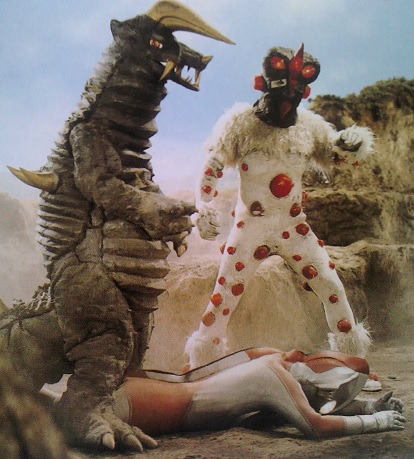
Nackle is yet another alien invader who seeks to conquer Earth. To go about this, Nackle plans to defeat Ultraman Jack in combat, as well as crushing the Ultra’s spirit. After reviving stock footage of Bemstar and Seagorath to analyze Jack’s powers, Nackle kills off Goh’s girlfriend, Aki Sakata, and his best friend, Ken Sakata. Tag-teaming with his monster, Black King, Nackle easily defeats Jack, and takes the crucified Ultra back to Planet Nackle to be tortured and executed. To make matters even worse, Nackle steals the powerful Satan Z explosive, and then takes control of MAT to ensure they won’t foil his plans…
The story of Ultraman Dies At Sunset! as well as the followup episode When the Ultra Star Shines are clearly a take off from the two-part storyline in Ultraseven, The Seven Assassination Plan, but with the extra emotional twist in regards to killing off Ken and Aki Sakata. What basically happened was that the actress who played Aki, Rumi Sakakibara had gotten a role in the TV drama Anxious Bride, and due to scheduling conflicts, the writers behind Return thought it would be best to have them be cut from the show. I’m not 100% sure why it was decided to kill them off, but it adds a really emotional core to the two-parter, and helps establish Nackle as one of the cruelest villains in all of Ultra.
Nackle’s design here was another one by Iguchi, and I think he did a fantastic job creating an alien design that in my opinion, is just as iconic as characters like Baltan, Guts and Metron to name a few. The white body covered in red spots should normally be a lot sillier, but it works in creating a memorable alien foe. I’m also quite fond of Nackle’s face too, as unlike many other aliens, we’re not entirely sure what’s what on his head, and the inability to make out facial features helps sell the menace of the character.

Nackle’s human form was played by Masahiko Naruse (The Robot Commander of Planet 4, as well as Prote’s human form in Ultraseven), and much like his roles in Seven, Naruse really lays it on thick in terms of just evil smugness here. It’s honestly one of the best villain performances in the franchise, and he was such a good choice to play Nackle since man, he makes it really easy to hate him. Nackle’s suit actor was Takanobu Toya, who preformed as other monsters on the show, and his acting as Nackle has the character come across as a powerful bully. The arm-swinging he has Nackle do when he joins the battle is a great moment that shows how bad this is going to go for Jack.
Nackle’s monster, Black King, is another one of those kaiju that has easily become one of my favorites, and it’s just due to him being such a juggernaut, even compared to many of the other powerful foes found in Return. He shrugs off the Ultra Bracelet like it’s nothing! This guy is business! Black King was designed by Ken Kumagi, and he’s another monster that I think it’s a home run in terms of monster design. He’s a simplistic dinosaur, sure, but the black skin, and golden horns help make a striking, iconic creature (Kumagi reportedly gave him the horn on top of his head as visual shorthand to show how strong Black King is) and paired with a great story, he easily becomes iconic. I honestly wish he was the final opponent for Jack just due to how dangerous he comes across here with Nackle, that it makes the actual final opponents not look so good in comparison.
There’s a consistent rumor going around that Black King is the “brother” of Red King, or a Red King modified by Nackle, and I’ve tried to research such a connection, but have found no real concrete Ultraman publication that ties the two together. All I can really gather from this is that this is nothing more than a very persistent fan theory.
Nackle and Black King would rightfully go on to become two of the most iconic monsters from this entry, and would make numerous appearances in the last part of the Heisei era. Curiously enough though, despite Nackle returning in 2006, and Black King in 2009 himself, the two wouldn’t be paired up again until 2015’s Ultraman X.
 Easter's Kaiju Kompendium