While Ultraman: The Adventure Begins sadly failed at the box office and didn’t lead to an animated show for the United States, its failure only inspired Tsuburaya to push harder in making Ultraman international. In 1990, Tsuburaya would team up with the South Australian Film Corporation for the first ever Heisei era Ultraman show: Ultraman: Towards the Future. Towards the Future blended Japanese and Australian sensibilities, as well as environmental messages to craft a truly unique entry in the franchise’s canon, and a show that I feel has made its influence felt on the succeeding entries. And fitting for such a unique show, we have a gaggle of some very fascinating monsters.
GUDIS

The show’s big baddie (at least for the first half), Gudis is unique as far as alien invaders go as he’s a sentient space virus with the ability to infect and mutate other living things into monsters. Gudis makes landfall on Mars and menaces astronauts Stanley Haggard and Jack Shindo before battling Ultraman Great. Great is able to stop Gudis, but Haggard and the spacecraft are destroyed, and to make matters worse, Gudis’s cells travel to Earth, intent on assimilating all life. Great merges with Jack Shindo and the two begin their battle against Gudis.
The concept of a sentient space virus is a really unique, and feels like an expansion of the the Yapool fragments idea from Ultraman Ace, but with a cool b-movie sort of twist to it. It also ramps up some of the paranoia that Jack’s teammates at UMA (this season’s Science Patrol equivalent) feel towards him, as Gudis can be literally anywhere and the fact that he’s sentient means just washing your hands isn’t going to stop him. It’s also mentioned by Great that the Ultras have battled Gudis for countless ages, so you know this guy is genuine threat in the eyes of the Ultras. His design is fantastic as well, albeit he doesn’t look like he’d quite fit alongside the usual lineup of Ultra kaiju and would feel more at home in a b-movie from around the time. But that’s what I like about him, Gudis feels like a fresh new step for monster designs, and his exposed brain, insect-like mouth, bug eyes, tentacles and long, slimy, slug-like body makes him feel truly loathsome and sickening.

Gudis originated from a concept called “New Ultraman”, a proposed 1989 Japanese TV show that was a sequel to the original show and meant to kickstart Ultramania in Japan again. One concept for the show featured a shapeshifting monster, who would battle Ultraman in different forms in each episode. That concept was carried over to Gudis and his abilities once New Ultraman mutated into Towards the Future. The original Gudis design concept, seen above, had a much more nightmarish face. I quite like this design, but I don’t find it as good as the one we got in the end. This iteration of the character was around when the show was planning on using puppets to portray Ultraman Great and his foes and if you look closely in the first episode, there’s still a couple shots of the original Gudis still there in it. Since the second incarnation of Gudis was designed first, the one we see in episode 1 was designed to intentionally look weaker than the one that appears midseason. The setting for the Mars battlefield was influenced by the space battles seen in Mamoru Uchiyama’s The Ultraman manga series, and also makes me wonder if Gudis himself is a nod towards the Martians from H.G. Wells’s War of the Worlds who have a similar appearance to our virus friend.
BOGUN

Bogun here is our first mutation created by Gudis, the result of his cells transforming an amphibian into a monster. Bogun’s another great monster in my book. Bogun feels like a take off from the Twin Tail school of monster design with the head at the bottom of the body and the whip at the top, but there’s quite a few differences that help Bogun stand out, like the second head, and the curved posture. Bogun really feels like the end result of some bizarre evolutionary path. I also like how they decided to make both heads look different from each other, a decision that I think really helps the design look striking.
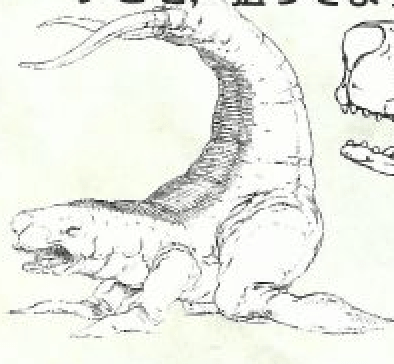
Bogun, or “Evil Monster” as he was called in development, was based off of seals, and originally the character had four legs and was more in-line with Twin Tail. It’s not a bad design of course, but it lacks a certain oomph the final version has.

As you can see on this concept art, the head at the bottom lacks the trunk the final version has, and I’m glad they added it, as it makes Bogun feels much more bizarre (and in addition too, is reminiscent of elephant seals, so it feels in-line with the motif already).
GIGASAURUS
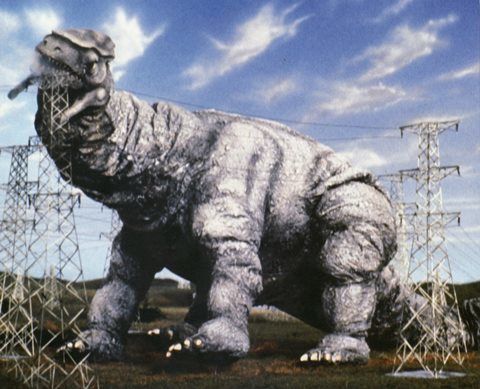
A dinosaur frozen in an iceberg, Gigasaurus begins to revive after the Gudis cells heat up the Earth’s atmosphere. Emerging from his hibernation, Gigasaurus grows to a massive size and is armed with an icy breath attack and begins to rampage after being angered by the Australian heat. A human agent of Gudis begins to lure the Gigasaurus to an oil refinery to cause some damage.
Gigasaurus is a pretty standard, but solid dinosaur kaiju. He’s not as good as say, Kingsaurus III, but he’s not a bad reflection of how sauropods were viewed at the time and he also avoids the “on-hands-and-knees” problem that many quadruped kaiju tend to have, which helps make Gigasaurus very convincing. I also like the idea of giving the dinosaur an ice-theme, which is something you usually don’t see with more reptilian monsters.

The original Gigasaurus concept art gave the monster a more armored, ridged body. It wouldn’t look too out of place among previous kaiju, and it sort of carries the ice theme, but honestly, I do think making Gigasaurus a more plain monster helps the monster feel more unique oddly enough, than if he had more things added to his design to make him more monstrous.
GERUKADON
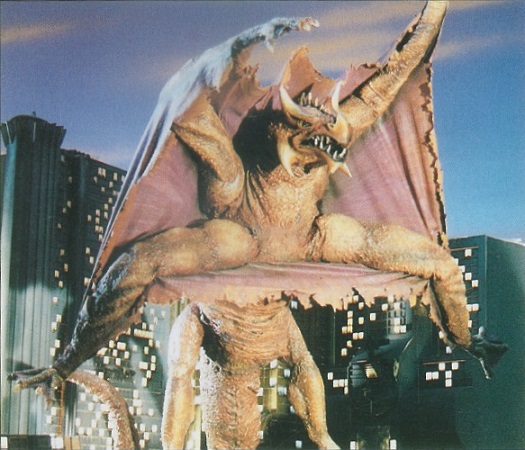
Originally Gus, the pet lizard of a young boy named Jimmy, Gudis fuses the poor reptile with the fossil of the Gerukadon that’s been unearthed at Acme Towers. Jimmy soon gets a green crystal that connects him to the monster, allowing Jimmy to summon Gerukadon when he’s conscious, and drawing him deeper under the influence of Gudis, who creates a clone of Jimmy to control the two hapless friends. However, Jimmy is able to break himself and Gerukadon from the control of Gudis, and the two fly off into the night sky.
The Gerukadon story is quite the odd one, but it’s a neat, surreal story that feels like a New Age update to something like the Hydra episode of Ultraman. It is albeit, a tad confusing, especially with the Jimmy clone that’s running around too, but hey, I can give them some points for trying.

One fun thing I’d like to point out is how Gerukadon’s monster form is foreshadowed as a drawing in Jimmy’s room. A really cool little way to build up to the monster, and it ties in well with the dream theme the episode has.
The Gerukadon design is a really cool one in my book, and I love how he’s got such a weird body going on there with all those limbs and the gliding membrane that make Gerukadon look like a frilled lizard from hell.
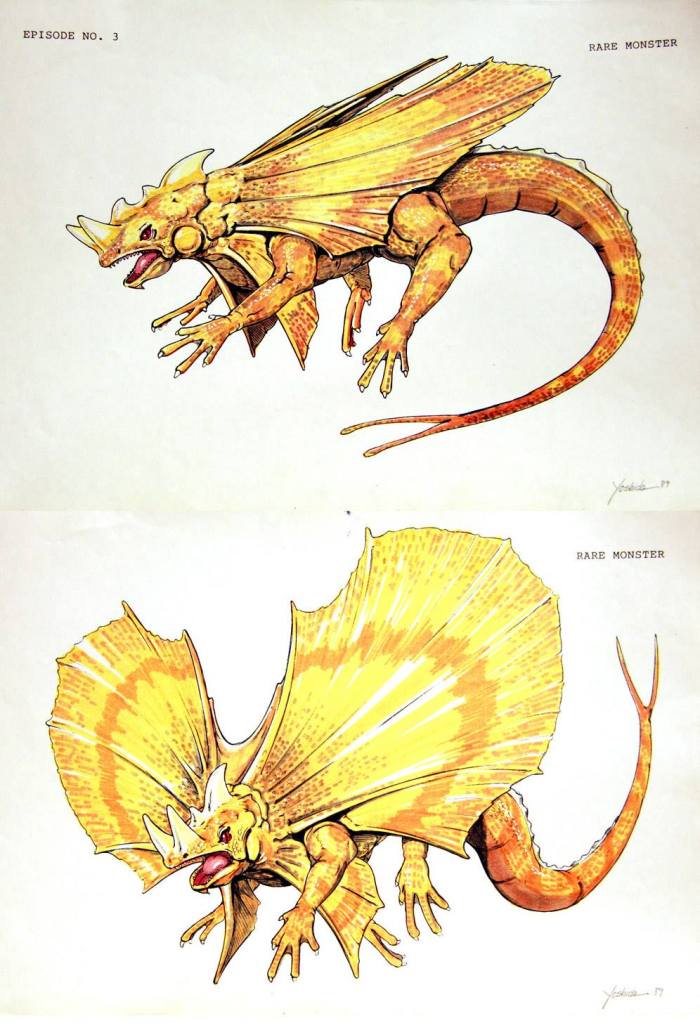
The original design for Gerukadon isn’t bad, but it feels too much like a regular frilled lizard and lacks that punchy weirdness that the final one has. Interestingly, the monster was intended to be based off of the extinct prehistoric Moa at first.

Interestingly enough, Minoru Yoshida, one of the monster designers for the show, also did several designs for the monster designs for the unmade Toho film Mothra vs. Bagan in the late 80’s, and while I haven’t found any source that directly confirms it, I wonder if the staff based the final Gerukadon off of this Bagan concept. It’s not too out of the question, especially since there is a kaiju from this show that they did that with…
DEGANJA
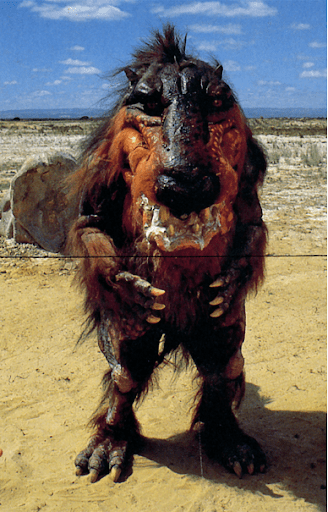
Originally an Aboriginal wind spirit, Deganja is corrupted by the Gudis cells and materializes after a shrine to the creature is destroyed by hunters. Deganja soon begins to rampage through the Outback as a titanic dust devil. Great is able to free the monster from Gudis’s control, allowing it to disappear into dust and bring back the rainy season.
Deganja doesn’t look as nice as some of his fellow Towards the Future monsters, I appreciate the show giving us a mammal monster, something that rarely seems to pop up with kaiju. And as mammal kaiju go, Deganja ain’t too bad. He looks scruffy and feral enough that I could easily see this guy being some actual form of Australian wildlife. Also, the fact he’s a corrupted wind spirit as opposed to just a run of the mill mutant, and also fleshes out the world of the show a bit, particularly with the implication Deganja met an Ultraman long ago in Australia’s past.
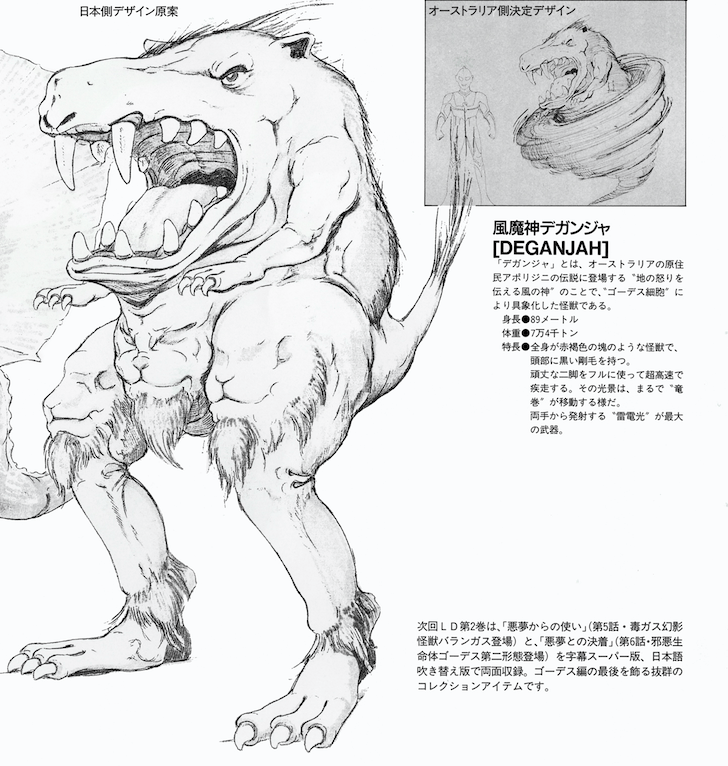
Deganja was based on Australia’s native Tasmanian Devil, and the fact he travels via twister, while never officially confirmed, is totally a nod to Taz, the famous Looney Tunes character. The initial design as seen above, is quite odd and the original intention of the design was for Deganja to be a a collection of animals killed along the highway, sadly fitting due to the real life Tasmanian Devils are often killed by motorists.
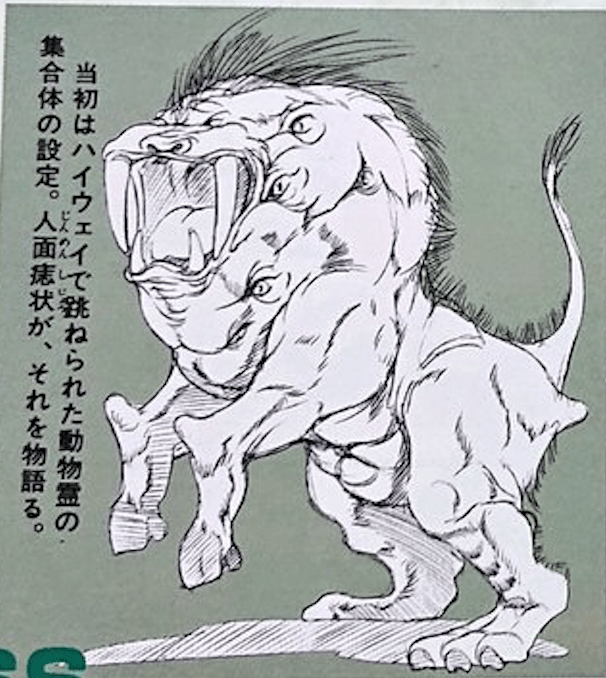
Another possible design for Deganja gave the creature a strange, hybridized body. I’m really fond of the mismatched limbs and the head covered in eyes, although I could see how this version would be tricky to pull off in live action.
BARRANGAS

An insidious Gudis mutation armed with a toxic red gas, Barrangas emerges from a city street, but as UMA goes to stop the monster, the creature is stopped by a mysterious man wielding a strange gun…
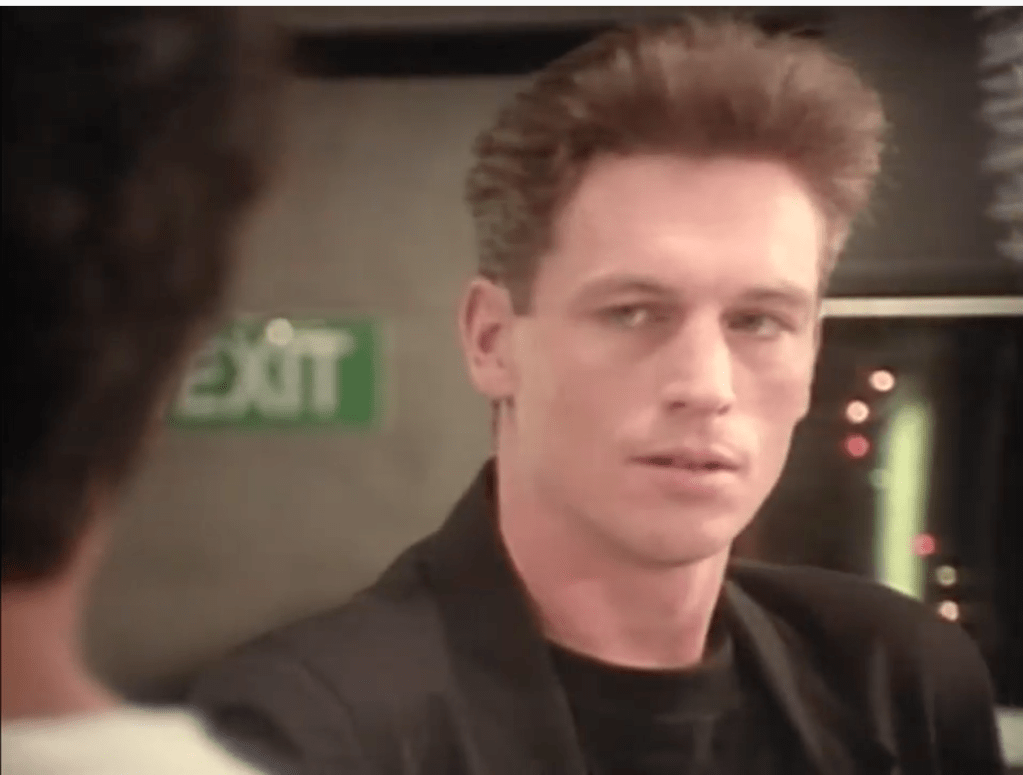
It’s revealed that this man was Stanley Haggard, who is mysteriously alive after his supposed death on Mars. It comes as no surprise as Stanley has been assimilated by the Gudis and is connected to Barrangas. Stanley causes a whole lot of trouble such as stealing Jack’s Delta Plasma Pendant that he uses to transform as well as kidnapping UMA member Jean and nearly destroying the base. Intending to infect Jean with the Gudis cells, he faces Jack and Ultraman as Barrangas.
The plot in question is quite thrilling, and there’s some great moments between Jack and Stanley at UMA HQ where both know something is up with the other, but neither can say it in front of the UMA staff. In addition, a supposedly dead hero returning to battle a creature with a mysterious new weapon, only to turn out to be in cahoots with the villains is very reminiscent of episode 10 of Ultraman Ace, Duel! Ace vs. Hideki Goh.

Barrangas himself is a pretty good quadruped design, maybe not as good as Gigasaurus from earlier, but I do like how sort of artificial he feels with his blockier body and the square vents on him. Originally named Baraki, Barrangas’s name is derived from the demon Balam, a powerful king of hell, and combined with the word gas (basically devil’s gas)
SUPER GUDIS

Absorbing the geothermal energy from a volcano, Gudis II proves be be a more powerful, and dangerous adversary compared to the one Great fought on Mars. It also becomes a race against the clock as the military wants to nuke the creature, but UMA realizes that will only empower the creature further. When Jack and Ultraman Great go to battle the powered-up Gudis, their attacks bounce right off of the invader and they soon find themselves absorbed, leading to a philosophical battle of the wills between the two. Gudis states his wish to consume all life in the universe, but Jack questions this mission, as once Gudis has taken away all life in the universe, what purpose does it have? In classic Captain Kirk fashion, this confuses just enough for Great to break free and destroy the monster from the inside for good.
While I prefer Gudis’s first incarnation, Super Gudis is a good upgrade to the character, and you really get the vibe that he’s a truly empowered version of the one we saw earlier. I love his angry little face he’s got, and you can totally feel the hate emanating from it.
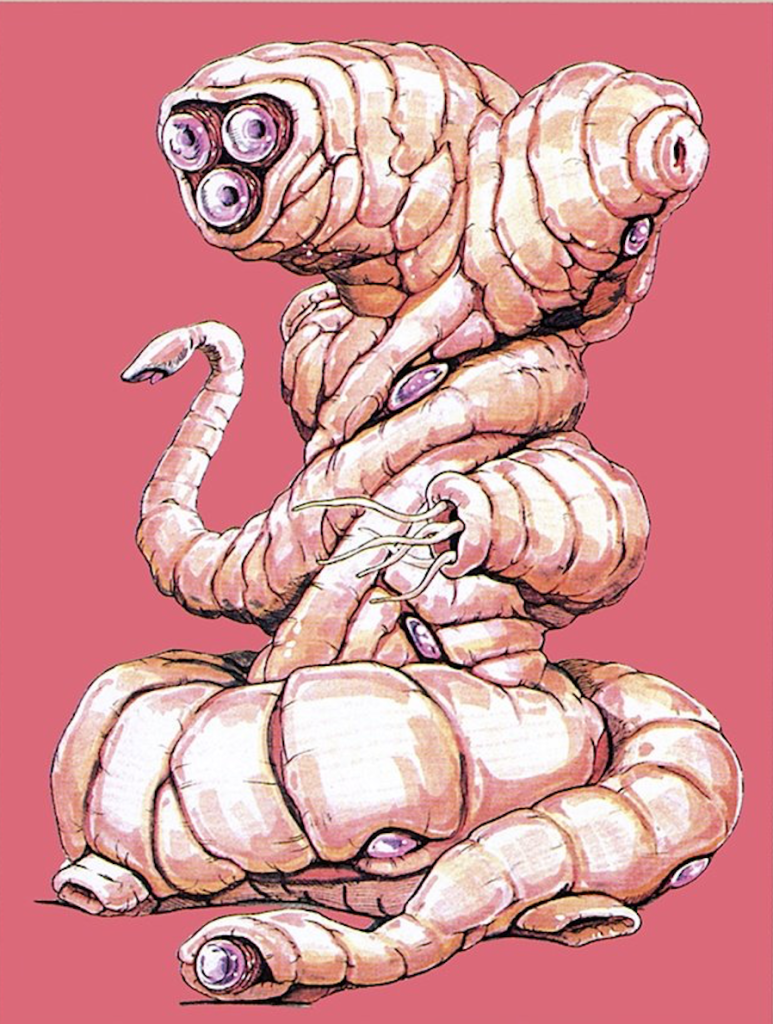
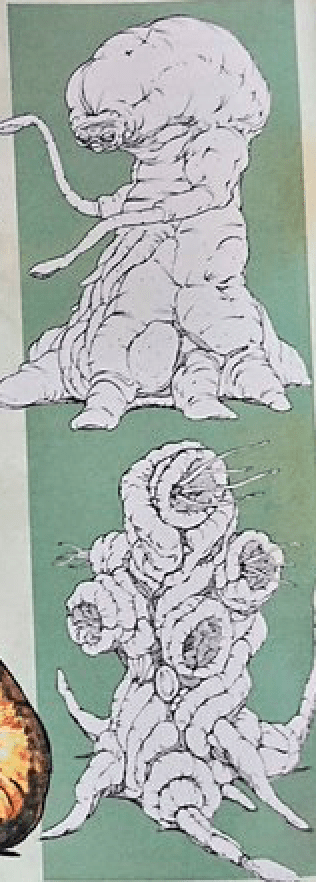
Super Gudis was originally designed around the concept of being a faceless, more alien beast. An interesting idea, but I think ultimately we got the better version in the end. Originally, Super Gudis was meant to be the end of the series, but Tsuburaya wanted the show to run for another 6 episodes, so while the show got to continue on for a bit longer, this is Gudis’s last stop sadly. Outside of appearing in the Ultraman: Towards the Future tie-in comics, Gudis would never appear again in the series proper, a damn shame. But the character’s legacy does live on as more shows in the Heisei era would introduce various sentient space virus characters in shows like Ultraman Dyna and Ultraman Cosmos as recurring villains, so Gudis did leave a bit of an impact on the franchise, even if he’s been gone for 30 years.
GAZEBO
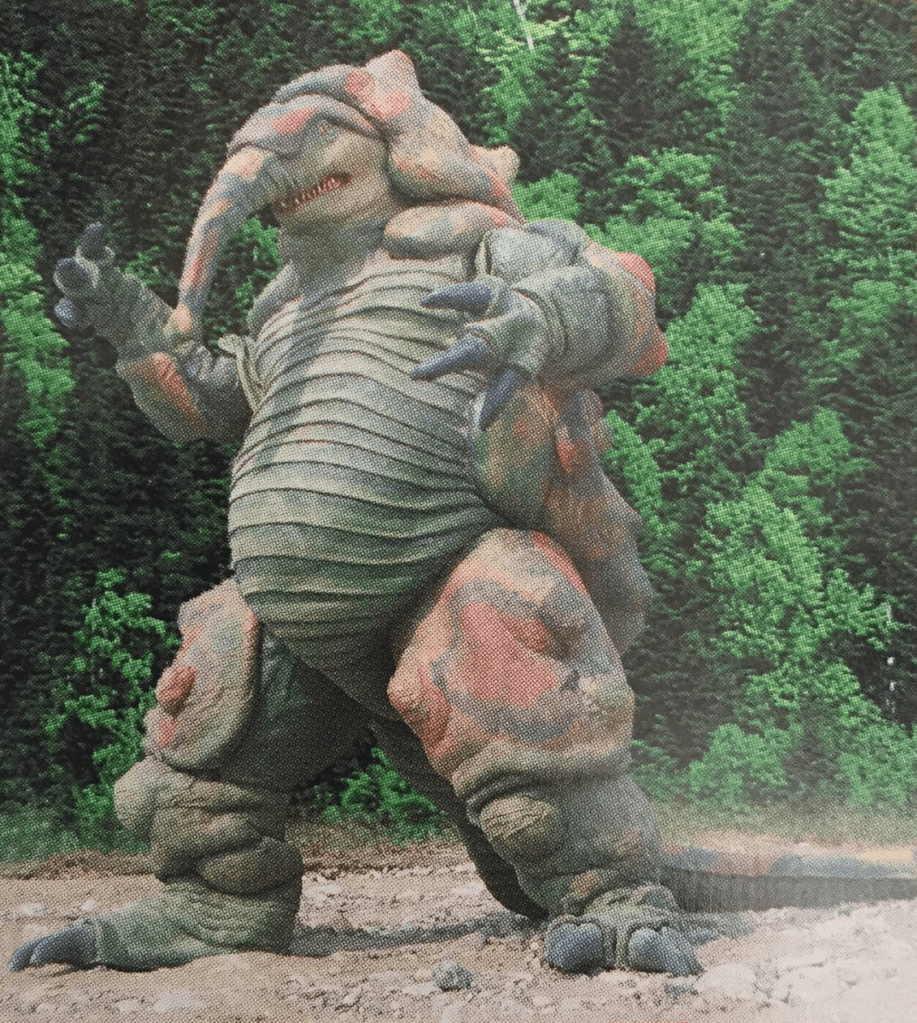
No, not a killer version of a popular outdoor structure, Gazebo is a forest dwelling monster who becomes disturbed by his habitat being intruded upon by humans who are building a new road. Rather than destroying him, Great seals him up inside of a cave, so he cannot be disturbed by human activity.
As the first monster seen in the second half of the show, Gazebo is pretty weak in my eyes. The show has moved on to focus more on the environmental storylines, and Gazebo is sadly handled awkwardly during the transition.
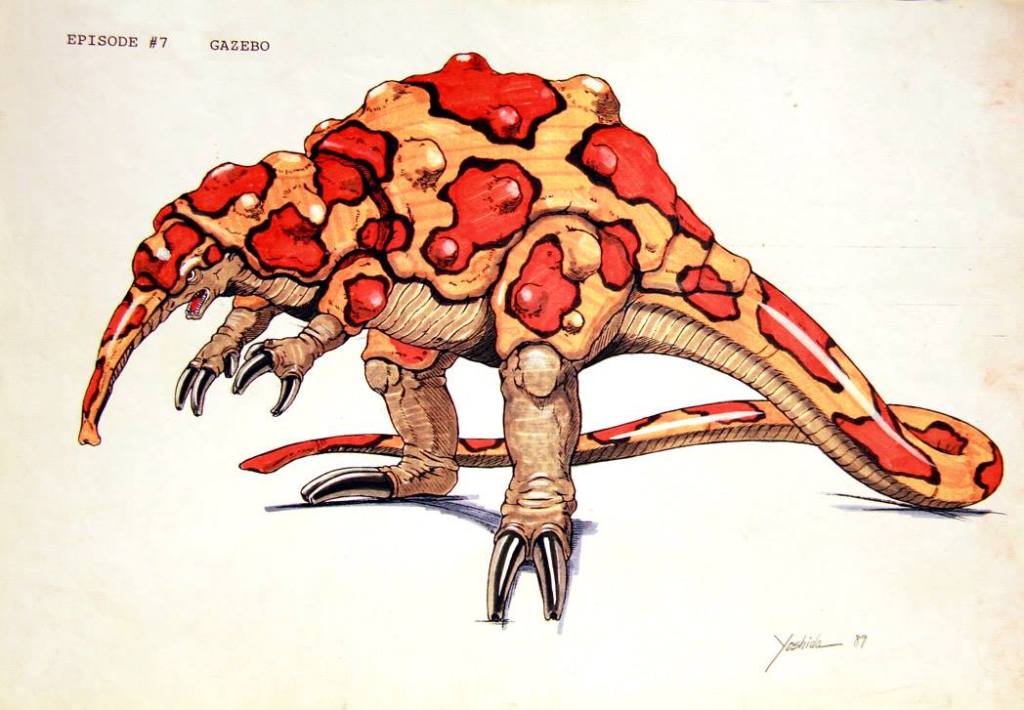
Gazebo’s design is serviceable, being based on weevils. Gazebo, as you can see on his concept art, is supposed to have a very colorful hide, something that is sadly obscured on the suit.
MAJABA

A pair of giant locusts mutated by an experimental pesticide, the two mutants soon begin roaming the countryside in their search for food. Worse yet, the female has begun laying eggs and the threat of an entire army of locusts conquering Australia becomes all too real.
I really love Majaba. Giant bug kaiju are usually winners in my eye, and Majaba might be my favorite bug monster in all of Ultra. The grasshopper motif was inspired due to how much damage locusts cause to crops in Australia, and I’m glad they went with that instead of doing another giant beetle or spider. I do wanna point out on how I love that they gave them three eyes and the male and female having asymmetrical claws. That being said, as dangerous as these two are, I do have to feel bad for the mama Majaba throwing herself on top of her eggs in a vain attempt to protect them. Poor giant bugs.
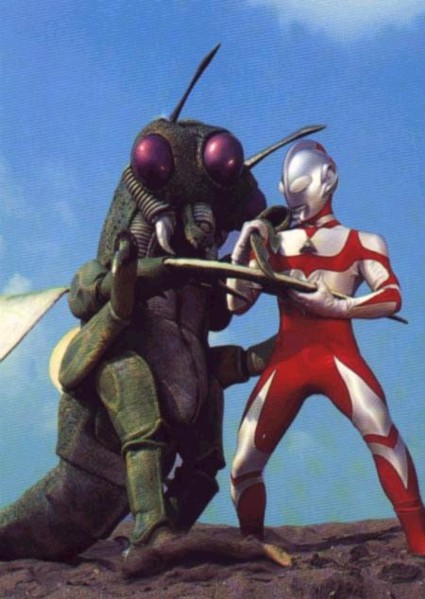
Majaba, like the other monsters from this show, would never appear past this show, the monster would become a staple of stage shows, even a good 25 years after appearing in Towards the Future. Not bad at all for a couple of big bugs.
BIOS
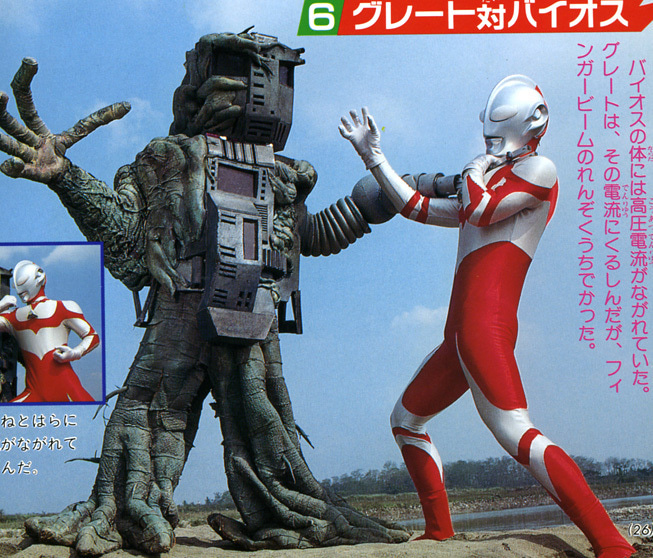
A plant from outer space, Bios comes into contact with a group of researchers at Southern University. Fusing with the group’s computer, Bios convinces the team’s leader, Dr. Krankstein to work together to make a new utopian world. And of course, a plant from outer space is telling the truth, right?

Turns out the Bios wishes to create the ideal environment on Earth…but for itself. Yeah, maybe working with this thing was a bad idea Krankstein.
We’ve seen a few plant-like invaders so far such as Keronia, but Bios takes us in a much weirder direction with the fact it’s combined with a computer, as well as the biosphere plot is so 90’s, I love it.
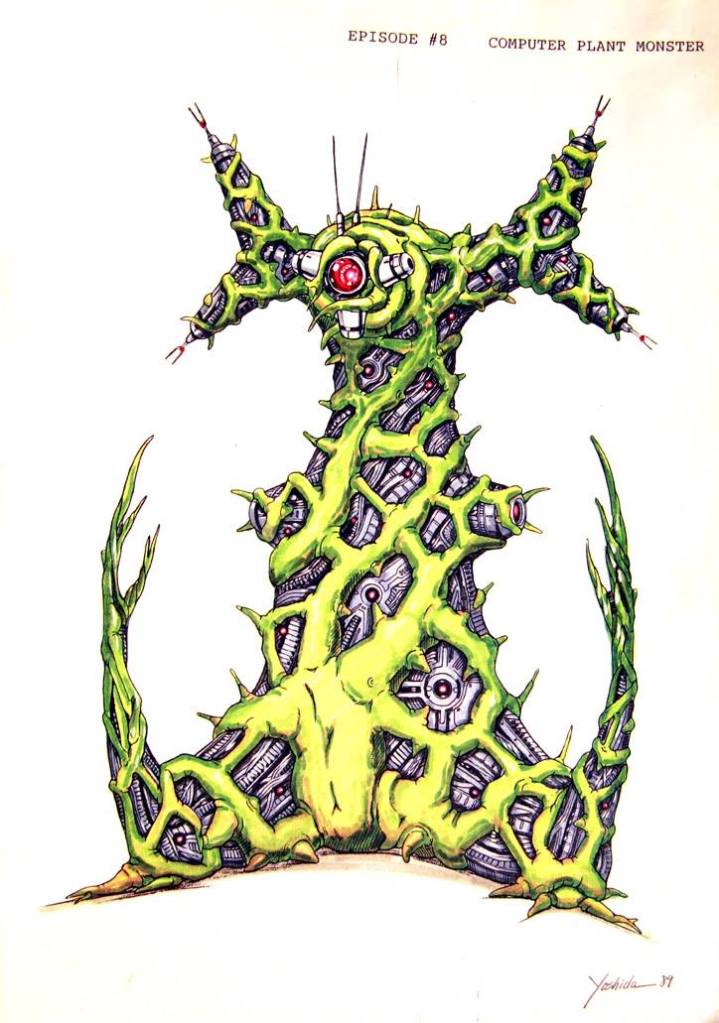
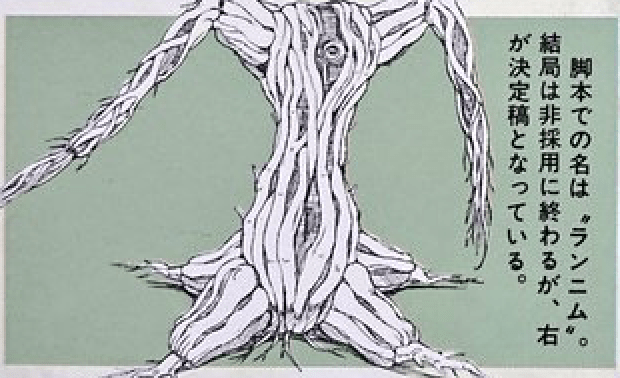
Bios was inspired by Biosphere 2, an Arizona research facility that was constructed between 1987 and 1991, so this was definitely a hot topic at the time. The first design, based on the visual of machinery being wrapped around a tree, is one I personally think is cooler than the final one we got, but I could see how it might not make for a very exciting foe for Ultraman Great to fight.
The second design by Yoshida feels like it could work a bit better as a suit, and I really love the lone mechanical eye peeking out from the tendril covered body.
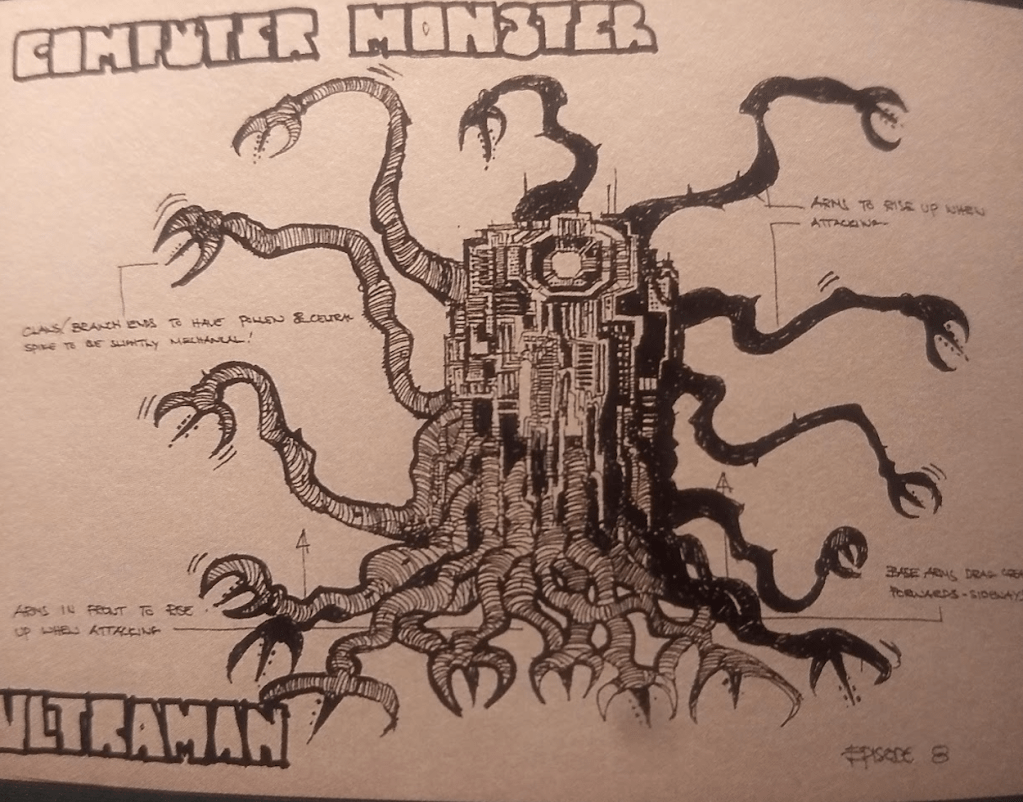
The third design looks a lot closer to the final monster, although it’s still not quite as humanoid as the final version, and I can imagine budget probably forced them to go with a more humanoid route. The monster’s original name in the script called it Runim and on the subject of names, merchandise of the character always referred to it as Plant Bios, more than likely a way for Bandai to keep a trademark on the toys much more easily.
RUGULO AND VERONICA

Episode 9, Tourists from the Stars, is easily one of the craziest episodes of the show, and perhaps of just Ultra in general. The story opens with a meteorite landing on Earth and transforming into a hamburger truck with a young woman inside. UMA scientist Charlie finds himself at the food truck after the relationship with his fiancee crumbles. Becoming smitten with the girl who runs the truck, Veronica, the two decide to go on a date later.
As you can tell, Veronica is not of this Earth, and she is a shapeshifting alien entity. She’s joined by her husband, Rugulo, who disguises himself as her hamburger truck. The two are intergalactic tourists who stopped by to visit Earth and see the world’s beauty.
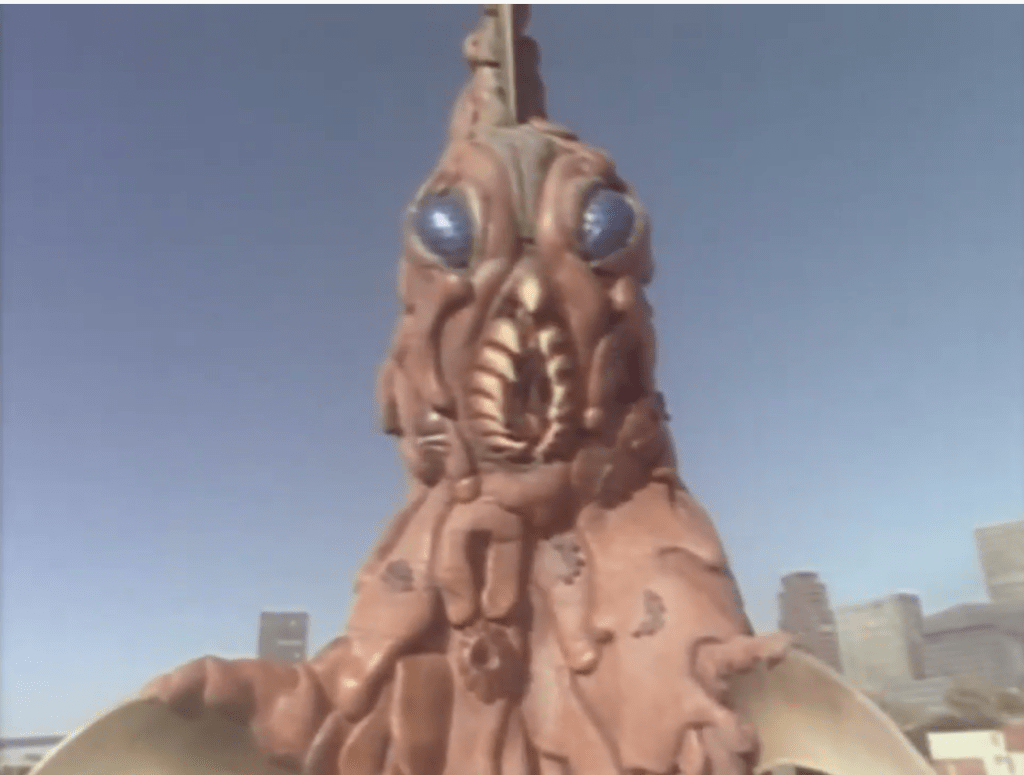
Unfortunately, Rugulo has a massive jealous streak and transforms himself into a gigantic slug-like monster. However, Ultraman Great is able to save the day, not by blowing Rugulo to hell and back, but by convincing Rugulo that his jealousy will only drive Veronica away. Rugulo takes Great’s advice to heart and the marriage is rekindled as the two go off to explore more of the Earth, even taking on a human appearance similar to Charlie’s.
The idea of space tourists who have marriage problems is a really fun and quirky type of story and is exactly the kind of off-beat story that an off-beat show like Towards the Future would explore. There’s an episode of this show where Ultraman saves the day by being a marriage counselor, I don’t think you can comprehend just how fun that is.
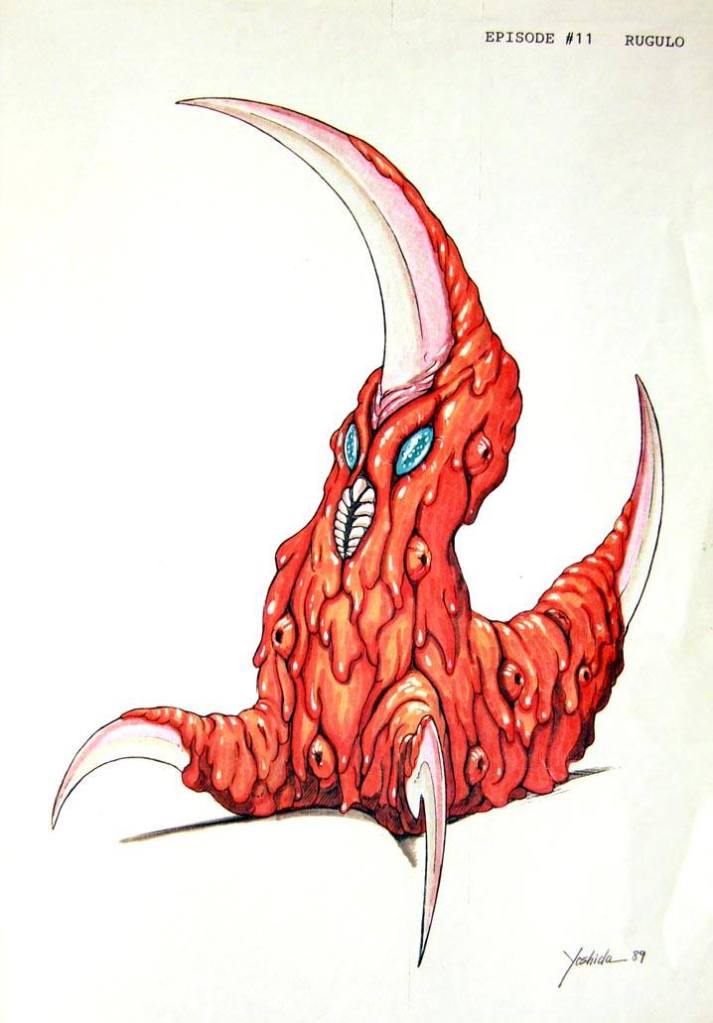
We never see the true forms of Veronica and Rugulo, so I always got the vibe that the monster form he takes is not what he really looks like. It’s not my favorite design from the show, but it’s still pretty neat, and there’s a lot to enjoy about it such as the slimy looking skin, the huge blade he’s got for his head and that bug-like mouth. It just feels like a great b-movie alien design.
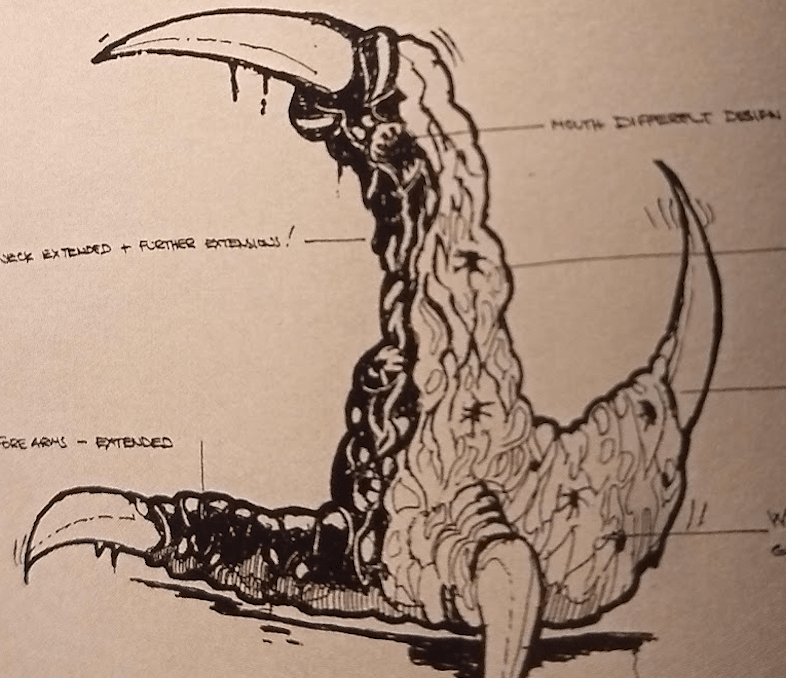
It doesn’t differ too much from the original design concept as well, albeit here the head is much smaller. It could’ve been an interesting concept, but I think the final version is better by a mile.
Rugulo and Veronica never returned past this episode…but had the show got it’s second season off of the ground, they would’ve returned to Earth after being chased back here by a much scarier alien race…the Baltans. God, I really wish this show got a second season.
UF-0
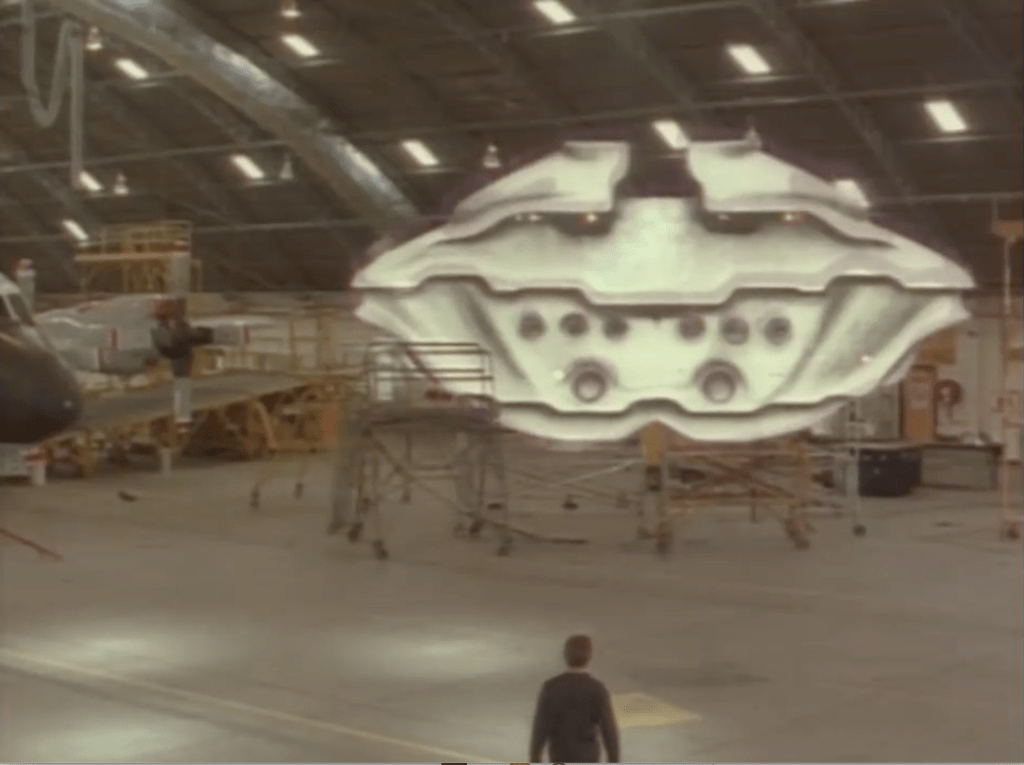
A mysterious UFO (if it’s name didn’t already clue you in) that has been hidden in the Air Force’s Hangar 47, the extraterrestrial craft has some mysterious traits such as being controlled by thought.

The craft’s existence becomes known to Norberg, the leader of an environmental terrorist cell who wheels and deals in brainwashing his followers. Norberg has designs on the UFO, planning to build a whole fleet of craft based on it and establish his group as the new masters of the world.

Norberg manages to steal the UFO and has the time of his life attacking UMA with it. But, the ship soon absorbs him and transforms into a flying monster. However, Great is able to free the craft of Norberg’s influence, allowing it to fly back off into space.
The story revolving around a downed UFO being stolen by a terrorist cell for their own needs is the kind of quirky, out-there story that Towards the Future really specializes in. While UF-0 is certainly a unique creature, especially since it’s a sentient, bio-mechanical craft (which raises a whole load of fun questions), the real monster here is Norberg who is able to be equally campy as well as dangerous and I think his power as a villain, especially what he represents, really helps elevate the story and make it a classic of this particular show.
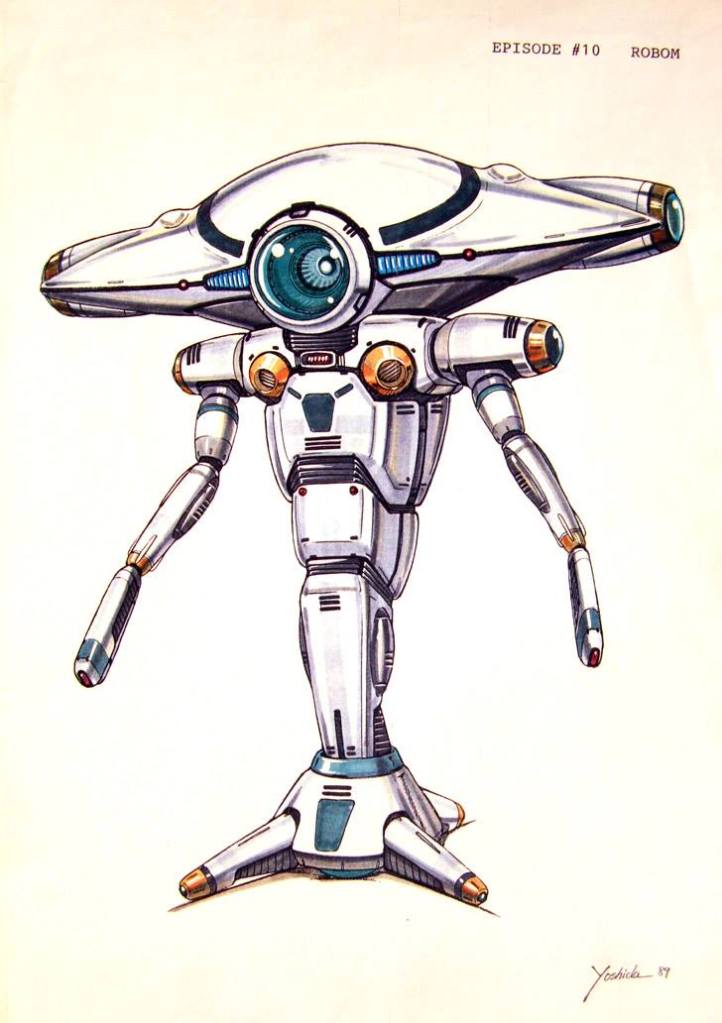
The original concept for UF-0 was called Robom during the development phase, and was intended to be a robotic entity. The concept above by Jo Yoshida is a very interesting design and that the organic element was added in during the episode’s production.

There was another concept for the character when it was still Robom where it would’ve been two UFOs joined together to form one big robot, clearly a concept borrowed from King Joe.
KODOLAR, KILAZEE AND THE ONE WHO SLEEPS BELOW
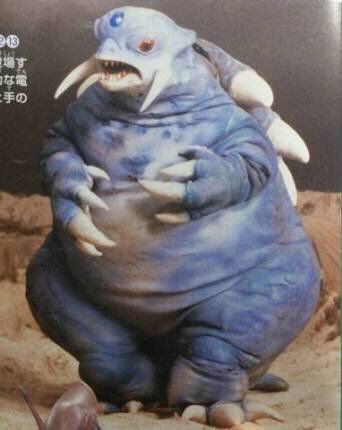
Shortly after UMA launches a satellite made to repair holes in the ozone layer, a mysterious red algae covers the ocean, killing all life it comes across. Jack and Jean discover that a large, turtle-like monster named Kodolar is the cause. Additionally, UMA discovers a strange, metal disc from the ocean, covered in mysterious inscriptions which read:
“One that was bound to the deep, One that was born in to the sky, One shall be called from its sleep, and the darkness shall come from the sky.”

As UMA Captain Arthur Grant studies the mysterious disc, another monster, Kilazee heads towards the Earth. Kodolar soon surfaces on the Australian shore and Ultraman Great goes to battle it, but the monster has the ability to reflect Great’s plasma based attacks and the giant of light is defeated.
In desperation, several ICBMs on the approaching Kilazee, but the monster shrugs it off completely, landing on Earth unopposed. Arthur Grant soon realizes that both of the monsters are being drawn here by another creature, one that UMA and Ultraman have no way of fighting: The Earth itself. The planet, angered by humanity’s abuse of it, called upon Kodolar and Kilazee to destroy human race. In a race against time, UMA and Great set off for one last stand against the two titans. UMA is able to defeat Kodolar by using the strange disc to ricochet Kodolar’s energy back and forth, finally destroying the beast, and Great is able to slay Kilazee just before his energy runs out, and he takes the monster into space after separating with Shindo. Thanks to Great and UMA, the human race has a second chance.
The finale to Towards the Future, while perhaps not as intense as the finales to Ultraman and Ultraseven, but despite it’s low budget, it’s a good apocalyptic thriller that is able to make use of it’s scope and budget to present us with a great final thesis to the environmental messages the show has been talking to us about: That humankind must be kind to the Earth or we will reap what we sow.
I’m a bit fan of these two guys (three?) and I think Kodolar and Kilazee are really underrated as final bosses go. They’re not as flashy as say, Zetton, but both carry a genuine sense of dread to them and there’s a nice contrast between the blue, blubbery, primeval Kodolar and the sleek, red, futuristic Kilazee. And the twist of the two monsters being called from the Earth really takes the up a notch. They’re not tools of invading aliens, they’re the immune system for when humanity wears out it’s welcome.

The original designs for the two monsters are pretty similar to the ones seen in the show, except Kodolar here seems to be a little more physically fit and Kilazee is a quadruped. Kodolar’s design was inspired by dolphins and killer whales, albeit I feel like the final suit looks more akin to a sea turtle.

Kilazee has a bit of a more interesting conception, being reworked from a design meant for the infamous unmade Godzilla kaiju Bagan. Without getting too off-topic, Bagan was intended to be in several Toho monster movies (12 or so different projects), but only managed to appear in two video games, the SNES Super Godzilla and Godzilla Movie Studio Tour for PC before heading back into limbo. The staff at Toho drew up countless designs for the monster and one of them was just lucky to actually make it onto screen (this wouldn’t be the last time a Bagan design became an Ultra kaiju, but that’s a story for another time). It also makes me wonder if Kilazee’s role as Earth’s defender is another thing taken from Bagan, as many of those projects featured the monster as nature’s vengeance personified. The reworked design by Yoshida was given a strange, almost synthetic look to it as the script originally described the monster as being mechanical.
Kilazee probably has the weirdest name-mixup of all the various kaiju in the franchise. Named for the ancient Korean kingdom of Silla, the monster’s name in the show is Shillagi, but in Japan and in the SNES video game adaptation it’s Kilazee, but on the promotional flyers for the American toyline by Dreamworks, he’s Chimeron! There’s a couple other kaiju from this show that have mixed up names, but definitely not on the level of old Kilazee here.
 Easter's Kaiju Kompendium