The story should be familiar to aficionados of foreign sci-fi TV: A show starting in the 1960’s about a friendly alien who comes to Earth to protect the planet from various invading extraterrestrial forces. The series lasted through multiple iterations, before finally being cancelled and after 16 years of various rough starts and failed foreign reboots, finally managed to return to the airwaves.
I’m of course, talking about Doctor Who, the BBC’s long running show about the heroic time traveler from Gallifrey that is a beloved piece of sci-fi programming the world over. However, after the show’s cancellation in 1989, and before it’s revival in 2005, there was a period of uncertainty for the fans regarding the show’s future. It wasn’t on the air, but there’d be things such as novels and audio dramas that kept the show alive for the hardcore fans. The Doctor Who fandom named this sixteen year long period as the show’s “Wilderness Years”; a fitting name for this odd period of limbo.
The Ultra Series experienced it’s own period like this similar to Doctor Who‘s, lasting from the end of Ultraman 80 up until the airing of Ultraman Tiga. I think referring to this period of Ultra history as it’s own Wilderness Years is incredibly fitting. While I’ve covered several projects that were created during the franchise’s long hiatus, here, I’m going to cover some of the creatures from the miscellaneous other projects that were created during this time.
DOKKUN
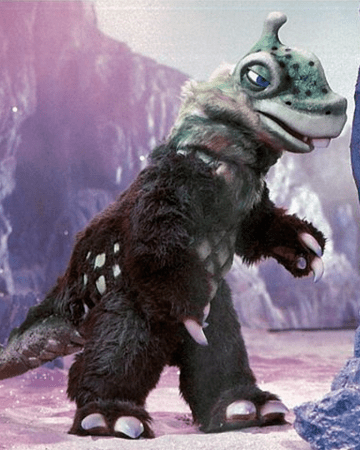
The 1984 film Ultraman Story is a bit of a headache continuity wise, being an alternative telling of Ultraman Taro’s origin story and playing fast and loose with the order of the Showa Ultraman shows (it implies that that Leo and 80 take place before the events of Taro). But I’m here to talk about kaiju, not Ultraman continuity! While Ultraman Story mainly utilizes stock footage from the previous shows for it’s battles, we do get some original monsters here.
The first of which is Dokkun, a creature native to the Land of Light that Taro attempted to fight during his childhood. Dokkun proved to be tougher than Taro anticipated and had to be rescued by his mother! I like Dokkun a lot. We don’t really get to see the natural fauna of M78, so whenever we’re granted a glimpse of what this world’s ecology is like, it’s always fascinating. Dokkun himself has a really cute design, and I could see this guy easily paling around with Booska.
I feel like it’s important to mention that Dokkun was played by Masao Fukazawa, better known as ‘Little Man Machan’, the same guy who played Minya, the Son of Godzilla himself!
GRAND KING
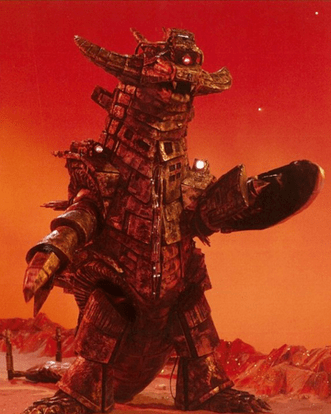
However, as fun as Dokkun is, the real star of Ultraman Story is the movie’s second original kaiju, Grand King, who serves as the final opponent for the Ultra Brothers. Taking the souls of various monsters destroyed by the Ultras, the evil Juda (see my Andro Melos article) combines them into one, colossal creature that is able to outfight and outmatch the Ultra Brothers. Only by combining their strength with Taro, are they able to overcome this mechanical monstrosity.
Grand King, despite not having too much of a major pedigree in comparison with some of the other Ultra kaiju, has become something of a fan favorite and it’s easy to see why. Grand King’s suit is truly massive, towering over the Ultra heroes, and the design is this cool robotic dinosaur with asymmetrical details that makes him feel more ferocious compared to characters like Mechagodzilla. I think it also helps that Grand King was also a major trailblazer for this rare niche of kaiju. We take for granted movie-exclusive kaiju that force the heroes to team up, but Grand King was the first of his kind, so it’s no wonder he left an impression.
Grand King’s design by Osamu Yamaguchi is definitely the man’s breakout monster design, and I feel like I notice some brand new detail with it every time I look at him. Grand King was originally conceptualized as being a hybrid monster like Tyrant, including features from Kingsaurus III and Silver Bloome, until Yamaguchi tweaked the design to make it a robot. Grand King’s still a chimeric monster (with horns taken from Gomora, tail from Twin Tail, claws from Sadora and armor on his left arm from Baltan), but manages to disguise his components much better than Tyrant could ever dream of. I was actually surprised when I discovered that Grand King was a hybrid monster, but it makes sense they’d go that route; after all, the idea of a monster born from the Ultras’ defeated enemies is a solid concept, so why not make another monster akin to Tyrant, but bigger and badder?
Despite Grand King only clocking in one appearance during the Showa era, he would become very popular with fans, more than likely due to the great numbers of merchandise featuring the character. Grand King would finally break into the mainline shows during the New Generation era during the 2010’s, but we’ll cover Grand King’s newer variants at a later time.
WADATSUJIN AND NAGIRA
The film Ultra Q: Legend of the Stars is a film that was unfairly buried by history. A co-production with Tsuburaya Entertainment, the movie was directed by Akio Jissoji and is in my opinion, perhaps the best Ultra film of them all, and one of my favorite pieces of media from the franchise. However, Japanese audiences didn’t feel the same way, as the film received lukewarm reception. Additionally, due SEGA (yes, that SEGA) being the film’s main sponsor over Bandai, it’s no wonder that Bandai, who now holds a majority share in Tsuburaya Productions, wants this forgotten. It’s a real shame, since it hasn’t been seen on home video since 2001, having been left in the dust (I did help contribute funds to get this film subtitled, so please check it out).
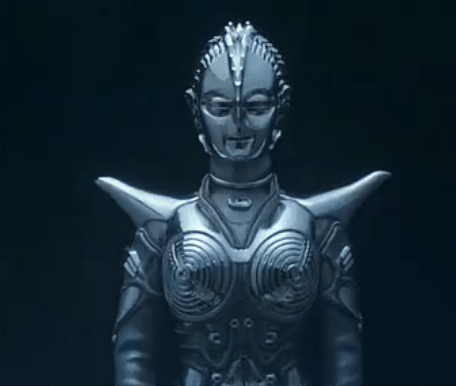
Moving onto Wadatsujin herself, Wadatsujin was an alien who arrived in Japan in ancient history, her kind inspiring numerous folktales such as Urashima Taro, the Swan Maiden and the Tale of the Taketori. Having been awakened by land developers, Wadatsujin begins murdering them and using her monster, Nagira, to halt their progress.
Wadatsujin herself is a great looking alien, feeling like the perfect melding of futuristic design and old Japanese stonework. While not intentional, I’ve always felt Noriyoshi Ikeya took inspiration for Wadatsujin from the evil robotic Maria from Fritz Lang’s Metropolis, one of my favorite sci-fi films. It’s just a design that looks incredibly unearthly and strange. The original plan for the film was to feature creatures from the original Ultra Q such as Garamon and Kanegon, but since Bandai owned the merchandizing rights to those monsters, the production crew had to create original characters to use for the film. Jissoji and screenwriter Mamoru Sasaki drew inspiration from their unmade Ultraman film treatment known as Ultraman: Monster Bible for the plot and creatures. In Monster Bible, the character that would become Wadatsujin was known as Kananga, but aside from the name change, the character in Monster Bible still took influence from ancient Japanese clay figurines.
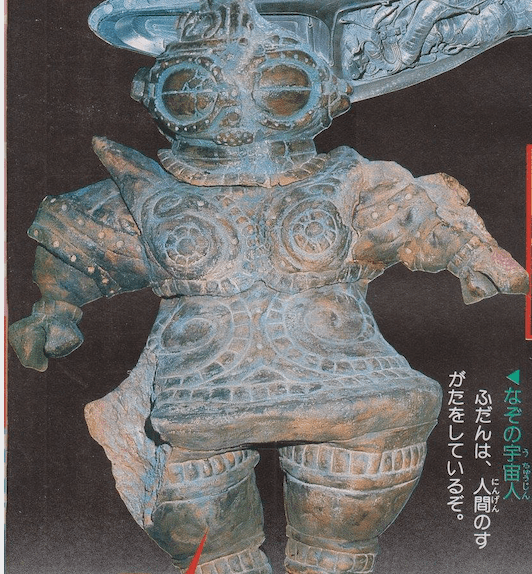
Wadatsujin does have her own form even based off of these ancient clay dolls! These were known as Dogu, which were created during the Jomon period of Japanese history. Due to the mystery surrounding the purpose of these artifacts, as well as their strange designs, many have speculated that these are depictions of ancient astronauts. Wadatsujin’s own design incorporates the features of the dogu, so it’s cool to see that in the story, she was the inspiration behind these mysterious clay idols. In the dogu costume is Little Man Machan again!
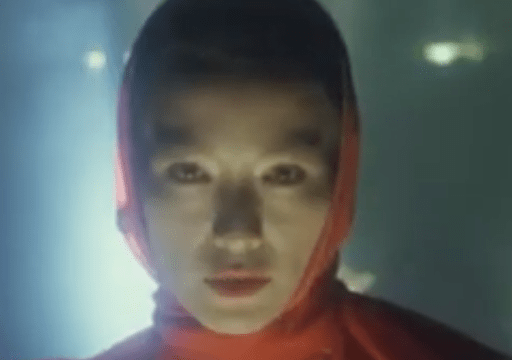
Wadatsujin’s human form is played by Mio Takaki, who does a great job in making the alien feel very mysterious and ancient. This wouldn’t be Takaki’s only role in the series, as she would go on to play Captain Iruma of Ultraman Tiga, the series’s first ever female captain!
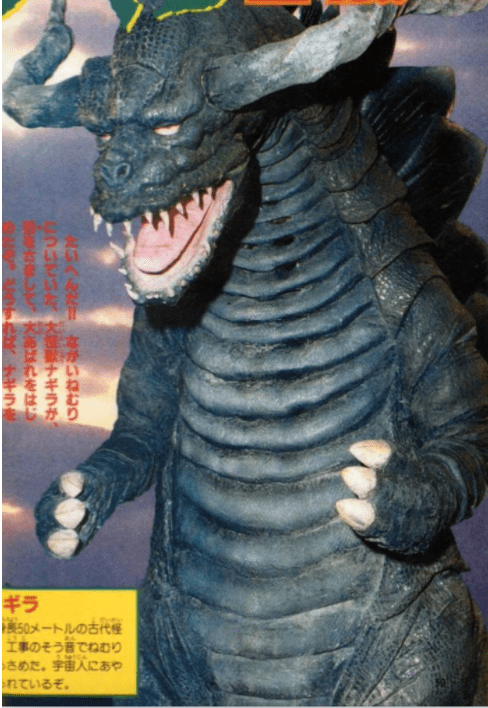
Her kaiju, Nagira, is a simplistic monster, but one I have a lot of love for. It’s not one of Ikeya’s crazier designs, but it’s just a simple, cool saurian kaiju, much like one of the monsters Ikeya would design for shows like Return of Ultraman or Fireman, and he looks really impressive during his nighttime attack scenes.

Nagira would undergo several design changes before Ikeya hit upon the one we see in the film proper. This first one isn’t too bad, though it feels perhaps a bit too comical for the thought-provoking story of the film.
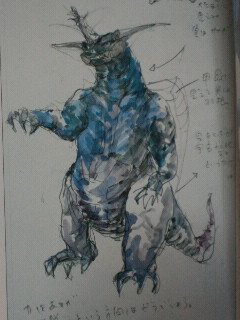
This second design isn’t too bad, you can see the beginning of Nagira’s horns in the final version, though the large middle horn gets dropped as we go on.
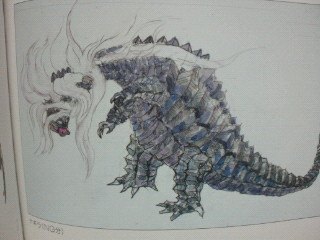
I like this Nagira design quite a bit, though with it’s long hair, and Red King-esque body, it looks more like Ikeya’s design for Daigoro’s Mother from Daigoro vs. Goliath.
THE MEN WHO MADE ULTRAMAN KAIJU
The Men Who Made Ultraman was a 1989 film based around the production of the original 1966 Ultraman from the perspective of Akio Jissoji himself. Like any movie based on a true story, there’s a lot of elements that are fictional for the sake of having a narrative, which brings us to a scene in the film where Seabozu is conceptualized. In the scene, Jissoji is looking for a kaiju to use for a story revolving around a more sympathetic monster, and Tohl Narita shows off some monster concepts he’s been working on, one of which is Seabozu. Now, the fun part is we do get to see some original monsters for this scene!
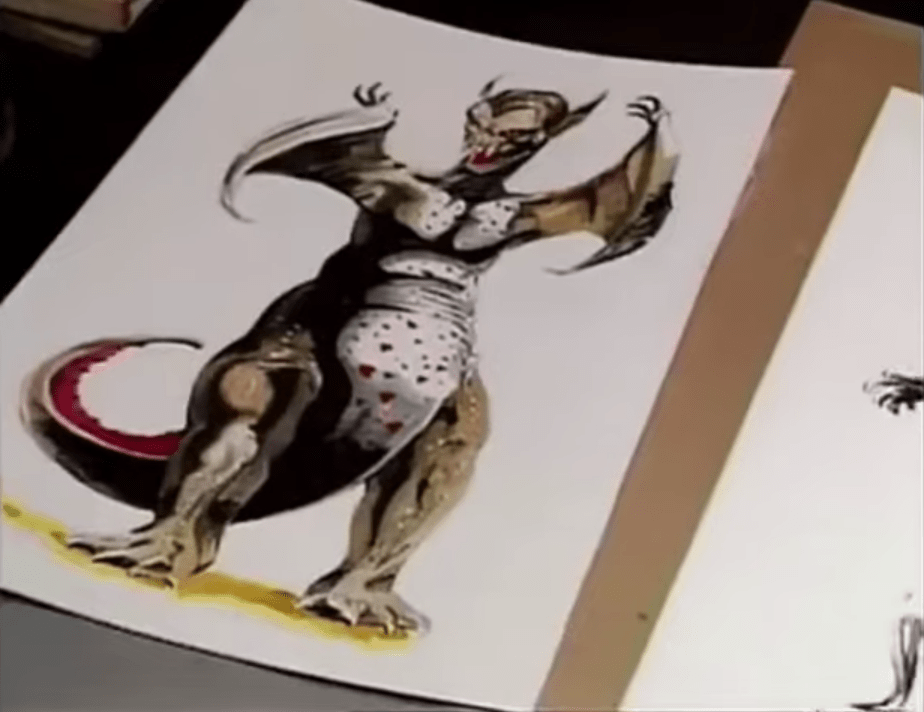
Our first monster is a winged monster, reminiscent of a freakier version of Peguila. While doesn’t quite feel in line with the sensibilities of Tohl Narita, but I could easily see him in a show. Really dig his skull-like face!
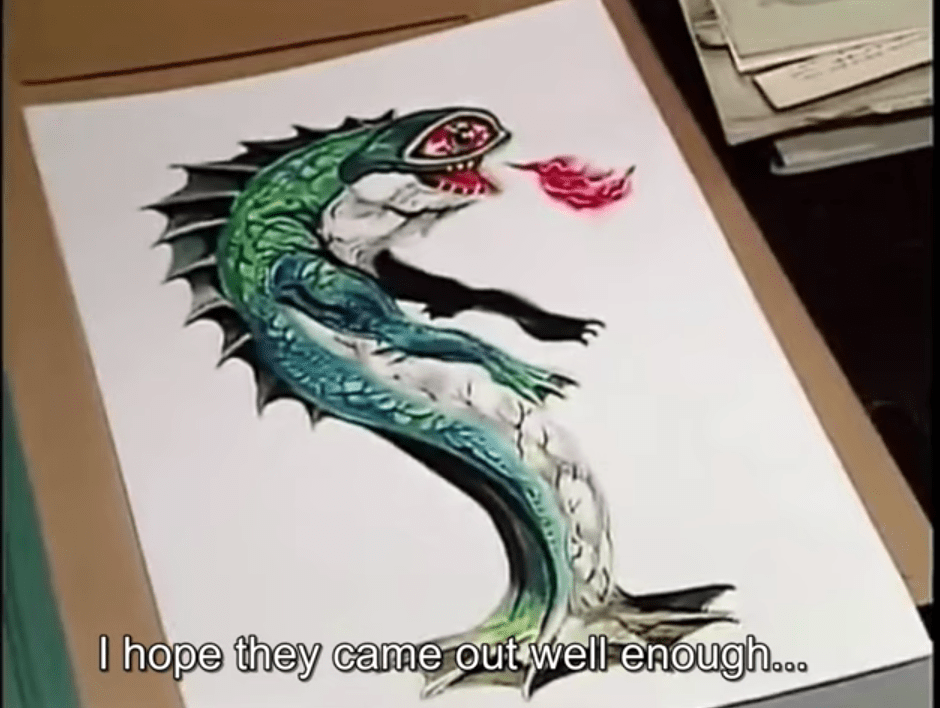
We get one more kaiju in this scene, and while he definitely sticks out like a sore thumb compared to the other ’66 kaiju, I really like this guy! He’s got an interesting posture, and that bloodshot eye really gives him a demented vibe.
BOSGON
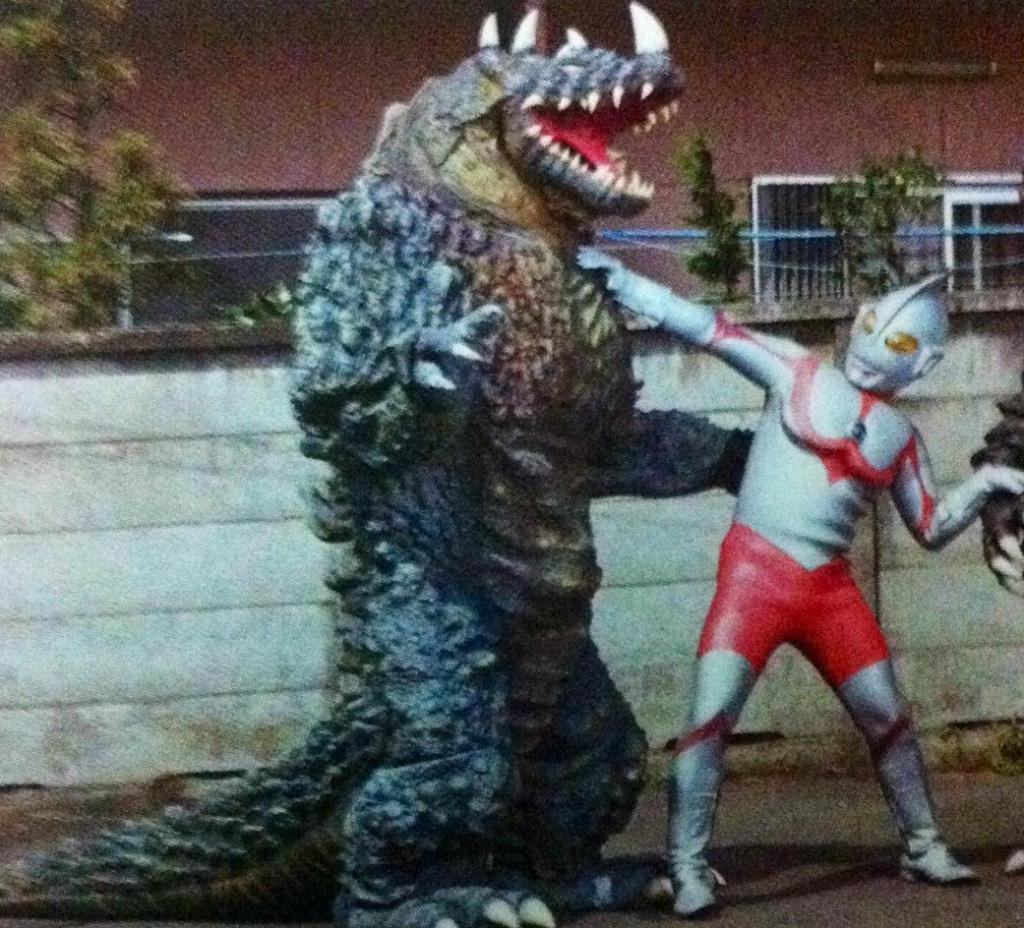
Originating from the 1993 TV special The Man Who Wanted To Be Ultraman, Bosgon is unique in that within the special’s narrative, he’s fictional. You see, this particular TV special is about the production of an Ultraman film and drama regarding the fictional film utilizing CGI effects over practical ones and a plucky guy who dreams of playing Ultraman in the film. So essentially, we have a “double pretend” kaiju here! Bosgon himself was designed by Osamu Yamaguchi and was originally intended for a project around the time of Ultraman Story. That project fell through and Bosgon managed to find himself a second life in this TV special. Bosgon is a serviceable design, but not one of Yamaguchi’s best works personally, especially when compared to the kaiju he designed for 80 or Ultraman Story. It feels like the kind of monster that’d be more at home in something like Juspion or Megaloman and sticks out like a sore thumb when running around with the classic Narita designed monsters in the film.
GOD KING
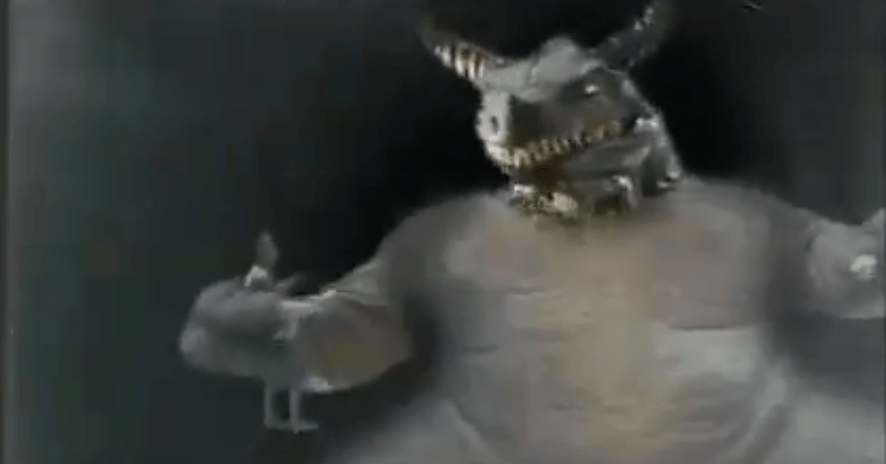
The Man Who Wanted To Be Ultraman would give us one more original monster, the gigantic God King! Appearing in the film-within-a-film, God King is a huge final boss monster, perhaps the most obscure of his kind. He only shows up briefly for a few moments, but he leaves quite an impression, being large enough to pick up Ultraman like he was a doll!
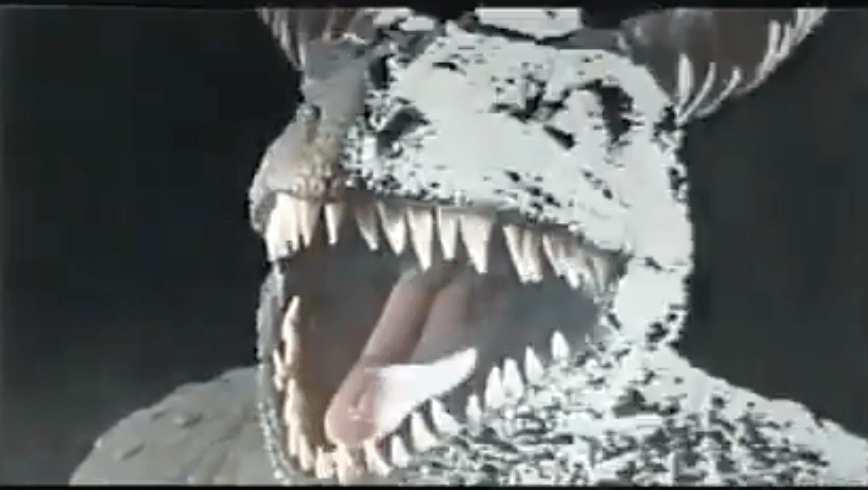
Much of the special’s drama revolves around using CGI for this monster over practical effects, though the way God King was actually realized was using animatronics as well as some CGI for the monster’s changing facial features. He was design by Noriyoshi Ikeya, and while not on the level as some of Ikeya’s other stuff, he’s very impressive, and I’m a little sad this gigantic demon dinosaur wasn’t used in some sort of more proper Ultra movie or special since he certainly commands attention.
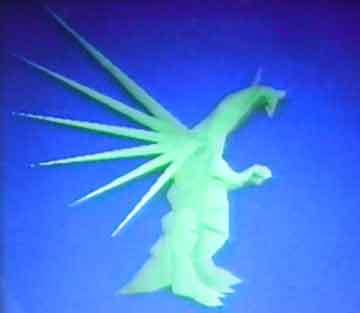
In the film, the characters planned to give God King wings, but this remained unrealized in the final “battle” at the end of the story. A bit of a shame as it could’ve been very impressive, but I can also see this being a bit too elaborate for a TV special’s scope.
POISON SCORPION MAN AND GADRAS
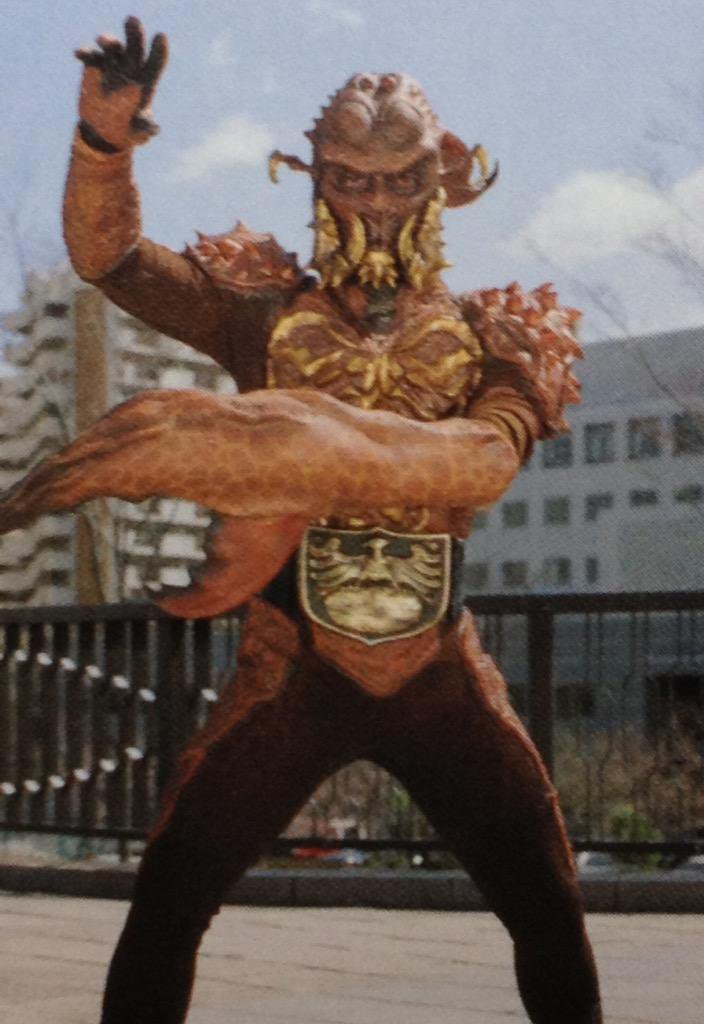
During Ultra‘s hiatus, another long-running tokusatsu series was finding itself in a similar position: Kamen Rider. Shotaro Ishinomori and Toei’s long running superhero franchise had undergone a similar hibernation at the end of 1989’s Kamen Rider Black RX and would remain dormant outside of several oddball productions until 2000’s Kamen Rider Kuuga. In 1993, Tsuburaya and Toei would produce Ultraman vs. Kamen Rider, a video special that served as a retrospective about each show’s long history up to that point. However, fans were treated to a short film at the end, featuring Ultraman and Kamen Rider teaming up!
In the short, the evil terrorist organization, Shocker, sends out their mutant Posion Scorpion Man for a scheme to destroy Tokyo with the kaiju Gadras, only to be met with opposition by Ultraman and Kamen Rider #1. Poison Scorpion Man has a great design, and he looks like he walked out of the original 1971 Rider show. I really like how they made it so his suit actor’s eyes are visible, and I of course, dig that gigantic claw he’s got.
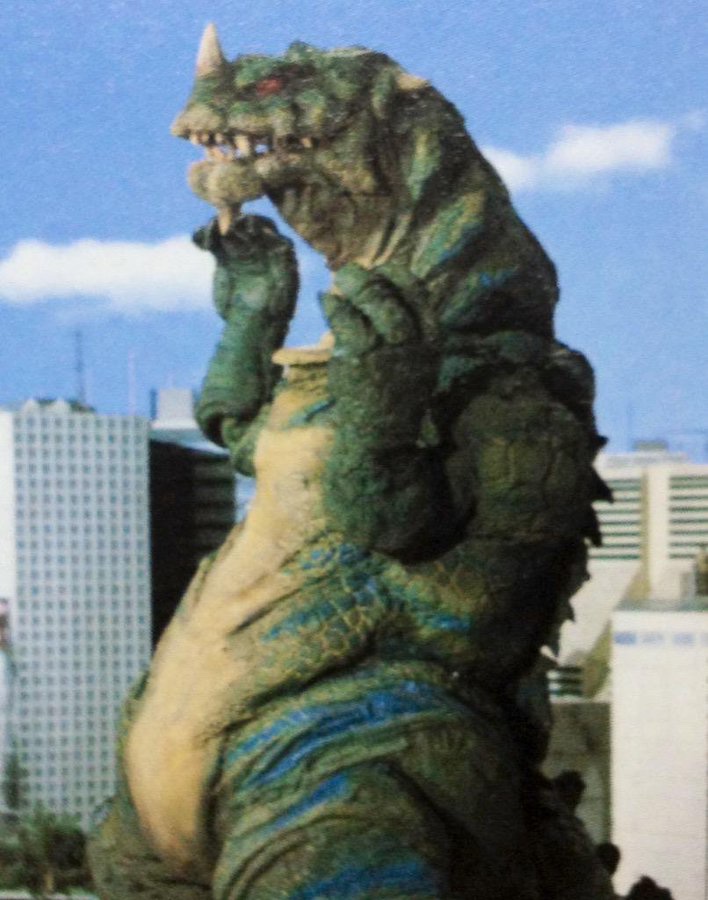
Gadras himself is a fairly simplistic dinosaur by Yamaguchi. Nothing to write home about, but not a bad monster in and of itself. Much like how Poison Scorpion Man is a good representative of the kinds of monster Kamen Rider fights, Gadras is a good representative of the ones the Ultras battle.
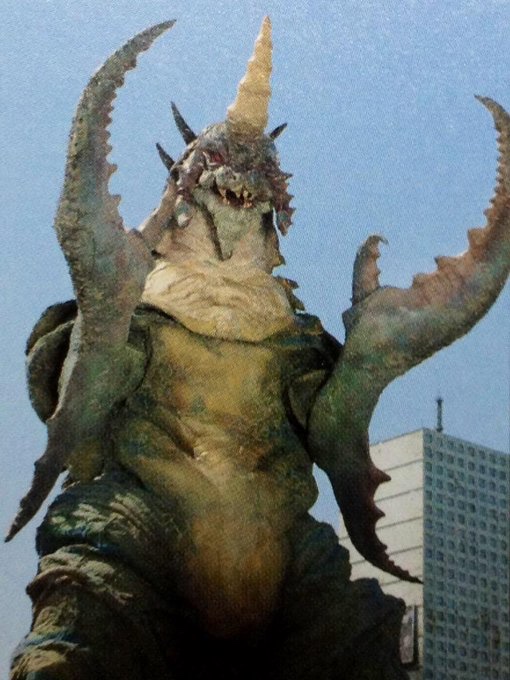
Of course, while Gadras looks plain, he gets a bit of an upgrade once Poison Scorpion Man fuses with him to create Scorpion Gadras! This iteration of Gadras is quite intimidating with those huge claws and glowing horn on his head. He lives up to his appearance, as he’s able to knock Ultraman for a loop and can even create a second mouth on his stomach to consume Ultraman’s Specium Ray! It takes Kamen Rider growing giant and teaming up with the alien hero for them to stop this guy! Scorpion Gadras gets points alone for forcing Japan’s two biggest tokusatsu heroes to team up. He might not be as remembered as guys like Zetton, but he’s a fitting opponent for such a crossover.
 Easter's Kaiju Kompendium