
Produced as a series to celebrate Tsuburaya Productions’s 10th anniversary, Ultraman Taro, the 1973 entry into the franchise takes a decidedly different turn, featuring a more fairytale bent as opposed to the more science fiction inspired shows that proceeded it. In addition, due to low toy sales of characters from Ultraman Ace and Mirrorman, merchandising switched from the monsters, to the various vehicles, allowing the staff of Taro to go all out in designing some truly bizarre creatures, free from the burden of coming up with more marketable characters.
OIL DRINKER

The first monster we see in Taro is a fairly unique one, being the last remaining Terrible Monster, or chojuh, the synthetic beasts created by Yapool that served as the monsters of the week in Ultraman Ace. Here, Oil Drinker is less of a major threat, and more of a throwaway monster, symbolizing a sort of passing of the torch from Ace‘s sensibilities to Taro. I think Yoshio Suzuki did a great job with the design for a character that is for all intents and purposes, a throwaway monster and for years, I thought it was a brand new suit, and not a repurposed Gorgosaurus from Mirrorman. I think what I like most about the design is how much of a goblin shark Oil Drinker looks like here, an animal that I’m sort of surprised hasn’t influenced more kaiju.
ASTROMONS
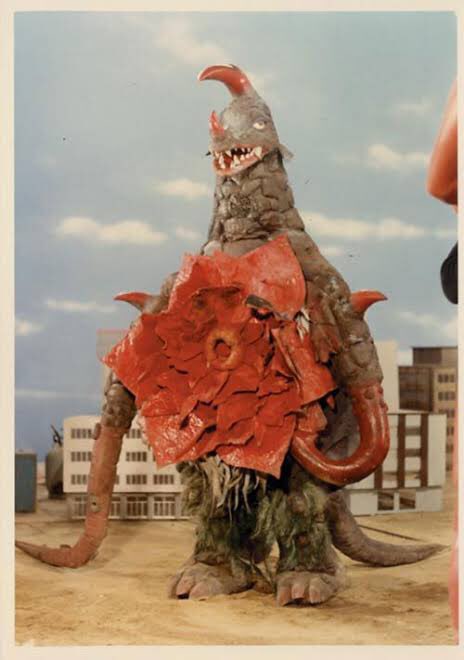
Oh yeah, we’re hitting another one of my favorites! While Oil Drinker is the first kaiju we see in Taro, Astromons is our first true, inaugural monster and Ultraman Taro’s first opponent.

Starting off as a seed of the Tigris Flower, a carnivorous space plant. Plucky boxer Kotaro plants it upon reaching Japan, only for it to begin consuming animals left and right, before eventually transforming into Astromons.

Astromons makes short work of Oil Drinker, consuming the monster with the flower on his chest, before attacking Japan and killing Kotaro, prompting the Mother of Ultra to fuse him with her son, Taro and being slain by the latest Ultra warrior.
Astromons is one of those few kaiju that I think is just perfect in every way, and the moment I first laid eyes on the character, I was a fan. Astromons was designed by producer Ken Kumagi, which explains why the monster feels somewhat similar to Kumagi’s most famous creation, Return of Ultraman‘s Bemstar, but I think Astromons doesn’t feel like it’s piggybacking off of Bemstar, but rather using it as a basis to bring us a really damn cool looking creature. The idea of a plant-reptile hybrid monster isn’t anything too new, but I love the chest flower that is somehow inexplicably able to consume another kaiju, and the red horns, whip, and claw match well with the flower, while at the same time contrasting with the green, cracked body.
Astromons’s development began in a sample story for when the show was still in it’s planning phases. In the sample story, Astromons arrived on Earth after destroying a space station and begins to attack fuel tanks, only to be lured back into space by Kotaro, who is fused with the unnamed, new Ultra Brother. I’m glad they didn’t use this story with Astromons since it feels like a retread of Bemstar’s debut episode, and would just heighten the similarities between the two monsters even more so. The creature’s name is derived from “astro monster”, and several names were originally bandied about such as Astro King and Flower King. The space monster name, as well as the fact that the original sample story Astromons appears in makes me wonder if the flower motif was meant for a different kaiju originally, since the Tigris Flowers coming from outer space is something that only is noted in magazines and references books and not from the show itself. As for Astromons’s bizarre ability to eat Oil Drinker with the flower on their stomach is a result of the staff wanting the new monsters in Taro to seem more powerful compared to the chojuh from Ace. It’s an iconic and silly shot, and there’s a myriad of Astromons toys where you can put a small Oil Drinker figure into the flower which is wonderfully morbid.
Sadly, for such a cool monster, Astromons doesn’t really have much more appearances, which is disappointing compared to several other inaugural monsters from the previous Showa era entries. Past this episode, Astromons appears alongside Gomora, Dustpan and several other Taro monsters in the infamous Hanuman vs. 7 Ultraman, as well as showing up in some hilarious skits in 1994’s Ultra Super Fight, where several characters such as Eleking, Bemstar and Ultraman Ace were all competing for her affection, and was going to appear in the 2008 film Ultraman Mebius and the Ultra Brothers 2, until the film’s story was retooled into Superior 8 Ultraman Brothers, a fine film, but one that unfortunately has zero Astromons in it. Hopefully, with how Tsuburaya Productions is bringing back older characters in the latest shows, we’ll see some more of Astromons soon.
COSMO LIQUID AND LIVE KING

A strange monster with the ability to transform itself into a liquid (hence the name), Cosmo Liquid begins a reign of terror through Japan attacking and eating civilians.
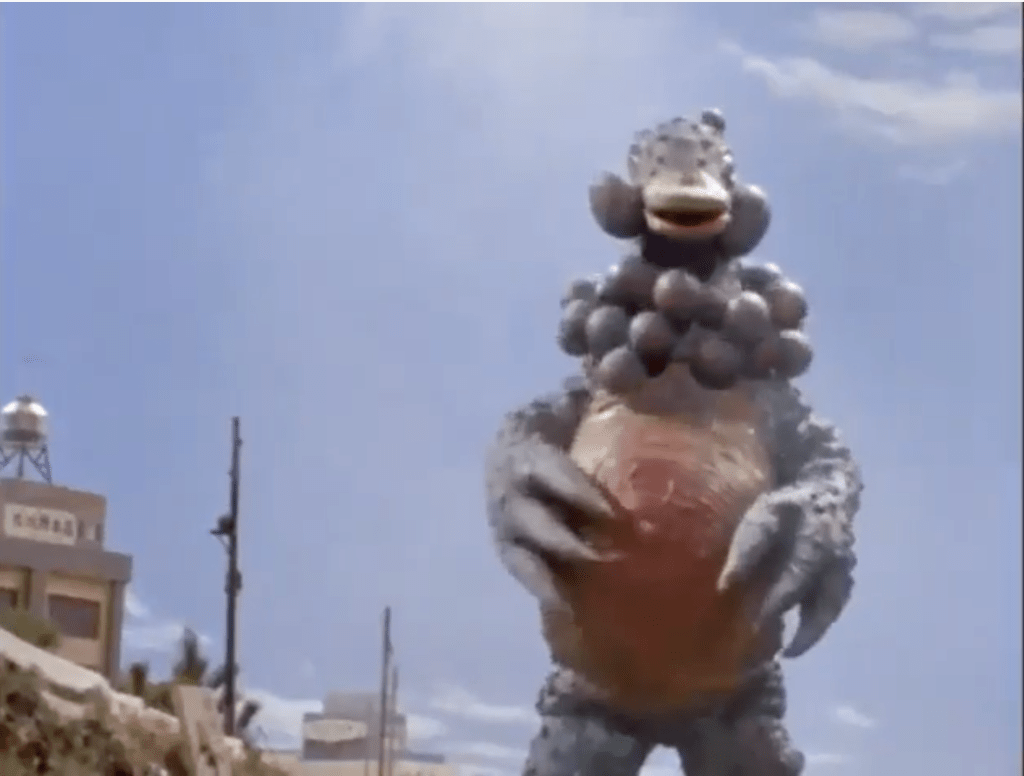
While this happens, Kotaro, in an attempt to save his pet dog, falls down a mysterious hole in the ground. The hole turns out to be the monster Live King, a giggling, powerful monster that soon consumes Cosmo Liquid as well. ZAT manages to free Kyotaro and his dog by using a giant pepper shaker (!) to make the monster sneeze. After having a hole in his stomach be blown out by ZAT, Cosmo Liquid is freed as well and the two monsters are frozen and demolished by ZAT and Taro. However, Live King manages to regenerate and gives Taro enough trouble to force the Mother of Ultra to come down and help take the monster into space, whereupon the mother-son team manage to destroy Live King once and for all.
The series’s first two-parter is less like the dramatic and suspenseful ones we’ve seen in shows prior, and more emblematic of just how utterly bonkers Taro as a show can get not just in terms of how the kaiju are, but how the narrative and characters play out as well.
Speaking of kaiju, we have some pretty funky ones this time around. Cosmo Liquid is a really fun character, and the idea of a monster that’s able to transform itself into a liquid state feels like it would make for a great opponent in the show and is sadly wasted on what is another throwaway kaiju, and I really feel like the character could’ve easily carried a whole episode himself (the character originally had his own story to himself in the initial sample stories during the production of the show). I do have to question the matter by which he is killed, you being frozen and then shattered by a ZAT vehicle wouldn’t affect a monster that can transform into liquid, but I digress.
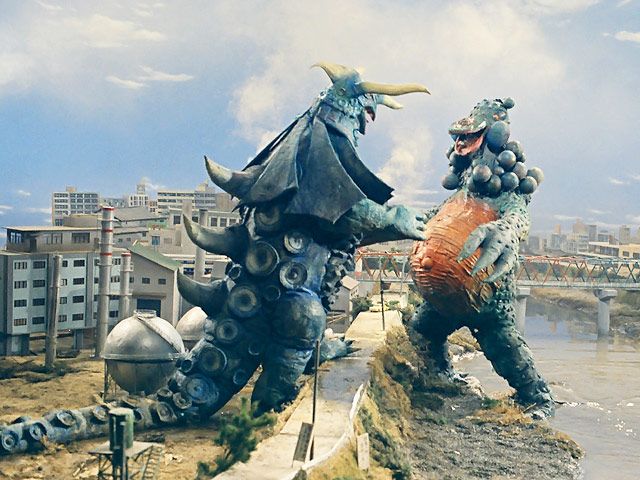
The design for Cosmo Liquid was done by producer Ken Kumagi and while it’s not my favorite design by him, it’s still a pretty good one. There’s a lot of little details I really love such as the blue color scheme and the suckers on his back that fit really well with his powers. While we’re never given a true origin for the guy, several reference books claim he’s a space monster.
As cool as Cosmo Liquid is, he plays second banana to the true star of the episode, Live King. A ridiculous, portly monster whose main vocalization is his deep belly laughs, Live King is a character I can’t help but love. His design (which has sadly never been credited to anyone) is wonderfully goofy, looking like a pot-bellied platypus with clackers around his neck. He’s not the weirdest monster we’ll run into in Taro, but he perfectly captures how goofy the show is in terms of story and aesthetics. It’s a little strange that such a goofy monster is the “boss” of this story, given that Taro has to call for his mother’s help in order to finally destroy him, but it sets the stage for just how much Taro has to grow as a warrior and stand on his own, something that will become a major plot thread down the line in the show.
Live King originates from another early sample story early on in production, which originally featured the monster’s remains being transported to Japan’s ZAT branch, before the aircraft mysteriously crashes and the now-revived Live King begins rampaging. I’m not quite sure why the two monsters were put into one story, especially since the two monsters have similar revival abilities, but I suppose it was to help grab the audience’s attention early on in the show’s run.
Live King would sadly never appear past Ultraman Taro, although the creature would be considered to be one of the monsters in the 2012 film Ultraman Saga as one of the monsters the diabolical alien Bat revived. Live King would’ve soon been purified by Ultraman Cosmos before sadly meeting his end at the hands of Hyper Zetton. Despite being left on the cutting room floor, perhaps we’ll see Live King again, sometime soon.
THE TORTOISE FAMILY
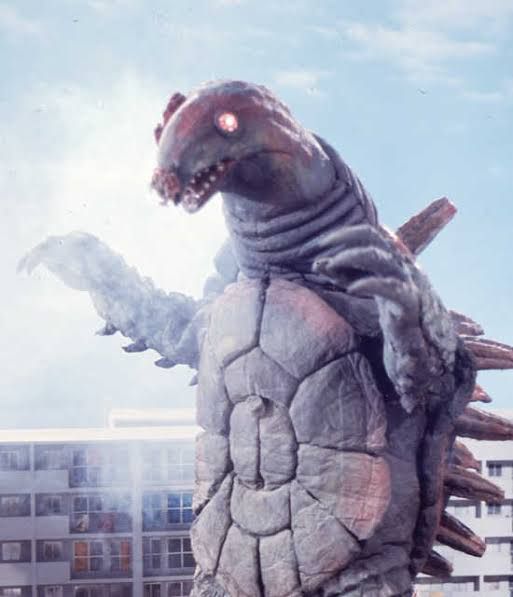
A species of giant turtle native to Oron Island, King and Queen Tortoise are expecting their clutch of eggs to hatch and welcome in several new members to their growing family.
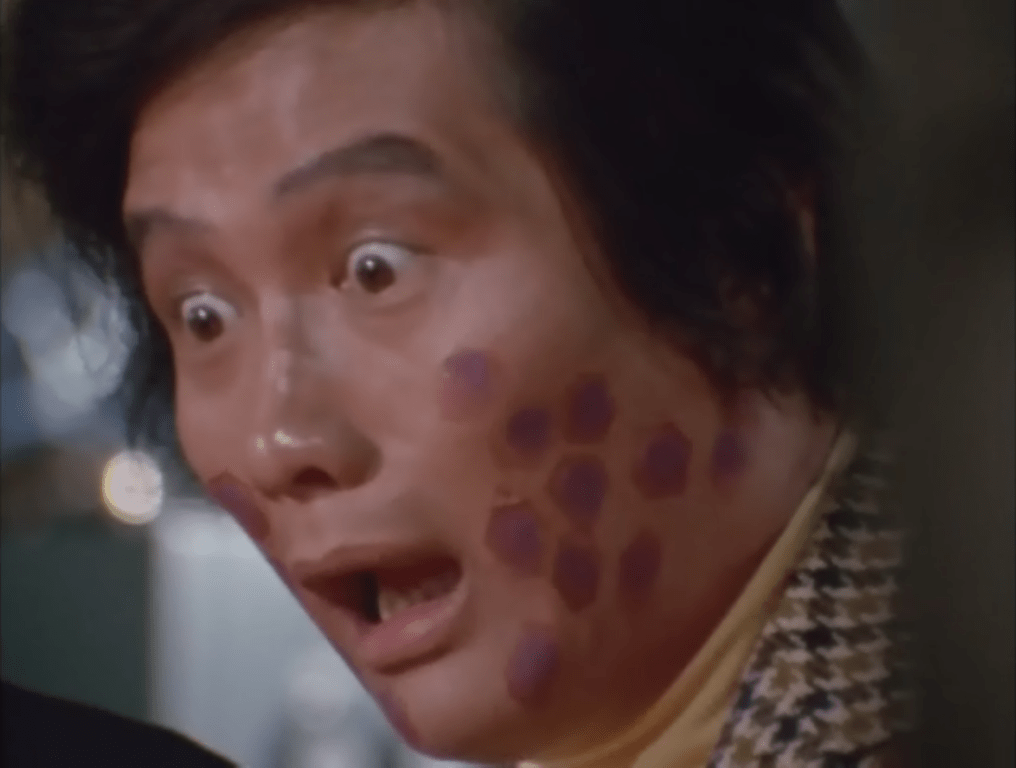
However, several thieves steal the eggs and take them back to Japan. The greedy egg-snatchers soon discover that if you eat the eggs of the Tortoises, you soon develop a spots on your face, allowing them to track you down easier. The angry parents kill the thieves and give Ultraman Taro some trouble before getting their eggs back.
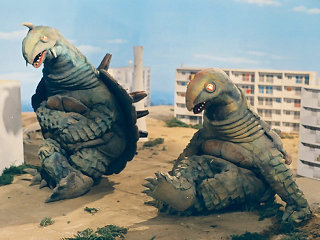
Sadly, as ZAT is helping the turtles head back to Oron Island, the Self Defense Force attacks the family (you think they wouldn’t have interfered) and the eggs, along with Queen Tortoise, perish. One egg survives and upon hatching, is grown into an adult by King Tortoise. King and Mini Tortoise give Taro more hell until Ultraseven arrives, and the two Ultras manage to take King and Mini Tortoise, as well as the carcass of Queen Tortoise into space, where they can live out the rest of their lives without being bothered by humanity.
The Tortoise family is an interesting group of monsters, feeling like Taro is tangling with a whole clan of Gameras. However, while flying turtles are odd, they’re not too alien and bizarre in the world of tokusatsu, but the Tortoise family has some extra tricks up their sleeve to show just how strange they can be. First off all, the King and Queen Tortoise have the ability to create a powerful, swirling vortex and organic, red bombs. However, their weirdest abilities are the egg created spots on those who’ve consumed them, and the baffling ability King Tortoise demonstrates to transform his offspring into a full-grown adult! It’s a miracle Earth hasn’t been overrun by these guys.
While the ending of taking the Tortoise family into space feels just a tad odd due to them being terrestrial animals, some magazines have stated that the Queen Tortoise was revived by the Ultras and that Ultraseven found them a new home on Planet Animal, the same world where Seven’s friendly Capsule Monster Agira hails from.
DILEMMA
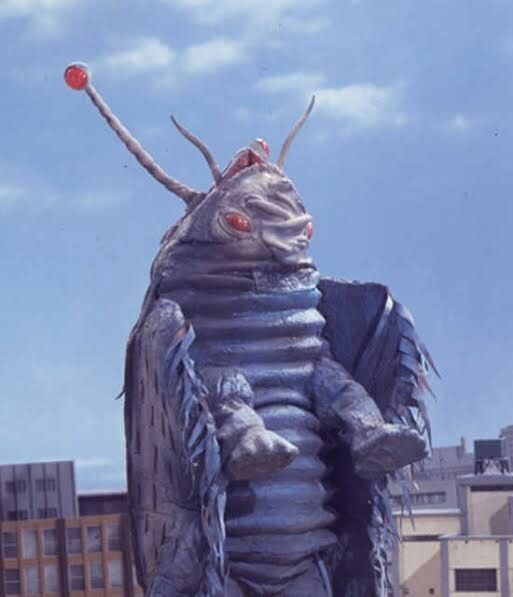
A strange, slug-like creature, Dilemma hails from Egypt, stalking those who are in the possession of a special jewel that the monster eats. Arriving in Japan when Kotaro gives the pendant containing the jewel to his girlfriend Saori, Dilemma uses his acid to melt Kotaro’s dog (who had survived encounters with Astromons and Live King previously). Kotaro fires upon the monster with the ZAT Laser, only for it to grow to a gigantic size for the end of episode brawl.
While I don’t find Dilemma as fun of a slug monster compared to Namegon from Ultra Q, I think he’s a solid slug. I like the idea of a curse manifesting as a gem-eating gastropod for a monster, especially since he starts off relatively small, sort of a slimier, acid-spitting take on Nokogirin from Return of Ultraman. He’s ain’t a bad monster.
GANZA AND TAGRL
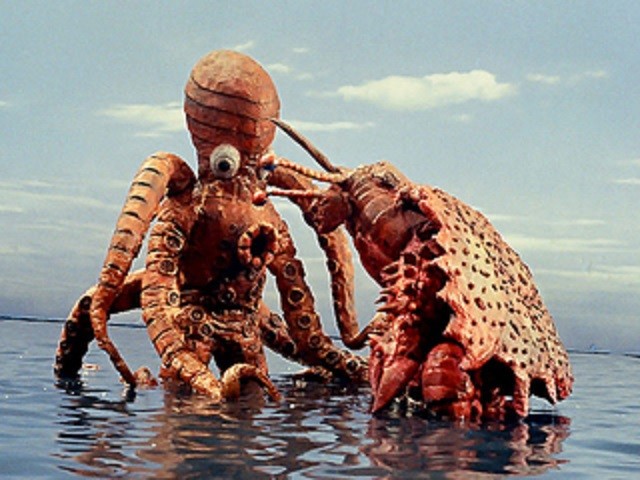
A pair of sea monsters, Ganza and Tagrl first appear dueling each other near Hachijo-jima, with Ganza claiming victory over the giant cephalopod. ZAT soon investigates and mistakes the sleeping Ganza for an island and decide to take a fishing trip rather than investigate the reports of the giant sealife. However, Ganza awakens and forces Ultraman Taro into action. Ganza proves to be a strong opponent with her acidic bubbles and claws that can be fired like rocket punches, but Taro eventually prevails. Upon her death, hundreds of babies emerge from her body. Rather than the usual ending of relocating the babies, they become meals for the islanders! It’s a darkly comedic ending compared to what baby kaiju usually get.
Both Tagrl and Ganza were designed by the legendary Yoshio Suzuki, and I think he did a good job creating these two guys. Tagrl is maybe not as unique as Takkong from Return of Ultraman, but I think he’s so loveably goofy, especially with the googly-eyes and huge sucker mouth he has. The monsters in Taro may not be as imposing, eerie or awe-inspiring as the ones we’ve seen before, but they definitely corner the market on quirkiness and Tagrl, even being a minor throw-away monster, fits it to a T.
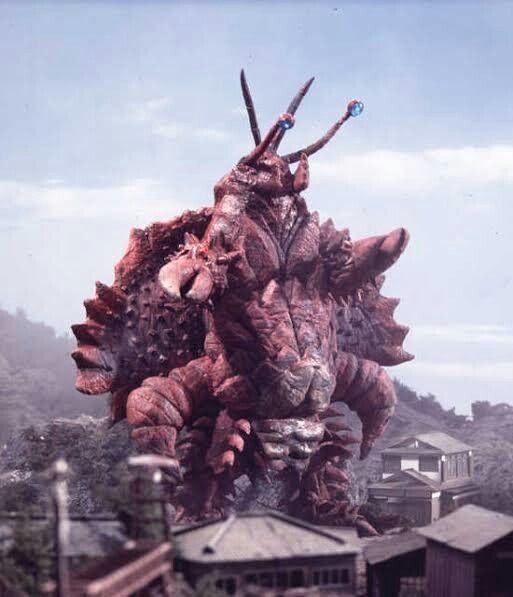
Ganza on the other hand, doesn’t come across as quirky as her sparring partner, but that’s hardly a bad thing. I honestly think the suit and design is really good looking and it brings to mind another 70’s crab kaiju, Ganimes, from Toho’s Space Amoeba, released just three years before Taro. It’s a design that isn’t as bonkers as many kaiju in this show, but it’s one I feel like is a well-rounded crab design, keeping the right attributes for a crab realized by a man in a suit.
In addition, the fact Ganza is mistaken to be an island is reminiscent of the Aspidochelone, a monster from medieval folklore that was a large sea creature that would disguise itself as an island to lure sailors onto its body, only to submerge and drown them all. While I haven’t found any official confirmation of this being an inspiration for Ganza, it wouldn’t surprise me if it was and it certainly fits the fairy tale feeling Taro has.
TONDILE
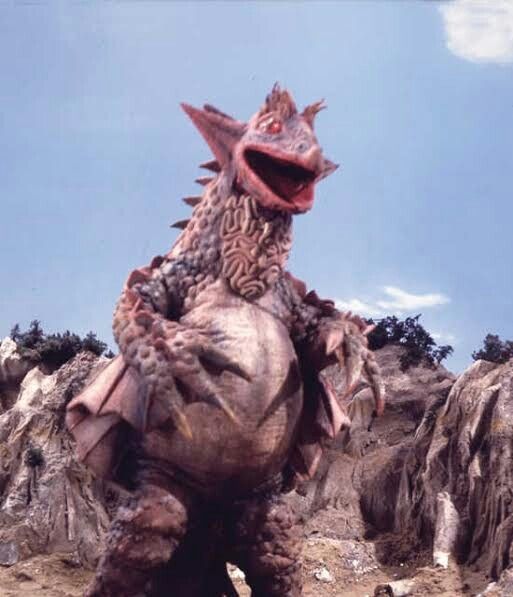
A monster dwelling in a swamp, Tondile uses his hypnotic eyes to prevent his victims from running away, whereupon he then traps them inside of clear orbs and then swallows them up (seems like a few steps too many to get a snack honestly). Thankfully, Ultraman Taro and ZAT are able to free the trapped people and defeat the lake-dwelling monster once and for all.
Tondile’s a fun little kaiju. Maybe not one of my favorites, but the idea of a monster who has the ability to prevent you from running away thanks to his red eyes sounds like something that would’ve freaked me out as a child and he’s genuinely eerie in the nighttime scenes to the point where I sort of wish his battle with Taro was at night as well. The design itself is alright, being an altered Live King suit. There’s some fun features on him, such as the webbed arm-flaps, the neck with the brain-like texture and of course, the brand-new head with the red horns and those cool, red eyes.
ARINDO
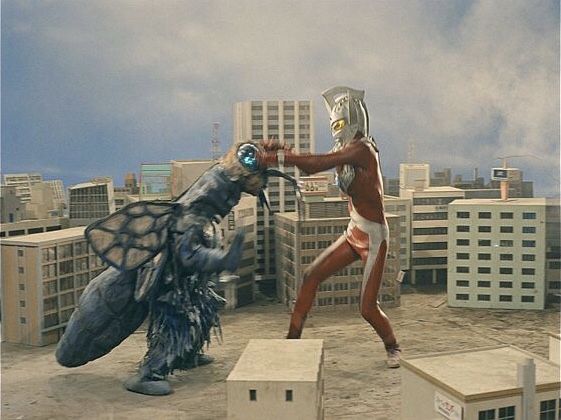
A species of concrete-eating ants, the Arindo wreck havoc on buildings, causing them to collapse. ZAT intervenes, but their attempts to destroy the Arindo with insecticide, only for the ants to consume that as well. ZAT’s last ditch effort to burn the ants alive causes them to coalesce into the giant Arindo.
While Arindo here isn’t as dynamic compared to fellow ant monster Aribunta from Ace, he’s a pretty solid bug kaiju, and I like how naturalistic the design is with the darker colors and the veined wings. It’s interesting to see how Arindo is another one of those examples of tinier monsters turned giant due to the attack team’s attempts to stop them. Between Arindo, Kingstron, Nokogirin and Dilemma, I’d definitely second guess any attempt to kill a smaller monster with such weapons since they seem to just make them bigger and more pissed off.
As a brief, pointless anecdote, I saw Taro thanks to a dodgy Malaysian DVD set waaay back in 2014, and I recall my set’s discs getting scratched in the mail, so I had to take them down to the local used video game store to get the discs repaired. Usually when I do this, it’s a quick sort of affair, but the guy helping me out that day got curious and wanted to watch an episode just to see what this show was about and he picked this one and had a pretty fun time with it, particularly during the ridiculous climax of the episode.
DEPPARAS
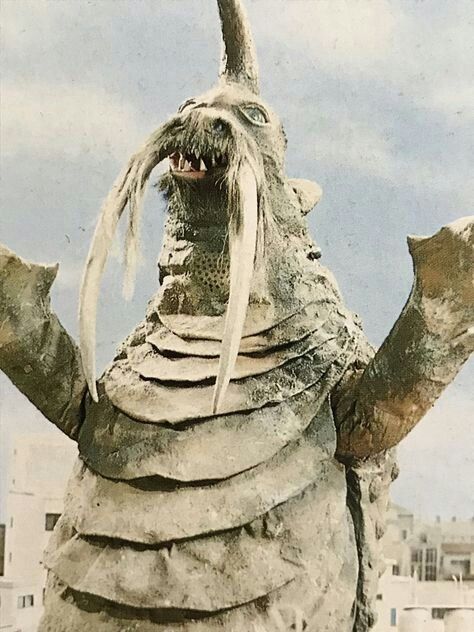
A walrus kaiju that shows up when Kotaro is preparing for a boxing match, Depparas arrives in Japan in search of his favorite food-ketchup. After getting his fill of the tomato based condiment, ZAT is able to lure the creature into a pit using giant mirrors tied to their aircraft and then blast the poor thing to bits.

However, after his demise, the remains of Depparas revive as a zombie and the monster begins his attack again. With ZAT’s mirror strategy being useless now, and armed with fiery breath and the ability to launch his tusks as missiles, the undead Depparas proves to be a worthy foe for Ultraman Taro.
Depparas continues along the line of the more “naturalistic” monsters we’ve seen, but throws in some fun twists. Like, how the hell does this guy become a zombie? It’s something that comes out of left field, but I love the idea of an otherwise goofy kaiju returning after his defeat as a gross zombie.
Depparas’s design was done by Yoshio Suzuki, and I think he did a great job in coming up with a kaiju character that manages to be both comedic and grotesque, something that’s quite difficult to do. I really love the first design of the monster, and the most notable parts of walruses like the tusks and whiskers are utilized well here to make him comedic, and I really like how the zombie form perverts that by making the once-goofy face a pile of gore which when paired with the whiskers, makes him wonderfully creepy.
Depparas has the interesting claim to fame of being the favorite kaiju of Saburo Shinoda, the actor who played Kotaro himself, and I gotta say, of all the kaiju to pick, Shinoda picked a solid one.
BASARA
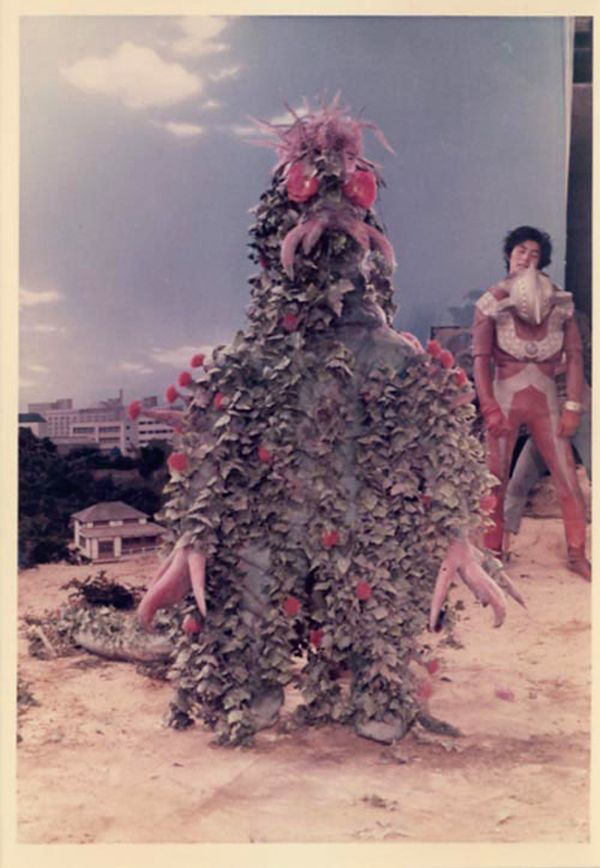
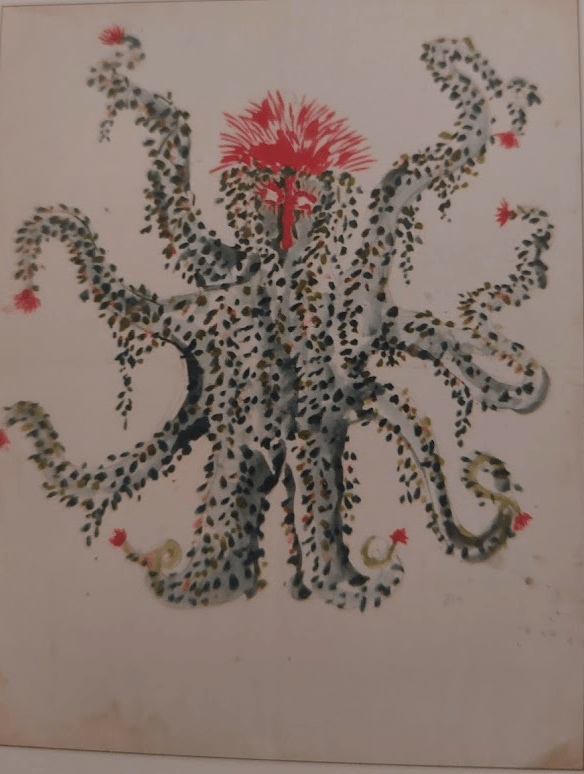
A vampiric plant possessed by the ghost of a child, Basara is one of the eerier monsters seen here in Taro. Basara really feels like something from a Japanese ghost story, and the spooky nighttime photography and it’s cries, those of an infant, really help Basara earn a spot as one of the spookier Showa kaiju. I also really like how they made an otherwise ghostly and supernatural creature a plant-based on, which really helps Basara feel more unique than if they were just a run of the mill ghost.
Basara’s suit was modified from the Arindo suit, albeit there were plans originally to have it be modified from the Tagrl suit. I think they did a great job disguising it, and I love the red eyes Basara’s got, which remind me of rose blossoms.
VOLKELLAR
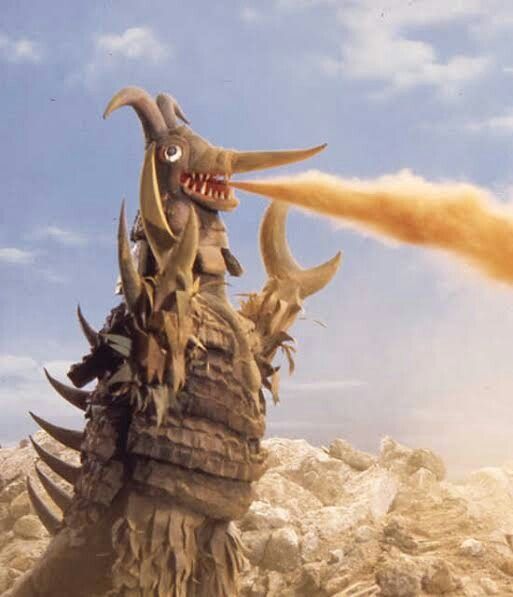
A monster native to the Ebino Plateau in Kyushu, Volkellar eats a man who was part of a team surveying the site for a future resort. The man’s son goes on an adventure to locate his missing father, only to run afoul of Volkellar.

Taro is able to rescue the tyke’s father….by ripping Volkellar’s stomach out through his mouth, cutting it off, and then throwing the kaiju into outer space. What the hell Taro?! It’s not super graphic thanks to just the general tone of Taro, but this monster meets his end in something that’s akin to a really sleazy, 80’s Italian horror movie….minus the being thrown into outer space part, unless there’s a Lucio Fulci movie that goes even more off the rails that I don’t know about.
Volkellar is another monster designed by Suzuki, and I think he did a pretty good job with him. I think the armored look is very well done, and feels very reminiscent of Suzuki’s various armored kaiju he designed in Ace. Interestingly enough, the original design drawing by Suzuki gave Volkellar a smaller mouth, something that was changed when the suit was created in order to pull off the scene where Taro pulls out his stomach.
SHELTAR
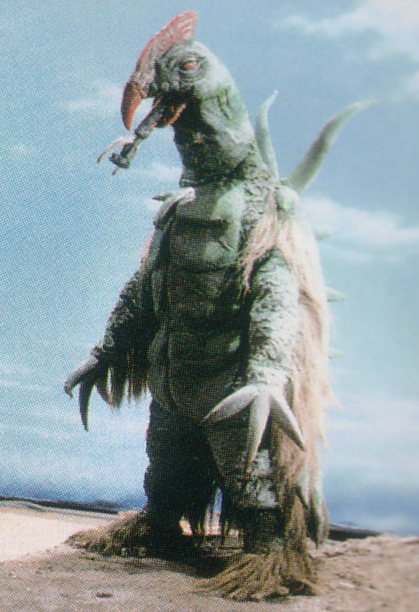
A normally peaceful sea monster, poor Sheltar finds a rocket stuck in his teeth, causing him an immense amount of pain. The monster rampages in his panic, and ZAT decides to help out the poor beast by extracting the rocket themselves.
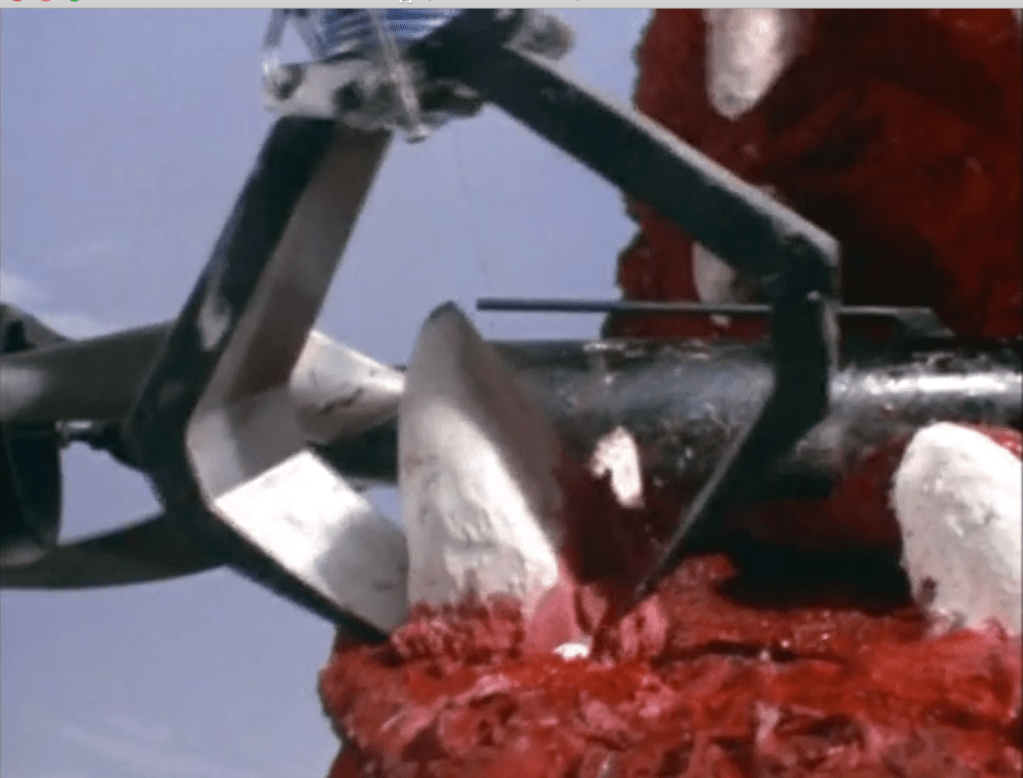
Unfortunately, Kotaro pulls out the wrong tooth, roots and all, and this blunder causes Sheltar to go into a frenzy, only stopped when Taro and ZAT launch another missile into the monster’s mouth, destroying the poor creature once and for all.
Sheltar is one of those monsters that I feel like should’ve been spared, and while the episode plays up the shenanigans of ZAT becoming dentists for comedy, I feel like it doesn’t quite work when you pair it with the surprisingly disturbing shot of Sheltar’s tooth being removed, as well as his demise, if anything, the comedic tone just makes the entire episode feel more warped and not in a good way that Taro as a show usually is. It’s also curious to note that after this episode, the sympathetic monsters that would show up in Taro would be spared at the end of their respective episodes. Makes me wonder if Sheltar’s death didn’t quite sit well with someone behind the scenes or with the audience hence the shift.
Sheltar’s design was inspired by soft shell turtles, and I think it’s one of those designs that does a good job standing out from just being a big turtle. I really like the fur he has on him, which helps him stand out from other reptilian sea monsters seen through the Showa era.
 Easter's Kaiju Kompendium