ENMARGO

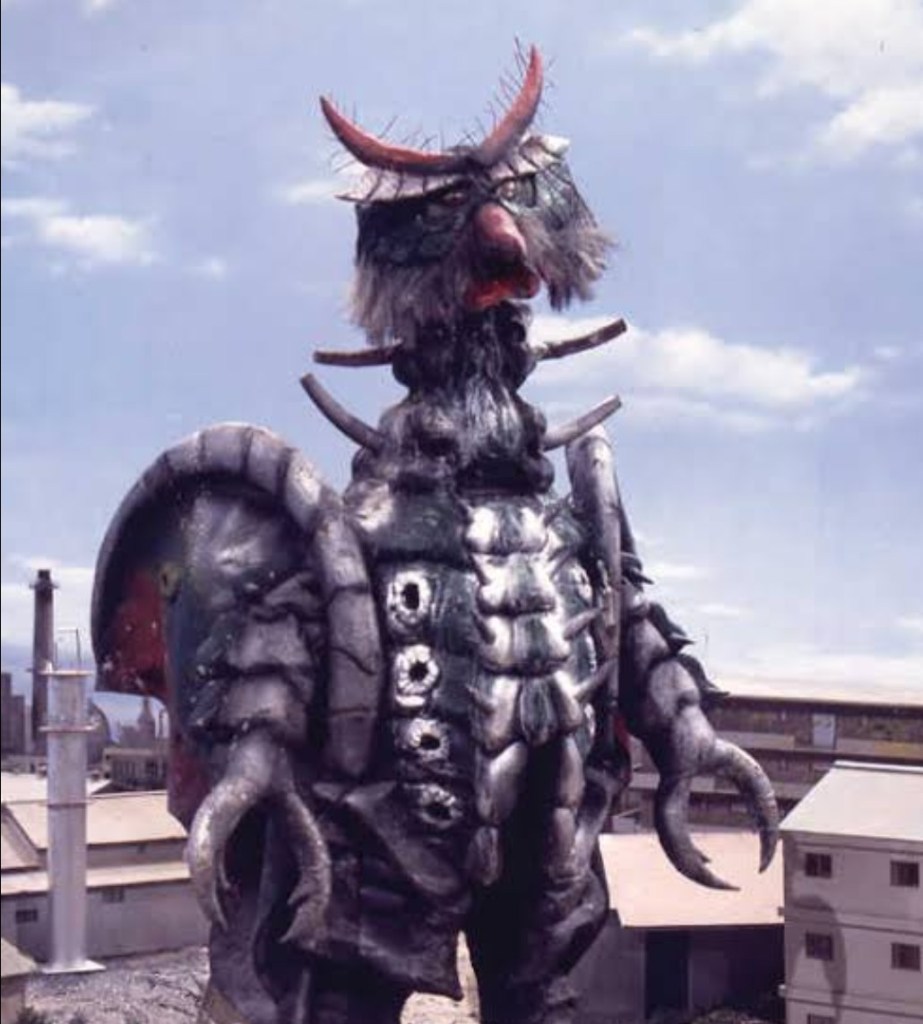
A demonic being sealed away since the Edo era, Enmargo is freed once construction begins on the area and the demon is allowed to run rampant once more. The bout between Enmargo and Taro is quite odd, featuring Enmargo decapitating Taro, and then Taro himself beheading the demon. It’s definitely one of the more surreal fights seen in the already strange world of 70’s Ultra.
I gotta say, I’m really quite fond of Enmargo. Most of the monsters we saw in Taro so far have been based on animals more, so seeing a monster really drawing from Japanese folklore is really cool. Plus, even if it was just an illusion by the statue used to seal him originally, the fact he beheaded an Ultra just makes this guy super cool in my book.
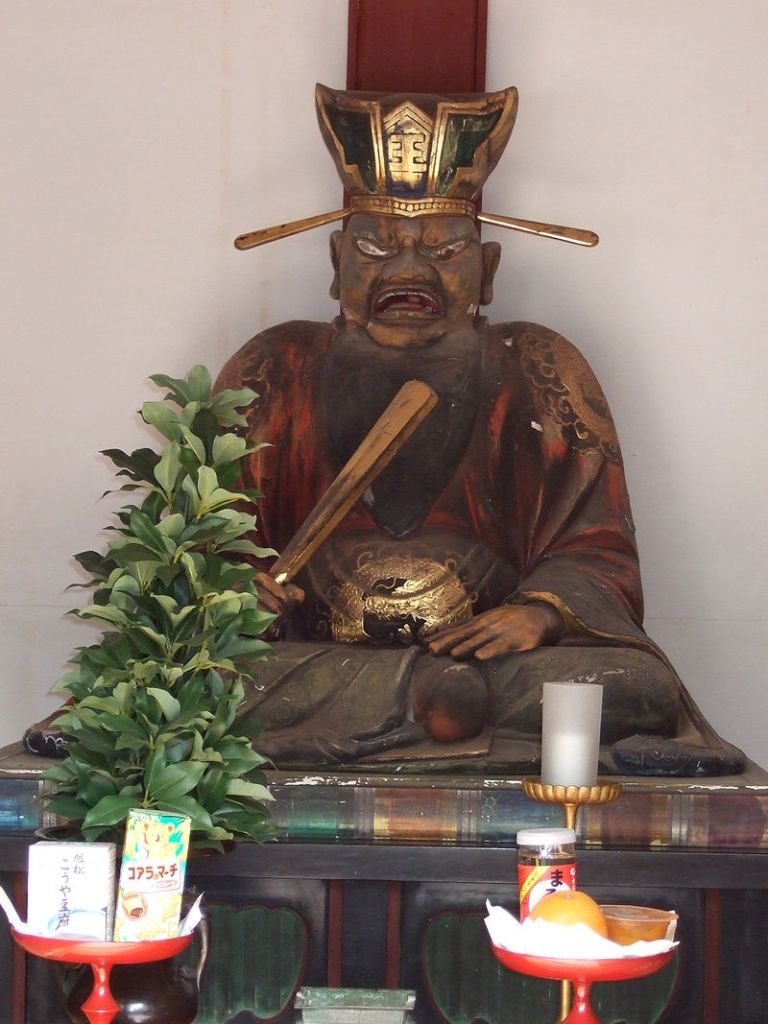
Enmargo was another Suzuki creation, drawing the monster’s name and appearance from Enma, the god of death and judge of the afterlife from different Buddhist mythologies, much like Suzuki’s design for Giant Yapool in Ultraman Ace a year prior. Unlike Yapool however, Enmargo here is pretty much Enma 1:1. Not that I mind though, since an Ultraman battling something ripped from religion isn’t too out of the ordinary compared to the vast majority of bonkers opponents seen in the franchise, and it’s also just fun as hell.
MIEGON
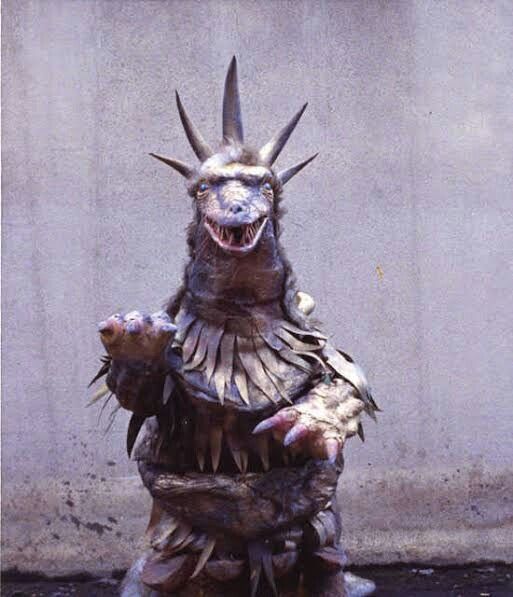
An invisible kitsune monster, Miegon follows around a young girl, and causes misfortune to follow her, making people belief that the girl herself is the daughter of a fox spirit. When the locals plan a good, old-fashioned, angry mob, Taro steps in and reveals Miegon, and destroys the monster, allowing the girl reprieve from the bad luck she’s had.
Miegon’s a fun little beastie. I think it has one of the better suits seen in Taro‘s earlier period, and there’s a lot of cool details on him like the large tail made of multiple tails that he swings around, and even some whiskers coming off of the snout that are a bit hard to see in still photographs. He’s just a well conceived monster.
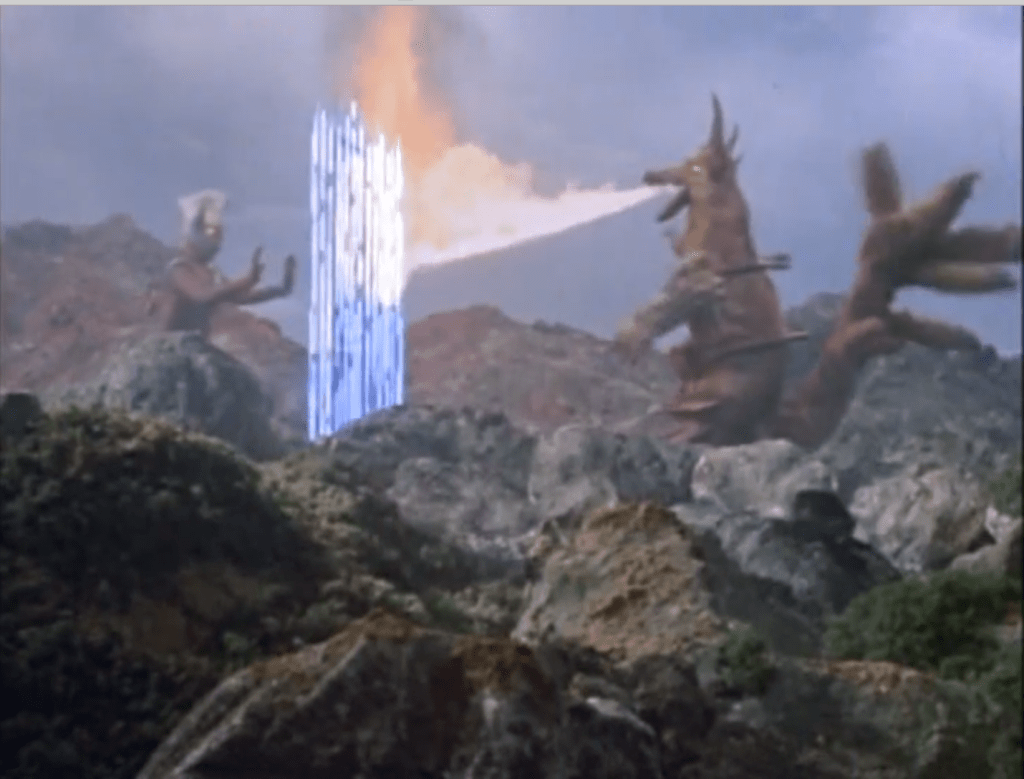
For those who aren’t otaku/weaboo/Japanimation dorks out there, kitsunes are nine-tailed fox spirits from Japanese folklore. Mainly cast in the roles of tricksters, kitsune are capable of taking human form and there’s stories of men who marry them without knowing what they are and bearing children with supernatural capabilities. The kitsune has numerous fantastical abilities such as generating fire, and invisibility, and it’s stated that the more tails the foxes has, the more powerful it is. Taro utilizing one as a monster of the week fits the fairytale theme perfectly, and I’m glad they were able to use quite a bit of the monster’s mythology as inspiration. All in all, solid critter.
OKARIYAN

Oh boy, we’re at this guy. This ugly dude was a kaiju that could be summoned via the sound of a certain ocarina. You see, the ocarina was created from a tooth of the monster that an old man found on Mt. Okari. The monster mistakes the sounds of the instrument as other members of it’s kind, which causes a problem when the man’s grandson plays it in a major metropolitan area, but hey, I feel like at this point the people of Japan are used to this stuff.
I’m not gonna lie, Okariyan is one ugly sumbitch. I recall for awhile, when I was a newbie Ultrafan, I utterly hated this guy with a passion, and I’d point to him as to why I thought Taro was a terrible show based on the scant clips and episode synopsizes I encountered. Thankfully, I warmed up to the show after watching it a few years back, and while I don’t quite dislike Okariyan, he’s not one I’d count among my favorites.
Okariyan was another Suzuki kaiju, one that Suzuki states he rushed the design on, which maybe accounts for how ugly the dude is. The suit itself was a kitbash of several different kaiju such as King Jaiglass, the premiere monster from Jumborg Ace, as well as Dorigorus from Fireman, the two other shows Tsuburaya aired in 1973 alongside Taro as part of their 10th anniversary celebration.
KEMJILA
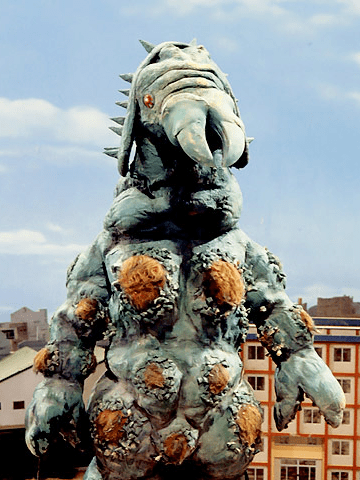
Emerging due to volcanic activity from Mt. Okuma, the Kemjila start off as a tiny caterpillar-looking creatures, and are able to shoot a chemical that causes blindness. The worms get to work eating, and nesting inside watermelon, bringing them into contact with humanity. ZAT is able to hunt down and destroy the Kemjila, but one survives and grows to a kaiju-sized proportions. Kemjila battles Taro, but soon a new threat makes itself apparent…
The throwaway monster for the first ever three-part storyline in Ultra, Kemjila is pretty good for a throwaway kaiju. I do think it’s a tad funny how a caterpillar somehow evolves into a humanoid shape for the final battle, but that’s tokusatsu for you. Made from the suit of Mirrorman‘s Killergon, it is a neat little design, and I like how appropriately, “buggy” it looks, just like the kind of animal you’d find burying itself in your produce, or underneath a rock in your backyard. I also feel like I should mention that while I’m not sure how intentional it is, this trio of episodes feels like a sort of loose remake of Toho’s 1956 kaiju epic Rodan, with Kemjila being an analogue for the Meganurons that terrorize the first portion of the film.
Kemjila would never achieve the same level of fame as the starring monster in this arc, but he was considered to make a comeback in episode 2 of Ultraman X, but it didn’t pan out due to budgetary concerns in regards to creating a new Kemjila suit.
BIRDON
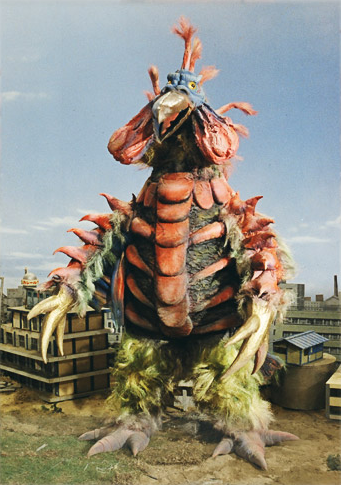
Here we are, probably the most famous, and infamous of all the monsters from Taro. Awakening from Mt. Okuma, Birdon flies down and makes mincemeat out of Kemjila. Despite looking like a cross between a turkey and a chicken with testicles on its beak, Birdon does the one thing few kaiju can attest to: They kill Taro. The venom from the monster is able to vanquish the hero from the stars, and the prehistoric monster runs rampant on Japan, making meals out of any humans it can find.
ZAT’s plan to trap the monster using bubblegum (seriously) fails, but Zoffy arrives to even the odds. But, in a shocking twist, Zoffy finds himself overwhelmed by the bird and is added to the monster’s growing list of victims. Things look grim until the Mother of Ultra revives her son, and grants him the King Bracelet, allowing Taro to use it’s illusionary abilities to lure Birdon back into it’s volcano, finally vanquishing it. Zoffy himself is taken back to M78, where he can be revived and fight another day.
Yeah, this is Taro‘s equivalent of guys like Zetton or Black King. This guy right here does what so many aliens and monsters failed to do and manages to kill off two of the Ultra Brothers with relative ease. This goofy-looking poultry has gone down as one of the most dangerous kaiju in the history of the series, and I think it’s wonderful that in that small club of alien super weapons and demonic creatures that sitting amongst them is just a really pissy bird.
Birdon was designed by Suzuki, and he’s stated that he had a bit of a difficult time coming up for the look of the creature. The final design is a bit busy, but I think it really nails just how ridiculous this monster is, as well as just how revolting and ugly these birds can be.
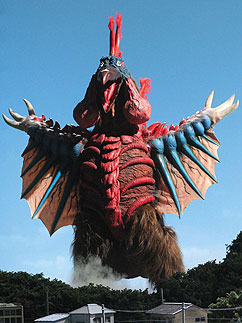
Of all the monsters from Taro to go onto iconic status, the fact it’s this big bird just somehow feels right, and Birdon would go onto clock many other appearances in the franchise, usually serving as a challenge to the newer Ultras. Two notable appearances include episode 3 of Ultraman Mebius, which serves as a loose sequel to this three-part story from Taro, and deals with just how dangerous it can be to be an Ultraman. The new suit seen here is a wonderful upgrade with not much changed, albeit designed to be a little bulkier to signify that this was a second Birdon. Another notable Birdon appearance was in Ultraman X episode 2, where a female of the species begins taking buildings and cars to build a nest in anticipation of her egg. Director Kiyotaka Taguchi wanted this Birdon episode to differ from others in the past, so he decided to focus on the ecology and life style of the bird, as well as giving Birdon a new ability to spin her head around like an owl.
RAIDRON
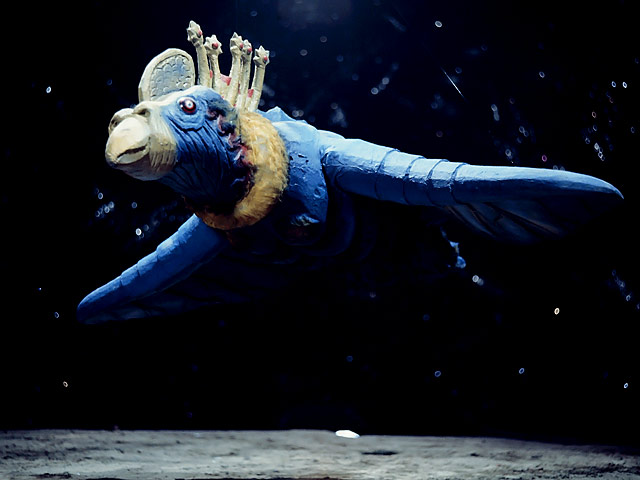
A space-faring species of monsters, Raidron and her child pass by Earth on their cosmic migration. The younger Raidron soon becomes fascinated by fireworks from a celebration, and upon getting too close, gets injured by the fireworks and lands in Japan.
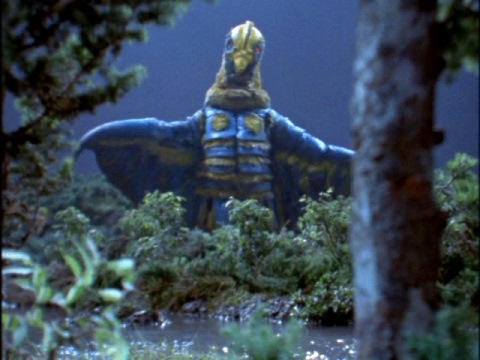
Taro battles the younger Raidron, but upon finding out it’s only attacking due to an injured wing and being separated from its mother, Taro heals the creature and reunites the two.
While it’s a tad questionable for two monsters out in space to notice fireworks, let alone get injured by some, I think the Raidron story has a cute fairytale flair to it. The Raidron themselves are really nice looking bird monsters, and despite coming an episode after a bird monster, don’t feel like rehashes. I really like the designs Suzuki gave for these guys, giving the mother and child different head designs, which really helps sell them as real, living creatures.
KING ZEMIRA
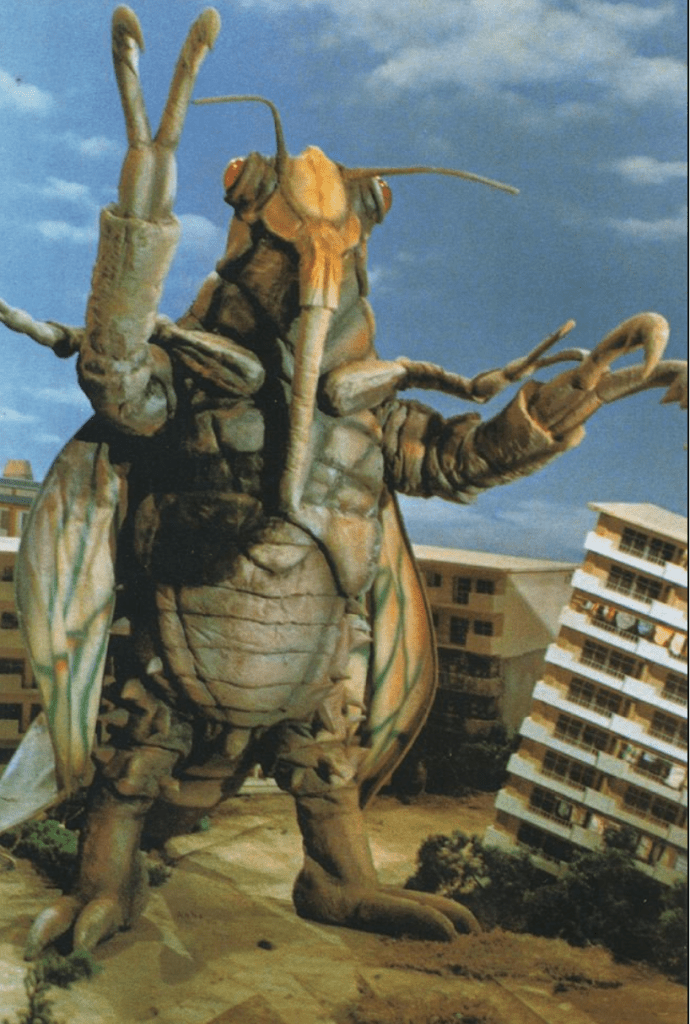
A giant cicada, King Zemira is an otherwise harmless monster, and ZAT decides to let the creature live out it’s life, figuring like his smaller cousins, Zemira’s lifespan will be a short one. However, the incessant sounds caused by the monster drives the civilians crazy. Taro battles the monster, but rather than killing it, he cuts off the monster’s flame-spitting trunk, and sends it off into space, where it can live a peaceful life.
The franchise’s fifth cicada monster isn’t as strange, or malicious as the past ones, but I find Zemira here to be a nice, naturalistic representation of the insect. I like how a cicada’s main traits like the loud noises they make, and their lifespan, help make King Zemira’s story really fun.
PANDORA AND CHINPE
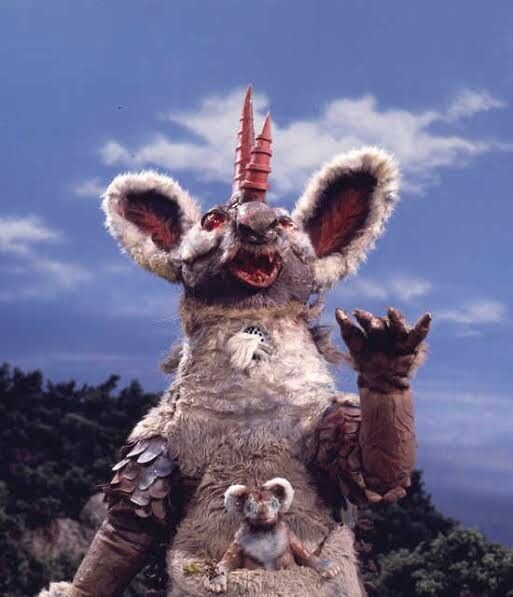
A mother and child monster, Pandora and Chinpe live near Mt. Asama in a large, underground cave. The monsters, who are naturally kind and intelligent, rescue a young woman named Yoko after she had fallen off of a cliff. However, Yoko’s husband thinks the monsters had killed her, and he assembles a posse to hunt the monsters down. Thankfully, Taro intervenes, and manages to clear up the misunderstanding, and sends the two back home underground, sealing the cave off where they will no longer be troubled by mankind.
I used to not like Pandora and thought the character looked too cheap, but over time, I’ve grown to appreciate it a bit, mostly since it reminds me of the old, gaudy Christmas decorations my grandmother used to have. While the motif here is supposed to be pandas, I feel like these two look more akin to koalas, which fits even moreso since the other main inspiration behind the characters were kangaroos.
While Pandora and Chinpe have been living peacefully underground since Taro, Chinpe clocked in a small cameo appearance as a mascot character at a carnival in episode 9 of Ultraman Leo.
RODERA
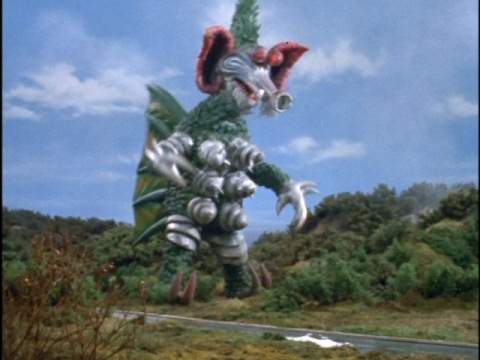
One of the more preposterous looking monsters in Taro, Rodera has the strange ability to produce a watery substance from his snout that is able to eat through metal, but is harmless to humans. After being defeated by Taro, the monster is transformed into a bunch of toy cars (!)
Rodera is…well, he’s a weird one. Certainly one of those monsters that could only appear in this particular place and time in the franchise. I can’t say I’m a huge fan of Rodera, but I am glad that there’s was a point in the franchise when they decided such a bizarre monster was needed.
Rodera was another monster created by Yoshio Suzuki, and reportedly, the design drawing for the monster was lost and was never published, but–
I was able to find a scan that had a very tiny picture of Suzuki’s design drawing! I sadly do not know the name of the publication this appeared in, but it’s apparent that it did manage to exist long enough to appear in some kind of book or magazine, and I’d love to find out what it is. Will this mystery ever be solved? Probably not, but it’s good to know it at least exists out there.
MURUROA
Showing that humanity didn’t learn anything from the destruction of Planet Gyeron, a European country launches a powerful missile weapon at the planet Muroro as part of a test. The planet’s destruction unleashes Mururoa, who heads towards Earth, seeking revenge.

Mururoa has the ability to create a thick smog that is able to black out the sun, and in addition, releases Space Moths, which fly around attacking different light sources. Earth becomes enveloped in darkness, and unable to overcome the powerful space monster, Taro returns to M78 to retrieve the Ultra Bell, a powerful artifact from the Land of Light that can dispel the smog around Earth. Taro is able to restore Earth, and finishes off Mururoa, saving the day yet again.
Mururoa is a monster that I’m surprised isn’t more iconic, as he feels like he should be on the level of someone like Birdon. He just feels like a good “boss” monster, and the fact he forces Taro to travel to M78 to find a way to stop him makes me feel like he should be put in that same tier of powerful monsters.
Mururoa is another Suzuki creation, being based off of a moth, and taking his name from the Moruroa Atoll in French Polynesia. The atoll was the site of nuclear testing by France in 1966 and 1996 respectively, hence the monster’s origin (curiously enough, the latter tests in French Polynesia would be used as the origin of the title monster in the infamous Godzilla from Tristar in 1998). Suzuki stated that he had trouble designing the monster, much like the trouble he had when coming up with Birdon. Apparently, the accounting staff for Tsuburaya Productions weren’t too happy with Suzuki, due to the cost of modeling, and building the suit.
RABBIDOG

A non-Ultra native of the Land of Light, Rabbidog here is Taro’s childhood pet, and he comes to greet his master after he returns to obtain the Ultra Bell.
While he’s only seen incredibly briefly, and is just a tiny prop, I felt I needed to include ol’ Rabbidog here since I love the idea of the Ultras having pets. Rabbidog is also introduced during a montage where we see where Taro went to school, as well as even a swimming pool for the Ultras, so his juxtaposition I feel helps paint a good picture of what the Ultras are up to when they’re not engaging in super-heroics.
MUKADENDER

One of the more famous monsters from Taro, Mukadender is a centipede monster with the unique ability to separate his head from his body. He uses this ability to gain advantage over Taro in combat, until Taro discovers that harming the head harms the body, and he’s able to defeat the creature.
Mukadender has been a character that a lot of fans tend to make jokes about in regards to the rather unfortunate placement of the character’s head, but while it does look really strange, I can see what the design is going for, and it feels like it belongs in the same school of monster design as guys like Twin Tail or Bogun, almost like Mukadender is a kind of evolutionary step between the two.
Mukadender was designed by Suzki and intentionally made to be not so complex in terms of look, so that the construction of the suit would be cheaper compared to the budget-busting Mururoa.

Mukadender would make a return some 33 years later in Ultraman Mebius, with a slightly tweaked design by designer Hiroshi Maruyama. It’s a pretty good update in my book, being incredibly faithful to the original suit. Mukadender would clock in a few more appearances in the late 2000’s in entries such as Ultra Galaxy Mega Monster Battle, before meeting his end during the climax of the 2009 movie, Ultra Galaxy Mega Monster Battle Legends: The Movie, before being retired for the time being.
 Easter's Kaiju Kompendium